
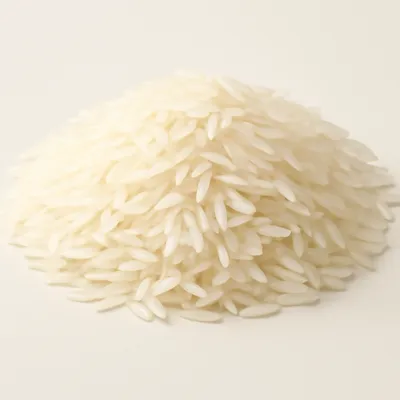
Sliced pork belly marinated in soy sauce, sugar, fermented bean paste or fermented bean curd and spices, coated in coarsely ground toasted rice powder (蒸肉米粉 — raw rice dry-toasted with spices, then milled), and steamed for a long time until tender. It is very often laid over a bed of sweet potato, pumpkin, taro or potato that soaks up the rendered fat. A pan-regional home dish claimed across Sichuan, Jiangxi, Hubei, Hunan and the lower Yangtze.




The dish's exact origin is unrecorded. It is generally described as originating in Hubei cuisine and is found across the rice-growing central and southern provinces — Hubei, Jiangxi, Hunan and Sichuan. Yuan Mei's Qing-dynasty culinary text Suiyuan Shidan (《随园食单》) records 米粉肉 (rice-flour pork) and assigns it to Jiangxi. In Jiangxi it is tied to the Beginning of Summer (立夏) custom called 撑夏. The Hangzhou version 荷叶粉蒸肉 dates to the late Qing and was named one of 36 famous Hangzhou dishes in 1956.
Done well, the pork belly turns silky and falls-apart tender, its fat melting into the rice coat, while the rice powder swells into a moist, faintly chewy crumb that carries the spice and soy. The vegetable bed beneath is soft and saturated with savory fat. Done badly, the rice coat is gluey and pasty, the meat is greasy or undercooked-tough, or the rice was milled too fine and clumps into a wet paste.
The point is toasting the raw rice before grinding. Dry-roasting drives off moisture and partly deactivates the surface starch while building toasted aroma, so that during steaming the powder absorbs the rendered fat and meat juices and swells into a moist mass — its starch hydrating and gelatinizing as separate coarse grains rather than dissolving into paste, the way un-toasted flour would. Long, gentle steaming renders the belly fat and breaks down collagen into gelatin so the meat turns tender, and that rendered fat is exactly what the rice coat and the vegetable bed below soak up. Coarse milling keeps the grains distinct; over-fine rice slumps into a gluey layer.
Variations
Regional kin go by name. The Sichuan style marinates the pork with Pixian broad-bean paste (郫县豆瓣) for a spicier, redder result, frequently over sweet potato. Jiangxi/Gan versions often sit over pumpkin or taro and are eaten at the Beginning of Summer. The Shanghai/Hangzhou style is sweeter and wrapped in lotus leaf — 荷叶粉蒸肉, sold by old houses such as Zhiweiguan (知味观). In Hubei it appears as one component of the steamed platter 沔阳三蒸 (from Mianyang/Xiantao), alongside steamed fish and steamed vegetables.
On the Palate
Where Steamed Pork with Rice Flour sits in the Chinese flavor cloud
Ingredients
Serves 4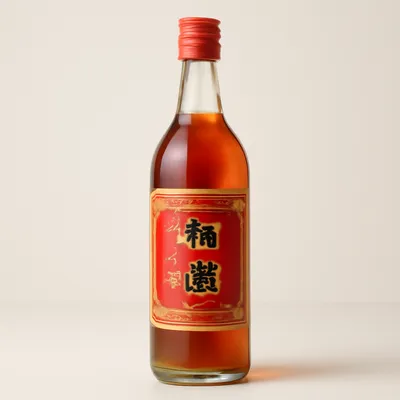

How it's made
8 steps · 30 min
- 115 min
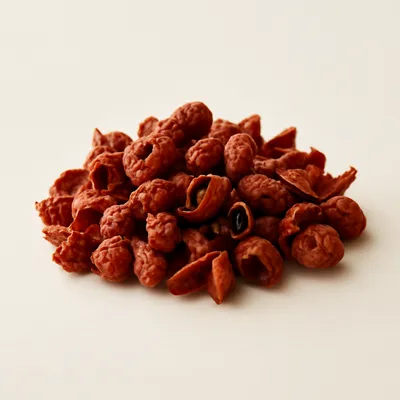
Dry-roast raw rice with star anise, cassia bark and Sichuan pepper over low heat until the grains turn golden and smell toasted; cool and grind coarsely (or use ready-made 蒸肉米粉).
Watch outDry-roast the rice until the grains turn golden and smell toasted — this is the whole point; the toasted powder drinks up fat and swells moist instead of dissolving to paste.
- 25 min
Slice pork belly into broad pieces about half a centimetre thick.
- 330 min
Marinate the pork with soy sauce, sugar, Shaoxing wine and fermented bean paste or fermented bean curd for about 30 minutes.
- 45 min
Toss the marinated pork with the toasted rice powder until each piece is coated; add a splash of water so the powder is moist.
Watch outAdd a splash of water so the rice coat is moist, not dry — dry powder can't hydrate evenly and steams up chalky.
- 56 min
Peel and cut sweet potato, pumpkin or taro into chunks and lay them in the bottom of a steaming bowl.
- 64 min
Arrange the coated pork skin-side down over the vegetables.
- 7110 min
Steam over high heat, then gentle steady heat, for about 1.5 to 2 hours until the pork is tender and the rice coat is moist.
Watch outSteam a full 1.5 to 2 hours until the belly turns spoon-tender — the long, gentle heat is what renders the fat and melts the collagen.
- 82 min
Invert onto a plate so the vegetables sit beneath the pork, and serve hot.
Archive tool suggestions — not reviewed
These legacy suggestions have not been evidence-reviewed and are not presented as required tools.


