The Nanchang take on a beloved Central-South Chinese classic: thick slices of pork belly coated in coarsely ground toasted rice flour, steamed until the meat is fork-tender and the crust has drunk up every trace of rendered fat. A customary Lixia dish that Nanchang households prepare at the Start of Summer, ranked among the city's ten famous dishes.



The 粉蒸肉 family's origin is contested: Hubei's 沔阳三蒸 tradition (today's Xiantao) and Jiangxi — where Yuan Mei's Qing-dynasty Suiyuan Shidan documents rice-flour steamed pork as a Jiangxi dish — both stake a claim to primacy. The style spread across Central-South provinces, with Jiangxi, Hunan, and Sichuan each developing distinct variants distinguished by different spice and paste profiles. In Nanchang, the dish is tied to the Lixia solar term: households prepare steamed rice-flour pork at the Start of Summer, an old custom holding that eating it wards off summer heat rash (旧时相传). The Nanchang version is defined by its use of sweet bean paste (甜面酱), which gives a richer, more caramelised coating than the Hunan fermented black bean or Sichuan doubanjiang versions. It is officially listed among Nanchang's ten famous dishes (2021 civic designation).
A thick wedge of pork belly wrapped in a coarse, fragrant crust — the rice flour has absorbed every trace of rendered fat, leaving the meat tender and almost pillow-soft, with a faint nuttiness from the toasted grain.
Dry-toasted rice ground coarse contains porous starch granules. During steaming, starch gelatinises at around 60–70°C, swelling to trap rendered pork fat within the coating rather than letting it pool. The extended steam time also converts collagen in the pork skin to soft gelatin — the reason the skin becomes yielding rather than chewy — while the sealed steaming environment prevents moisture loss from the lean meat.
Variations
Some Nanchang cooks layer fresh or dried peas at the bottom of the bowl for a sweet, earthy counterpoint. Hunan versions marinate in fermented black bean paste and dried chili; Sichuan versions add doubanjiang and red chili oil for heat.
On the Palate
Where Rice Flour Steamed Pork sits in the Chinese flavor cloud
Ingredients
Serves 4

How it's made
7 steps · 45 min
- 15 min
Cut pork belly (skin on) into slices about 0.8 cm thick.
- 235 min
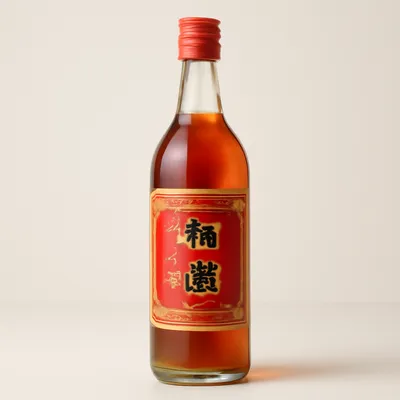
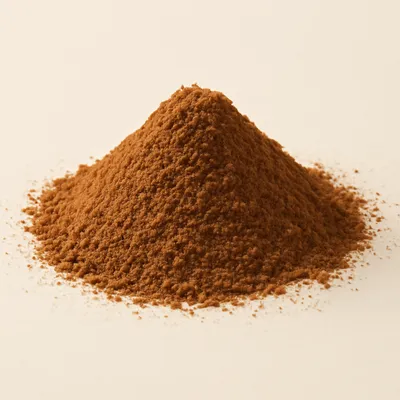
Combine soy sauce, Shaoxing wine, sugar, sweet bean paste, five-spice powder, minced ginger, and scallion; add pork and toss to coat. Marinate for 30 minutes.
- 310 min
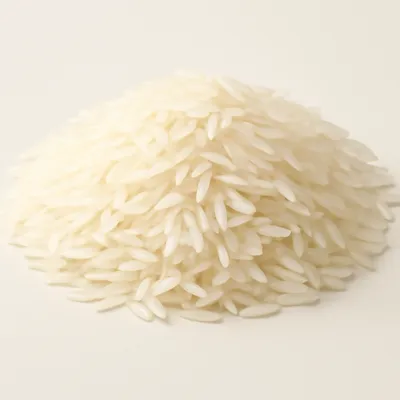
In a dry wok over low heat, toast the raw rice grains, stirring constantly, until golden and fragrant, about 8 minutes. Cool completely.
Watch outToast the rice just to golden and nutty — push it darker and the coating bakes bitter and stops swelling in the steam.
- 45 min
Grind the toasted rice to a coarse, sandy powder — leave texture; do not make it fine.
Watch outGrind it coarse and sandy, not to flour — too fine and the coating turns pasty and gummy instead of loose and fluffy.
- 55 min
Toss the marinated pork slices in the rice powder until evenly coated; sprinkle in 2 tbsp water and toss again so the coating clings firmly.
- 63 min
Optionally line the base of a deep steaming bowl with peas; arrange pork slices skin-side down, pressing snugly together.
- 755 min
Steam over high heat for 50–60 minutes until the meat is tender and the coating is thick and cooked through; invert onto a serving plate and serve immediately.
Watch outIt's done when a chopstick slides through the meat and the rice coat is soft all the way — cut it short and the coating stays chalky.
Archive tool suggestions — not reviewed
These legacy suggestions have not been evidence-reviewed and are not presented as required tools.


