
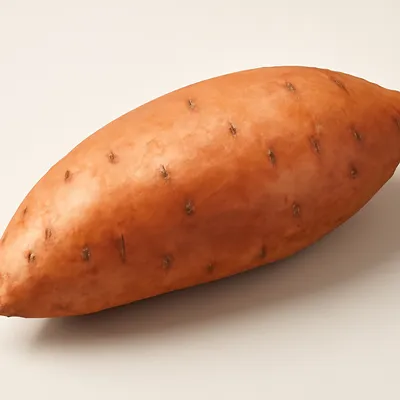
A sweet dish from Qixian county in Kaifeng, Henan: steamed sweet potato is peeled, its fibers picked out, pressed through a cloth into a fine puree, then fried in a pan with melted sugar and sesame oil until it turns into a glossy, persimmon-red paste so smooth it leaves nothing behind — known locally as a '三不沾' (it sticks to neither plate, nor chopsticks, nor lips), the same idea as the famous egg-yolk dish of that name. It is plated warm and layered with little jewels of hawthorn, candied rose petals, slivers of red-and-green candied peel, and osmanthus sugar. Sweet, fragrant, and silky, it is a banquet sweet of the Kaifeng region.



Qixian sweet potato puree was created at the Datong Restaurant (大同饭庄) in Qixian, Kaifeng, in the early Republican years, the work of a chef recorded under the name Jiang Siqi (蒋思奇, also given as 蒋世奇). A story attaches to him: that when Yuan Shikai's men came through Qixian and demanded the famous local sweet, the chef — unwilling to cook for them but unable to refuse — served the puree sealed under a film of hot oil so that the men, fooled by its cool-looking surface, scalded themselves on the molten paste beneath. The anecdote is folklore and the chef's name is recorded inconsistently, so it is best treated as a tale; the documented core is the dish's birthplace and rough date. The trick of the hot-oil seal, true or not, points to the dish's real character: a sugar-and-oil sweet potato paste that holds heat fiercely and runs glassy-smooth, the '三不沾' that touches nothing.
A good sweet potato puree is a smooth, glossy persimmon-red mound, soft and silky on the tongue with no fibers and no grain, sweet and clean with the rounded richness of sesame oil; the hawthorn bits give little sour-sweet sparks, the candied rose and osmanthus float a flowery perfume over it, and the red-and-green peel adds chew. It runs off the spoon in a sheet and, true to its name, leaves the plate clean. It also holds heat for a remarkably long time under its oil, so it arrives piping hot. A poorly made one is coarse and fibrous because the potato was not sieved fine, or oily and heavy from too much sesame oil poured in too fast, or dull and pale rather than the deep glossy red of properly fried sugar.
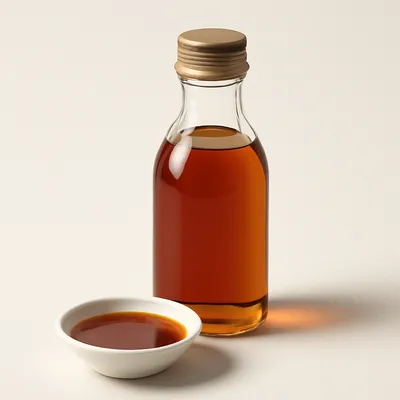
The puree turns on sugar, oil, and patient frying. Steamed sweet potato is naturally sweet and starchy; sieving it through cloth removes the tough fibers and bursts the cells into a fine, water-rich paste. In the pan the sugar is first melted to a syrup, then the paste and sesame oil are worked in and fried steadily. Two things happen: the sugar concentrates and lightly caramelizes, deepening the color toward persimmon red and adding flavor; and the oil emulsifies into the starchy paste, coating the starch so the mass turns glossy and, crucially, stops sticking — the well-oiled, sugar-rich paste no longer wets a plate, chopsticks, or lips, which is the '三不沾' effect. Constant stirring keeps it from scorching on the bottom and drives off enough water that the paste pulls together into one cohesive, ungreasy mound. The heavy load of oil and sugar also gives it high heat capacity and a sealing surface, so it stays hot far longer than it looks — the basis of the hot-oil-seal trick in its legend. The toppings are added off the heat so they keep their texture and scent.
Variations
The standard ratio handed down is about one part sweet potato to half a part sugar and a quarter part sesame oil, finished with hawthorn dice, candied rose petals, red-and-green peel, and osmanthus sugar; cooks adjust sweetness and oil to taste, and some use lard in place of or alongside sesame oil. It shares its '三不沾' nickname with the celebrated Beijing/Henan egg-yolk 三不沾 (also called 桂花蛋), a fried sweet of egg yolk, sugar, and starch — the name describes the same non-sticking quality, but that is a different dish made from eggs rather than sweet potato. Within Kaifeng and Qixian it is a signature banquet sweet; similar fried sweet-potato pastes appear elsewhere in Henan home cooking, but the sieved, sugar-fried, jewel-topped Qixian version is the named one.
On the Palate
Where Qixian Sweet Potato Puree sits in the Chinese flavor cloud
Ingredients
Serves 4
How it's made
7 steps · 40 min active + 10 min waiting
- 120 min
Steam whole sweet potatoes until completely soft, then peel them and pick out any tough fibers.
- 28 min
Press the flesh through a clean cloth (or fine sieve) into a smooth, fiber-free puree.
Watch outPress the flesh through cloth into a smooth, fiber-free puree — leftover strings ruin the silky texture the dish is prized for.
- 35 min
Prepare the toppings: dice candied hawthorn small, and ready the candied rose petals, red-and-green candied peel, and osmanthus sugar.
- 45 min
Melt the sugar in a pan over low heat into a syrup, taking care not to burn it.
- 56 min
Stir in the sweet potato puree and the sesame oil, adding the oil gradually, and fry steadily over low-to-medium heat, stirring constantly.
- 68 min
Keep frying until the paste turns glossy and deep persimmon red, pulls together into a cohesive mound, and no longer sticks to the pan.
Watch outKeep frying until the paste turns glossy and deep persimmon red, pulls into a cohesive mound and no longer sticks to the pan — that's the sign the sugar has caramelized and the oil is fully worked in.
- 73 min
Mound the puree on a warm plate and scatter the hawthorn, rose petals, candied peel, and osmanthus sugar over it in layers; serve hot.


