The workhorse main course of Yanbian Korean-Chinese home cooking — well-fermented napa cabbage kimchi stir-fried with sliced pork belly until the fat renders and the kimchi caramelises into a tangy, smoky, deeply savoury dish that makes plain steamed rice irresistible.

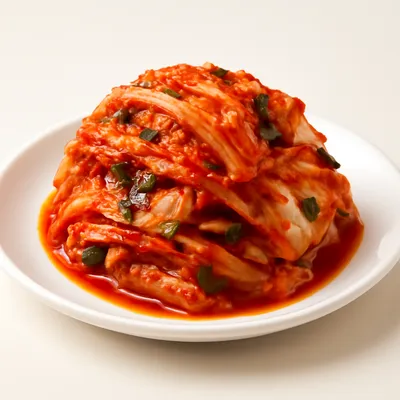




Yanbian Korean Autonomous Prefecture, established in 1952, is home to the largest concentration of ethnic Koreans (朝鲜族) in China. Since the mid-19th century, Korean settlers crossing the Tumen River brought with them the lactic acid fermentation of napa cabbage — kimchi — as a year-round staple. Stir-frying aged kimchi with pork belly arose as a practical solution in Korean-Chinese home kitchens: kimchi that had fermented past peak acidity and grown too sour to eat as a side dish became the primary flavour base of a rich main course. The fat of pork belly tempered the sharp acidity while the concentrated kimchi acids permeated the meat. In 2014, the State Council designated Korean ethnic kimchi-making (朝鲜族泡菜制作技艺) as a national intangible cultural heritage item (第四批国家级非物质文化遗产代表性项目). This dish is now arguably the most recognisable everyday preparation in Yanbian's Korean-Chinese culinary tradition.
Caramelised, tangy kimchi clings to silky pork belly — layers of sourness, pork fat richness, and chili heat, every bite an argument for another bowl of plain rice.
Well-fermented kimchi contains high lactic acid concentrations (pH around 3.5–4.0) and volatile organic acids that intensify with heat. High-heat stir-frying drives off the water content while concentrating those acids, which then undergo Maillard reactions with residual sugars and amino acids above 130°C, producing the caramelised edges and smoky-sweet aroma. Pork belly fat, rendering at 130–140°C, provides the medium for this browning and acts as a carrier for fat-soluble flavour compounds. Fermentation-derived glutamates from the kimchi and the meat's natural inosinate create a significant umami synergy.
Variations
With firm tofu: tofu cubes added to the stir-fry absorb the kimchi brine and pork fat, adding protein and a contrasting silky texture. | Kimchi fried rice: leftover stir-fry broken up and mixed with day-old rice over high heat with a fried egg on top — the weeknight staple. | With glass noodles: pre-soaked sweet potato noodles added to stretch the dish and add a chewy, slippery texture.
On the Palate
Where Kimchi Stir-Fried Pork Belly sits in the Chinese flavor cloud
Ingredients
Serves 3

How it's made
7 steps · 10 min
- 18 min
Slice 200g pork belly into 5mm thick pieces. Squeeze excess moisture from 300g well-fermented kimchi and cut into 4cm pieces; reserve the brine separately.
- 23 min
Heat a wok over medium-high heat without any oil; lay in the pork belly slices and sear until lightly browned on both sides, about 3 minutes total. Remove and set aside.
Watch outDry-sear the pork belly in the bare wok until browned and the fat renders — this rendered fat becomes the frying medium for the kimchi.
- 31 min
With the rendered pork fat remaining in the wok, add 3 thinly sliced garlic cloves and stir-fry for 30 seconds until fragrant.
- 44 min
Add the kimchi to the wok; stir-fry over high heat for 3–4 minutes until the kimchi begins to caramelise at the edges and smells smoky-sweet.
Watch outStir-fry the kimchi over high heat until the edges caramelize and it smells smoky-sweet — this concentrates its acid and deepens flavor.
- 52 min
Return the pork belly to the wok; add 2 tbsp reserved kimchi brine, 1 tsp sesame oil, and 1 tsp sugar. Stir-fry together for 2 minutes over high heat.
- 61 min
Taste for seasoning; splash in a little soy sauce if needed. Stir-fry 1 more minute until everything is glossy and the liquid has reduced.
- 71 min
Transfer to a plate; scatter sliced scallions and sesame seeds over the top. Serve immediately with steamed white rice.


