
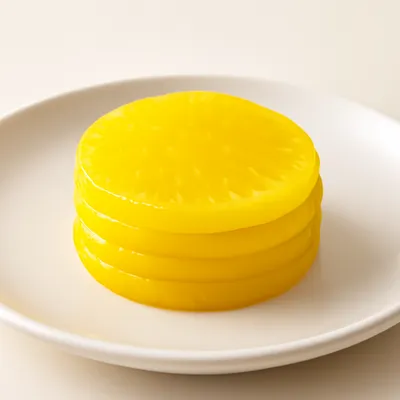
Guizhou rice tofu (米豆腐) is a soft, jelly-like "tofu" made not from soybeans but from long-grain rice. The rice is soaked, ground into a milky slurry, simmered, and set with lime water (food-grade calcium hydroxide) or edible alkali, which firms the cooked starch into a pale, slippery, faintly springy block. Cooled and cut into cubes or strips, it is eaten cold under a sour-spicy dressing of chili oil, black vinegar, soy, garlic water and scallion, finished the Guizhou way with fishwort root, sour pickled radish and crisp fried soybeans or peanuts. A cooling, refreshing street snack across Guizhou, it shares its name and method with versions in Hunan, Chongqing and Sichuan.




Rice tofu belongs to the rice-growing uplands where Guizhou, Hunan, Chongqing and Sichuan meet, a region without wheat where ground rice stood in for soybean and wheat staples. Guizhou's karst landscape yields abundant, high-quality limestone, so lime water became the natural setting agent, and the dish settled into the province's street-snack repertoire. It is best known nationwide through the film Hibiscus Town (《芙蓉镇》), made by the Shanghai Film Studio in 1986 and directed by Xie Jin from Gu Hua's 1982 Mao Dun Literature Prize-winning novel; its heroine Hu Yuyin, played by Liu Xiaoqing, runs a rice-tofu stall, and the film took Best Feature at the 1987 Golden Rooster Awards. The story is set in a town near the Hunan border, so rice tofu is shared across Guizhou and Hunan rather than owned by one; the Guizhou version is distinguished by its heavy chili oil and the local garnishes of fishwort root and sour radish.
Cool and yielding, each cube collapses softly between tongue and palate with a gentle springy resistance, smooth and slick rather than firm. The flavor of the tofu itself is mild and faintly grain-sweet with a whisper of alkaline scent; the dressing carries it, layering numbing chili-oil heat, the bright sourness of black vinegar, raw garlic pungency, and the crisp crunch of fried soybeans against the slippery jelly. Fishwort root adds a clean, peppery-medicinal note and sour radish a tart snap.
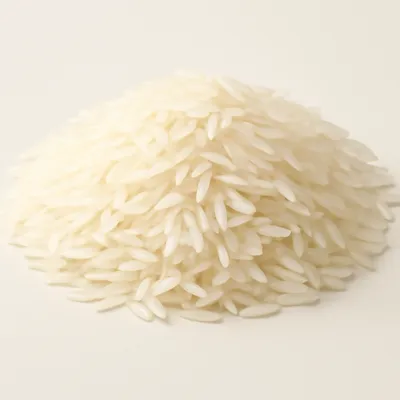
Long-grain (indica) rice is essential because its high amylose content forms a firm, elastic gel; glutinous or short-grain rice is too sticky to set. Soaking and grinding free the starch, and simmering gelatinizes it as granules swell and burst into a viscous paste. The added lime water or alkali does double duty: the alkaline environment promotes fuller starch gelatinization (the same trick as a pinch of soda in congee), while calcium ions from the lime bridge between starch chains, cross-linking the network so that on cooling the amylose sets into a self-supporting, springy gel that holds water and slices cleanly. The alkalinity also lifts trace pigments in the rice toward yellow and leaves the characteristic faint alkaline aroma. Because the block is bland and slippery, it is always served cold and dressed only at the moment of eating, so the sour-spicy sauce clings to the surface without softening the gel.
Variations
Setting agents vary by locale: food-grade lime is classic in Guizhou, while elsewhere cooks use edible alkali (soda), or the old method of alkaline wood ash from vitex or cypress, each tinting and scenting the gel a little differently. Hunan and the Hibiscus Town style lean on chili and lean garnishes; Guizhou loads on chili oil, fishwort root, sour radish, crisp soybeans, peanuts and bean sprouts. Tongren in eastern Guizhou is especially noted for its rice tofu. Beyond the cold sour-spicy bowl, the cubes can be stir-fried or simmered hot in a savory-spicy sauce, and the same batter sets into a firmer cake for slicing.
On the Palate
Where Guizhou Rice Tofu sits in the Chinese flavor cloud
Ingredients
Serves 5

How it's made
8 steps · 1 hour 30 min
- 1720 min
Rinse long-grain rice and soak in cold water 10-12 hours until the grains crush easily between two fingers.
Watch outSoak the indica rice 10 to 12 hours until a grain crushes easily between two fingers — its high-amylose starch is what sets firm; under-soaked rice won't grind fine or gel right.
- 220 min
Drain and grind the rice with fresh water into a smooth, milky slurry, as fine as possible.
- 315 min
Pour the slurry into a pot of warm (not boiling) water; bring up over high heat, stirring constantly, then lower to a gentle simmer.
- 415 min
Stir in the dissolved, strained lime water (or edible alkali) a little at a time and keep stirring as the paste thickens and turns glossy and translucent; cook until fully done.
Watch outAdd the strained lime water bit by bit, stirring, until the paste turns glossy and translucent — the calcium is what cross-links the starch into a springy, self-supporting gel.
- 5240 min
Pour the hot paste into a shallow oiled tray or bowls and leave to cool and set completely, several hours or overnight.
- 610 min
Turn out the set block and cut into 1.5 cm cubes or short strips.
- 715 min
Make the dressing: combine chili oil, light soy sauce, Chinkiang vinegar, mashed-garlic water, salt and a little sugar; prepare fishwort root, diced sour radish, fried peanuts or soybeans and chopped scallion.
- 85 min
Just before serving, pile the cold cubes into bowls, spoon over the dressing and scatter the garnishes; toss lightly and eat cold.


