A multi-grain festival porridge of eight or more ingredients — grains, legumes, nuts, and dried fruits — eaten on the eighth day of the twelfth lunar month. Simultaneously a Buddhist commemoration and a herald of the coming New Year.

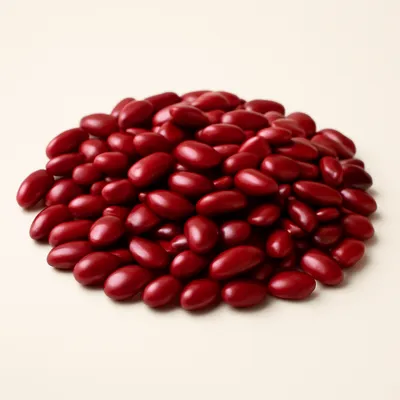


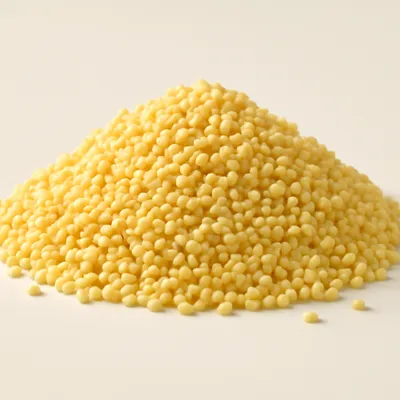

The practice has clear Song dynasty documentation: Meng Yuanlao's Dongjing Menghua Lu (《东京梦华录》, circa 1147) describes temples in the capital distributing 'five-flavor seven-treasure congee' (七宝五味粥) on the eighth day of the twelfth month; Wu Zimu's Southern Song Mengliang Lu (《梦梁录》) is where the term Laba Congee is formally established and its temple distribution confirmed. The Buddhist origin traces to Sakyamuni: after six years of asceticism, he accepted a bowl of milk-grain porridge from a shepherdess by the Nairanjana River, regained strength, and attained enlightenment under the Bodhi tree. The Qing imperial practice at Yonghe Palace in Beijing — where enormous cauldrons were filled with up to thirty ingredients to feed officials and commoners alike — fixed the capital's deep association with the festival.
Thick, deeply warming, and complex — each spoonful delivers a different combination of textures: the chew of barley, the melt of glutinous rice, the bite of red dates, the cream of cooked nuts. The sweetness is entirely from the ingredients themselves, with depth from long simmering.
Long, slow simmering causes complete starch gelatinization across multiple grain types and partial breakdown of legume cell walls, creating a thick, unified porridge base. Red dates and longan contribute reducing sugars that deepen the golden-brown color through gentle Maillard reactions at the bottom of the pot. Job's tears remain firm due to their higher proportion of resistant starch, providing textural contrast against the softer glutinous rice. The co-dissolution of multiple proteins and polysaccharides gives the broth a viscous, coat-the-spoon quality.
Variations
Northern China versions are predominantly sweet, finished with rock sugar or brown sugar. Southern regions — notably Guangdong and Fujian — also make savory versions with pork, preserved vegetables, and taro. The eight-ingredient number is symbolic; actual recipes vary from five to over thirty. Modern instant packets are widely sold, but traditional practice insists on a slow simmer of at least 90 minutes, often begun before dawn.
On the Palate
Where Laba Congee sits in the Chinese flavor cloud
Ingredients
Serves 6


How it's made
7 steps · 20 min active + 1 hour 10 min waiting
- 15 min
Soak red beans, mung beans, Job's tears, and lotus seeds separately in cold water for at least 4 hours or overnight.
- 25 min
Rinse and drain all soaked ingredients; combine in a large pot with 2.5 liters of water; bring to a full boil over high heat.
- 35 min
Skim any foam from the surface; add glutinous rice, millet, and peanuts; stir well.
- 460 min
Reduce to the lowest possible simmer; cover and cook for 60 minutes, stirring every 15 minutes to prevent sticking.
Watch outKeep it at the lowest simmer and stir every fifteen minutes — the thick porridge scorches on the bottom the moment it's left alone.
- 520 min
Add red dates, longan, and walnuts; continue simmering 20 more minutes until all ingredients are fully soft.
- 65 min
Stir in rock sugar to taste; simmer a final 5 minutes until dissolved and porridge is thick enough to coat the back of a spoon.
Watch outIt's ready when it coats the back of a spoon — remember it thickens more as it cools, so pull it a touch looser than final.
- 75 min
Ladle into bowls and serve hot; the porridge thickens further as it cools.
Archive tool suggestions — not reviewed
These legacy suggestions have not been evidence-reviewed and are not presented as required tools.



