The Teochew take on mung bean sweet soup, made with pre-husked beans—pale yellow, smoother in texture, and quicker to cook than whole-bean versions. Named 爽 for its clean, refreshing quality, the soup is a year-round staple in Teochew dessert shops, served warm in winter and chilled over crushed ice in summer.


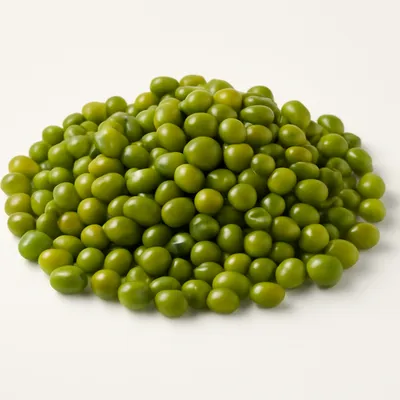
Peeled mung bean sweet soup is a staple of Teochew dessert culture, listed alongside 芋泥, 五果汤, and 姜薯汤 in Teochew sweet-soup inventories. The practice of husking mung beans before cooking is documented across southern Chinese culinary traditions; the husked form (绿豆仁) is favored in Teochew and Cantonese dessert making for smoother texture and faster preparation. The name 绿豆爽 distinguishes this light, grain-intact version from the thicker Cantonese 绿豆沙 (mung bean sand paste)—the key Teochew preference for clarity and restrained sweetness finds direct expression in the word 爽.
The broth is lightly sweet and clear, with small husked bean grains that are tender but individually distinct. The flavor is clean with a faint grassy sweetness from the mung beans. Served cold, each grain has a pleasant firm snap; served hot, they yield softly. The same soup tastes different depending on its temperature.
Mung beans are classified 甘寒 (sweet and cold) in TCM and associated with clearing summer heat. Modern analysis shows the seed coat concentrates the bulk of the beans' flavonoids and polyphenols; removing it reduces astringency and softens the perceived cooling intensity. Without the seed-coat barrier, water penetrates the bean starch more freely during soaking and cooking, enabling even gelatinization without a hard center. When the cooked soup is chilled, gelatinized starch undergoes retrogradation—partial recrystallization of amylose chains—which firms the beans, giving them a cleaner bite in cold form than in hot.
Variations
A strip of dried tangerine peel is a common addition for fragrance. Coconut milk stirred in just before serving creates a richer version. Chilled versions are sometimes poured over shaved ice with a drizzle of extra sugar syrup. In some Teochew households a small piece of kelp is added during simmering for a subtle oceanic note.
On the Palate
Where Peeled Green Bean Sweet Soup sits in the Chinese flavor cloud
Ingredients
Serves 4How it's made
6 steps · 1 hour
- 160 min
Rinse husked mung beans and soak in cold water for 1 hour. Drain.
- 25 min
Bring 1 liter of water to a boil. Add soaked beans and return to a vigorous boil.
- 32 min
Skim any foam from the surface. Add tangerine peel if using. Reduce heat to a gentle simmer.
- 430 min
Simmer uncovered for 25–30 minutes, stirring occasionally, until beans are fully tender but still hold their individual shape.
Watch outSimmer until the beans are fully tender but still hold their round shape — a clean bite means they're cooked through without collapsing into mush.
- 53 min
Add rock sugar and stir until completely dissolved. Simmer for 2 more minutes. Taste and adjust sweetness.
Watch outAdd the rock sugar only after the beans are soft and stir until fully dissolved — sugar added early firms the skins and slows them softening.
- 65 min
Serve warm immediately, or cool to room temperature, refrigerate, and serve chilled over crushed ice.
Archive tool suggestions — not reviewed
These legacy suggestions have not been evidence-reviewed and are not presented as required tools.



