Small taro corms simmered to silky tenderness in a blushing osmanthus syrup thickened with lotus root starch — a bowl of Nanjing autumn in its purest form. The rosy hue is no dye: a pinch of food-grade baking soda raises the pot's alkalinity and turns the taro's own anthocyanins from pale purple to a warm rose-pink as it heats, a transformation that defines the dish's identity as much as its flavor.
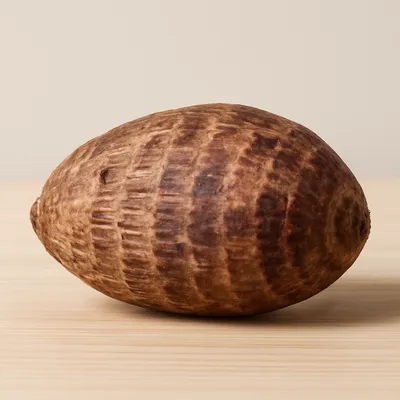


Nanjing street vendors have ladled out this warm sweet snack for centuries, traditionally in autumn when taro corms and osmanthus blossoms coincide. Residents trace the cultural habit of pairing osmanthus with sweet preparations to the poetic image in Qu Yuan's Chu Ci — dipping the ladle into the osmanthus wine. In the old city, vendors carried clay pots on shoulder poles from late September through early winter, exchanging bowls for a few coins. Local chronicles record osmanthus sweet-foods as a fixture of Nanjing's mid-autumn street life. Modern cold-chain distribution makes year-round taro available, though old Nanjing residents insist that fresh autumn corms carry an irreplaceable starchy fragrance.
Tender, starchy little taro pieces that melt against the tongue, cradled in a syrup that is sweet but not cloying, subtly floral from dried osmanthus, and silky from lotus root starch. The color is a blushing rose, and the warmth of the bowl carries the warmth of Nanjing's autumn lanes.
The pink-red color of authentic sweet taro in osmanthus syrup is direct anthocyanin chemistry. Taro corms contain purple-blue anthocyanins that are intensely pH-sensitive: in acidic conditions they appear red; in alkaline conditions they shift toward purple-red and deepen. Adding food-grade sodium carbonate raises the pot's alkalinity to roughly pH 8 to 9, shifting the anthocyanins into a warm rosy hue with no artificial coloring. Lotus root starch, stirred in at the end, gelatinizes in the hot syrup to produce the characteristic silky texture; its own mild opacity slightly amplifies the reddish visual effect.
Variations
Red beans are often added alongside the taro for textural contrast, a combination sometimes called red bean sweet taro. Some vendors stir in small glutinous rice balls for a heartier dessert. In winter when osmanthus season has passed, vendors use osmanthus sugar paste preserved from autumn instead of fresh flowers. A chilled summer version is sold occasionally, but purists insist the dish belongs to warmth.
On the Palate
Where Sweet Taro in Osmanthus Syrup sits in the Chinese flavor cloud
Ingredients
Serves 4How it's made
7 steps · 10 min
- 15 min
Peel taro corms and cut into bite-sized chunks; rinse under cold water to remove surface starch
- 215 min
Bring a pot of water to boil; add taro and cook 15 minutes until just tender when pierced with a chopstick
- 35 min
Drain; add 600ml fresh water and bring to a simmer; stir in rock sugar to taste
- 42 min
Add a small pinch of food-grade baking soda, about a quarter teaspoon; watch the syrup gradually blush pink
Watch outAdd just a pinch of baking soda and watch the syrup blush pink — the alkalinity turns the taro's own pigment rosy; too much and it goes murky purple and tastes soapy.
- 53 min
Stir in dried osmanthus flowers; simmer 3 more minutes until fragrant
- 62 min
Mix 2 tbsp lotus root starch with 4 tbsp cold water; pour slowly into the simmering pot while stirring constantly
Watch outPour the lotus-root starch slurry in slowly while stirring nonstop until it turns silky — dump it and it clumps into lumps.
- 73 min
Cook until syrup thickens to a silky consistency; serve hot in bowls
Archive tool suggestions — not reviewed
These legacy suggestions have not been evidence-reviewed and are not presented as required tools.



