A cooling summer dessert of set agar jelly, made from dried red seaweed dissolved in sweetened water and poured into moulds. Hong Kong versions range from clear sugar jelly to layered coconut milk and red bean variations.
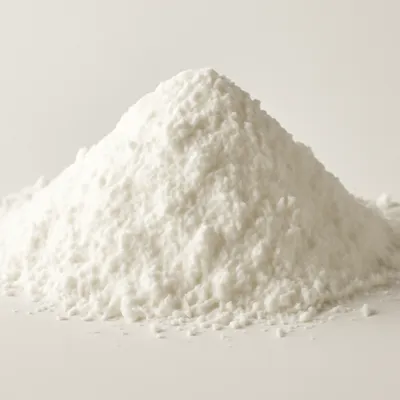


Stone flower seaweed (石花菜) has been harvested and traded along the Fujian and Guangdong coasts for centuries. The practice of dissolving dried agar strands in boiling water and cooling them into a gel was documented across the southern coastal provinces well before the twentieth century. By the early republican era, agar jelly was a fixture of Hong Kong street stalls and school tuck shops throughout the colonial period, sold in plain sugar, red bean, and coconut varieties. The dessert is known by distinct regional names across the Sinophone world: 菜燕 or 石花凍 in Taiwan, 石花凍 in Fujian, and 茉莉凍 in Zhoushan.
Silky and cool on the tongue, with a clean, faintly oceanic sweetness. The jelly shatters cleanly without the rubbery bounce of gelatin, dissolving almost instantly into a refreshing coolness—a texture that only agar, never gelatin, produces.
Agar is a sulfated galactan polysaccharide extracted from red algae cell walls. Unlike gelatin (which melts at body temperature), agar sets at roughly 35–40°C and does not re-melt below about 85°C, making it stable in hot weather. On cooling, the agarose fraction forms double-helix hydrogen-bonded networks that trap water in a firm but brittle gel, producing the characteristic clean-shattering bite rather than collagen-derived chewiness.
Variations
Coconut layer jelly: alternating layers of clear sugar agar and opaque coconut milk agar, the most visually striking version. Red bean agar: sweetened red beans suspended in the set jelly. Milk agar: evaporated milk replaces part of the water for a richer, ivory-tinted result.
On the Palate
Where Agar-Agar Jelly sits in the Chinese flavor cloud
Ingredients
Serves 6How it's made
7 steps · 30 min
- 130 min
Soak dried agar strands (大菜絲) in cold water for 30 minutes until softened; drain and gently squeeze out excess water.
- 210 min
Combine soaked agar with 1 litre of fresh water in a pot; bring to a gentle boil over medium heat, stirring continuously until fully dissolved.
Watch outStir until every strand of agar fully dissolves and the liquid runs clear — any undissolved bits leave hard specks and the jelly won't set evenly.
- 35 min
Add rock sugar to taste; reduce to a low simmer for 5 minutes until the liquid is completely clear and smooth.
- 43 min
For coconut layer version: divide liquid equally; stir coconut milk into one half and mix well.
- 58 min
Strain both liquids through a fine sieve; pour the clear sugar layer into moulds to one-third depth; cool at room temperature for 5–8 minutes until surface just sets.
Watch outLet the first layer surface just barely set before pouring the next — pour too soon and the two colors bleed into a muddy blur.
- 68 min
Gently pour the coconut milk layer over the semi-set base; allow to set again before adding any further layers.
- 7120 min
Refrigerate completed moulds for at least 2 hours until fully firm; unmould and cut into cubes to serve chilled.
Archive tool suggestions — not reviewed
These legacy suggestions have not been evidence-reviewed and are not presented as required tools.



