Mung beans simmered in lightly sweetened water until some burst open to cloud the broth—China's oldest and most universally consumed heatstroke remedy, drunk cold throughout summer from households to government offices and construction sites.


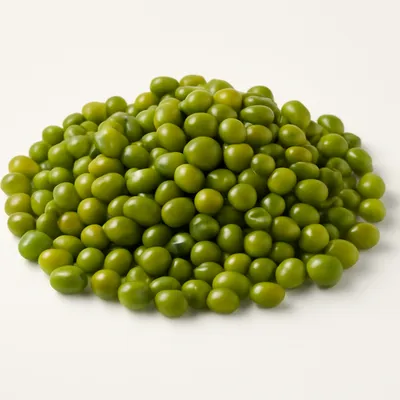
Mung beans (Vigna radiata) were domesticated in South Asia—most likely the Indian subcontinent—approximately 3,500 years ago, and were introduced to China in antiquity. Chinese cultivation is documented from the Han Dynasty onward, and their cooling properties came to be systematically recognized in classical medicine. By the Tang Dynasty, the physician Sun Simiao (孙思邈, 581–682 CE) formally documented their medicinal applications in Qianjin Yaofang (《千金要方》): mung beans clear heat and toxins, relieve summer-heat, and promote urination. By the Northern Song Dynasty, vendors reportedly sold 绿豆甘草汤 (mung bean with licorice root) as a popular cooling beverage on the night-market streets of Bianjing (汴京). The Ming Dynasty physician Li Shizhen's Bencao Gangmu (《本草纲目》, completed 1578, published 1596) systematized the record: 'Mung beans are sweet, cold, and non-toxic; they enter the heart and stomach meridians; they clear heat, resolve toxicity, relieve summer-heat, calm the spirit, supplement original qi, and moisten the skin.' In the Qing Dynasty, the writer Pu Songling (蒲松龄, 1640–1715) reportedly set out cauldrons of mung bean soup by the roadside for travelers, accepting strange tales in exchange—stories that became Liaozhai Zhiyi (《聊斋志异》). By the early twentieth century, government offices and welfare institutions were distributing mung bean soup to outdoor workers during summer heat waves, cementing its dual identity as folk remedy and public health measure.
Mildly sweet, faintly earthy, almost weightless—drunk cold on a blazing day, the cooling effect feels almost immediate. Beans are tender but hold their shape; some burst open to cloud the soup with a silky starch haze.
The cooling effect is both pharmacological and physical: mung bean skins are rich in flavonoids, primarily vitexin and isovitexin, with documented anti-inflammatory and antioxidant activity. Their high potassium content promotes urination and electrolyte replacement in heat conditions. The color chemistry: mung bean skin polyphenols stay greener in mildly acidic conditions (typical of soft southern water) but oxidize more readily under alkaline conditions (hard northern water), producing a reddish or brown hue—one explanation for the north-south color difference in the same dish. Covering the pot helps exclude oxygen and preserves the green; boiling uncovered accelerates oxidation. Studies suggest greener soup tends to retain more polyphenol content, though the practical gap is modest.
Variations
Guangdong adds pandan leaf (香兰叶) for floral fragrance, sometimes with sago pearls. Suzhou-style (苏式绿豆汤) layers mung beans with glutinous rice balls, lotus seeds, and agar jelly—a textural dessert rather than a drink. Some northern recipes add barley (薏仁) for additional cooling properties. Hong Kong versions use unsweetened, concentrated broth as a medicinal drink, with beans served separately. Rock sugar (冰糖) is the traditional sweetener; a pinch of salt added before serving enhances the mung bean flavor.
On the Palate
Where Mung Bean Sweet Soup sits in the Chinese flavor cloud
Ingredients
Serves 4How it's made
7 steps · 5 min
- 13 min
Rinse mung beans quickly under cold water; do not soak (soaking accelerates polyphenol leaching and dulls the green color).
Watch outJust a quick cold rinse — don't soak. Soaking leaches the skin's polyphenols and the soup loses that fresh green; you want the color bright, not dull.
- 23 min
Combine beans and cold water in a pot; use a ratio of roughly 1 part beans to 8 parts water.
- 35 min
Bring to a boil over high heat, uncovered; once boiling, cover the pot, reduce heat to a low simmer.
Watch outBoil it open uncovered first, then clap the lid on and drop to low — covering after the boil is what keeps the broth green instead of turning it muddy brown.
- 438 min
Simmer covered for 35–40 minutes until beans are completely tender and some have split open, releasing a silky haze into the broth.
Watch outIt's ready when the beans have burst their skins and a bean crushes to mush between your fingers — that split is what clouds the broth silky; firm beans mean it's not done.
- 52 min
Test doneness: press a bean between your fingers—it should collapse completely with gentle pressure while still holding shape in the soup.
- 63 min
Add rock sugar or white sugar to taste; simmer uncovered 2 more minutes, stirring to dissolve. The soup should be lightly sweet, not dessert-sweet.
- 7120 min
Cool to room temperature, then refrigerate; serve chilled. The soup keeps for 2 days.
Archive tool suggestions — not reviewed
These legacy suggestions have not been evidence-reviewed and are not presented as required tools.


