Red oil wontons rank among Sichuan's most recognizable street snacks: pork-stuffed wontons with nearly translucent skins, boiled and tossed — not in broth — in a layered sauce of chili oil, sesame paste, soy sauce, Sichuan pepper oil, vinegar, and garlic. Each wonton is coated in a glossy brick-red lacquer that delivers the signature Sichuan má-là tingle and heat in sequence. The name chaoshou (抄手, literally 'crossed arms') belongs exclusively to Sichuan and Chongqing; elsewhere in China the same dumpling is called huntun, yuntan, or bianshi. Chengdu's street stalls have served them from morning hours, ten to a bowl, unpretentious and resolutely local.



The name chaoshou derives from the folding technique: the square wrapper is folded diagonally into a right triangle, then each tip of the hypotenuse is pressed inward and overlapped at the center — hands folding across each other, like crossed arms. Wontons appear in Chinese texts from the Han dynasty, initially called hundun (混沌); they diffused through the Tang and Song periods into distinct regional identities. The Sichuan variant's defining inversion is the abandonment of broth in favor of sauce — where Cantonese yuntan rest in long-simmered stock, Sichuan chaoshou are finished in a bowl of chili oil emulsified with sesame paste and soy. Chengdu's Long Chaoshou (龙抄手), founded by Zhang Wuguang and named using a homophone of the Nonghua teahouse, became the city's benchmark establishment and helped embed this preparation in Chengdu's civic food identity.
Ten wontons arrive heaped in a bowl, slicked in red oil. The skins are nearly transparent — you can make out the round mound of pork inside. First bite: Sichuan peppercorn numbs the tip of the tongue before the chili heat arrives, followed by the deep, nutty undertow of sesame paste anchoring the finish. The filling is silky and springy. The sauce stays on the skin's surface rather than soaking through. One follows another without effort; the bowl empties before you've planned for it.
Two technical decisions define the dish. The wrapper must be thin enough to be nearly translucent — high-gluten dough rested until the gluten relaxes, then rolled very thin; skins too thick turn gummy once cooked and mask the filling. Red oil is not plain chili oil: hot oil at roughly 130–160°C is poured over dried chili flakes, physically extracting fat-soluble capsaicin into the oil; Sichuan peppercorn's hydroxy-alpha-sanshool, the compound responsible for the lip-numbing vibration, is extracted the same way. Sesame paste's oils and proteins act as natural emulsifiers, binding fat-soluble chili oil and water-soluble soy sauce into a cohesive sauce that coats each wonton evenly. In the filling, iced water is beaten into ground pork incrementally; each addition encourages the myosin proteins to cross-link, turning the mass pale and sticky — producing the smooth, springy bite that distinguishes well-made chaoshou from a crumbly one.
Variations
Beyond red oil, Chengdu stalls also serve original-broth chaoshou (原汤抄手) in a clear pork-and-poultry stock, and seafood-style (海味抄手) boosted with dried scallop and shrimp roe — all three styles typically listed together on established Chengdu menus. Chongqing's version favors hotter local chilies and reduces the sesame paste, making the sauce sharper and more direct. Contemporary upscale versions stuff wontons with fresh shrimp or black truffle, departing far from street tradition, which holds firm with pork and red oil.
On the Palate
Where Wontons in Red Chili Oil sits in the Chinese flavor cloud
Ingredients
Serves 4



How it's made
6 steps · 45 min
- 15 min
Mix wheat flour with a pinch of salt. Add warm water gradually, kneading into a smooth, non-sticky dough. Cover with a damp cloth and rest 30 minutes.
- 210 min
Roll the rested dough on a lightly floured surface to about 1mm thickness. Cut into 8cm squares. (Store-bought thin wonton skins are a practical substitute.)
- 310 min
Combine ground pork with minced ginger, finely chopped scallion, soy sauce, a splash of sesame oil, and salt. Beat vigorously while adding iced water tablespoon by tablespoon until the filling turns pale, sticky, and springy. Chill 15 minutes.
Watch outBeat the pork filling in one direction, adding iced water bit by bit, until it turns pale and springy — that's the protein binding so the filling stays juicy, not crumbly.
- 415 min
Place a wonton skin flat. Spoon a small mound of filling at the center. Fold diagonally into a right triangle, pressing edges firmly to seal. Press each tip of the longest edge inward and overlap them at the center — the classic crossed-arm chaoshou shape.
- 55 min
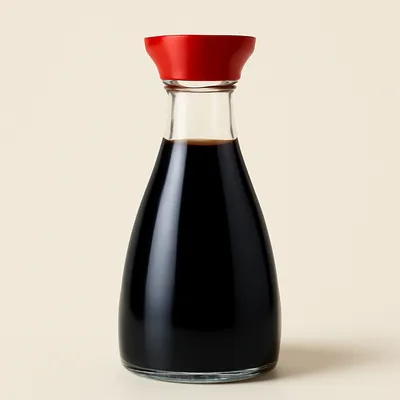
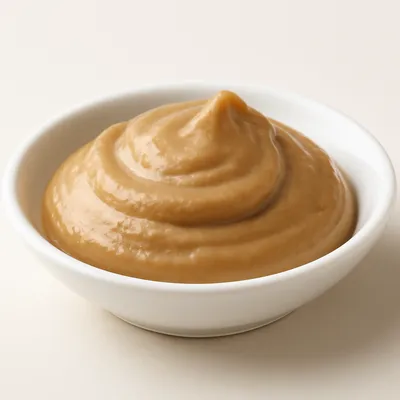
Prepare the sauce in each serving bowl: chili oil, soy sauce, sesame paste loosened with a little warm water, Sichuan pepper oil or finely ground Sichuan peppercorn, black vinegar, a pinch of sugar, and minced garlic. Stir to combine.
Watch outLoosen the sesame paste with warm water first until it pours — dumped in dry it clumps and won't coat the wontons.
- 610 min
Bring a large pot of water to a rolling boil. Cook wontons in batches until they float and the skins turn translucent, 3–4 minutes. Scoop directly into the sauce bowls with a slotted spoon. Scatter sliced scallion over the top and serve immediately.
Watch outScoop them the moment they float and the skins go translucent — a wonton left boiling turns gummy and the thin skin splits.
Archive tool suggestions — not reviewed
These legacy suggestions have not been evidence-reviewed and are not presented as required tools.


