
A Chengdu street snack of extra-thick, chopstick-width chewy wheat noodles, dry-dressed in sweet compound soy sauce, chili oil, garlic and crushed peanuts — no soup. Sweet first, then spicy, then garlicky, with a numbing tingle of Sichuan pepper running underneath.






The dish's exact origin and inventor are unknown, but its existence is documented early: the 1909 Chengdu gazetteer Chengdu Tonglan, compiled by Fu Chongju, already lists "sweet water noodles," sold in the mornings at restaurant halls for sixteen wen a bowl and from shoulder-pole carts for six — though the chronicle's own verdict was blunt, "too coarse, no flavor." That early version was plainer than today's; the heavy sweet-soy dressing that now defines it came later. The earliest carts are placed in the old imperial-city quarter of late-Qing Chengdu, and the snack had its heyday around the temple districts of the north city in the 1940s. The name is the received explanation for its sweet finish: it leans heavily on fuzhi soy sauce, a compound soy simmered down with sugar until it tastes sweet.
The noodle is the whole point: as thick as a chopstick, dense and springy, with a serious chew that the thin strands of other Sichuan noodles never have. The dressing clings to it as a glossy glaze, never a soup. Sweetness from the reduced soy comes first, then the chili-oil heat catches up, then raw garlic pushes through, and a faint numbing of ground Sichuan pepper threads underneath — all of it broken up by the crunch of crushed peanuts.
Two techniques carry the dish: the thick noodle and the reduced soy. The dough is made from a blend of high- and low-gluten flour, not high-gluten alone — pure strong flour would turn rubbery, so the blend tunes the chew. Rested dough is rolled thick and cut into strips about half a centimeter across, then each strip is stretched by hand at the pot, pulling the gluten into long aligned strands; the thick cross-section keeps the core dense and springy after boiling. They are cooked just to done — cold water splashed in once or twice to firm them — then cooled, often by fan, so the surface starch sets and the noodles stay chewy rather than mushy. The dressing's sweetness is not table sugar but fuzhi soy: plain soy simmered low and slow with brown or rock sugar and whole spices until a third or so of the water has boiled off. The reduction concentrates the soy and dissolved sugar into a viscous syrup that clings to the noodle, while the heat browns the sugars for a dark, glossy, rounded sweetness. Because the dressing is a concentrated glaze rather than a thin sauce, it coats the thick noodles directly — a broth would only dilute it and wash it off.
Variations
Shops tune the snack to taste: some fold in sesame paste, some leave it out; crushed peanut is near-universal but the amount varies; more or less ground Sichuan pepper dials the numbing up or down, and each stall strikes its own balance of sweet and heat. Authentic shop noodles run around half a centimeter, while home recipes tend a touch thicker, up to a centimeter. The sweet compound soy is not unique to this dish — it is the shared backbone of a whole family of Chengdu cold-dressed plates, the same fuzhi soy that seasons the city's sweet-soy dumplings, cold noodles and garlic-sauced pork.
On the Palate
Where Sweet Water Noodles sits in the Chinese flavor cloud
Ingredients
Serves 2

How it's made
7 steps · 50 min active + 40 min waiting
- 135 min
Make a firm dough from a blend of high- and low-gluten flour with water and a pinch of salt. Knead until smooth, cover, and rest at least 30 minutes so the gluten relaxes.
- 225 min
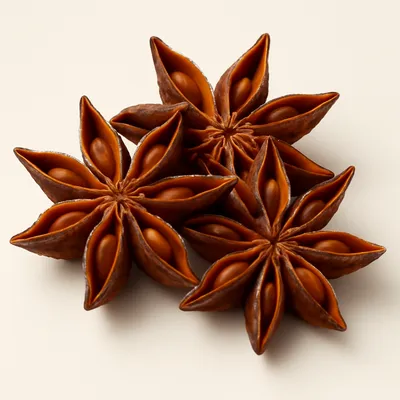
Meanwhile make the compound soy: simmer soy sauce with brown or rock sugar, star anise, cassia bark and a few aromatics over low heat until reduced by about a third into a glossy syrup. Strain and cool.
Watch outReduce the compound soy only to a glossy syrup thick enough to coat a spoon — boil it too far and it turns bitter and salty-sharp when cold.
- 36 min
Roll the rested dough into a thick sheet and cut it into strips about half a centimeter wide.
- 48 min
Take each strip by both ends and stretch it gently to a long thread, then drop into a pot of boiling water.
- 58 min
Boil until just cooked, splashing in cold water once or twice to firm the noodles, then lift out, cool, and toss with a little oil so they do not stick.
Watch outSplash in cold water once or twice as it boils to firm the noodles — pull them at just-cooked, they keep softening once dressed.
- 63 min
Build the dressing in the serving bowl: spoon in the compound soy, red chili oil, garlic paste and a pinch of ground Sichuan pepper.
- 73 min
Add the noodles, toss until every strand is coated, and finish with a generous scatter of crushed peanuts and toasted sesame. Serve at once, with no broth.
Watch outToss hard until every strand is coated in the compound soy before the peanuts go on — a dry, unevenly dressed bowl tastes bland.
Archive tool suggestions — not reviewed
These legacy suggestions have not been evidence-reviewed and are not presented as required tools.


