Hand-pressed buckwheat noodles from Wuji County, Shijiazhuang — pushed through the perforated iron plate of a traditional noodle press (饸饹床) directly into boiling water, then dressed with slow-simmered pork bone broth, chili oil, and black vinegar. Wuji's sandy loam once grew buckwheat widely, and the technique has been practiced locally for over three centuries. Listed as Hebei Province intangible cultural heritage in 2012.




Wuji County's sandy loam plains have been a productive buckwheat-growing zone in central Hebei for centuries. Local records suggest that the pressed-noodle technique arrived with migrants from Shaanxi during the upheavals of the late Ming and early Qing periods, when widespread famine drove population movement across northern China; those migrants brought with them the Guanzhong-style noodle press (饸饹床), which they adapted to Wuji's buckwheat harvest. By the Qing dynasty the dish had become the defining morning-market food of Wuji County, served in hot pork bone broth. In 2012 the Wuji buckwheat noodle-making craft was formally inscribed on the Hebei Province Intangible Cultural Heritage list, recognizing more than three centuries of continuous practice.
Dense, elastic cylinders with buckwheat's earthy, faintly nutty fragrance — not soft or yielding, but satisfyingly chewy and slippery under hot broth. The slight bitterness intensifies as the noodles cool, making this a dish to eat the moment it is served.
Buckwheat flour lacks the glutenin and gliadin proteins that form gluten in wheat flour, so the dough builds no stretchable protein network and cannot be rolled thin or hand-pulled. The noodle press (饸饹床) applies lever-amplified mechanical force to push the stiff buckwheat dough through circular perforations, producing uniform cylinders that drop directly into boiling water. Buckwheat starch gelatinizes rapidly in the boiling water, setting the noodle structure within seconds. Buckwheat is rich in rutin (a quercetin glycoside flavonoid), which accounts for the noodle's characteristic earthy-bitter note, brownish-gray hue, and antioxidant activity; its high resistant starch content also lowers the glycemic index relative to wheat noodles.
Variations
Spicy street version: topped with homemade chili oil, black vinegar, minced garlic, and sesame paste — the most common market preparation. Cold summer version: rinsed in cold water after pressing, dressed with sesame sauce, cucumber shreds, and vinegar.
On the Palate
Where Wuji Buckwheat Pressed Noodles sits in the Chinese flavor cloud
Ingredients
Serves 2


How it's made
6 steps · 20 min
- 115 min
Combine buckwheat flour with a small amount of wheat flour (about 10:1 ratio) and warm water; knead into a very stiff, smooth dough. Cover and rest for 15 minutes.
Watch outBuckwheat dough must be very stiff — too wet and it can't push through the press cleanly, the noodles break up.
- 260 min
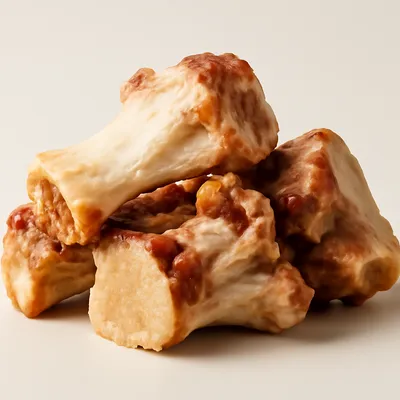
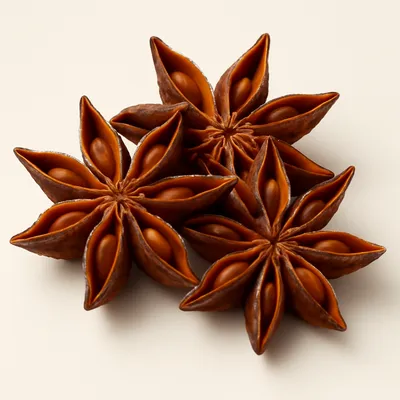
Prepare the pork bone broth in parallel: simmer pork bones with ginger, star anise, and soy sauce for at least one hour; strain and keep hot.
- 33 min
Bring a large pot of water to a full rolling boil. Fix the noodle press (饸饹床) firmly across the pot rim.
Watch outWater must be at a full rolling boil before you press — into lukewarm water the extruded noodles slump and stick together.
- 45 min
Divide the dough into hand-sized portions. Load each into the press and push the handle steadily downward so the dough extrudes through the circular holes directly into the boiling water.
Watch outPush the handle down steady and even so the strands drop straight in — jerk it and you get stubby uneven bits.
- 53 min
Cook the noodles for 2–3 minutes until they float and are fully cooked through. Scoop into individual bowls with a slotted ladle.
Watch outScoop them out just after they float — buckwheat has no gluten, over-boil and it goes to mush fast.
- 62 min
Ladle hot pork bone broth generously over the noodles, then add chili oil, minced garlic, chopped cilantro, and black vinegar to taste. Serve immediately.
Archive tool suggestions — not reviewed
These legacy suggestions have not been evidence-reviewed and are not presented as required tools.


