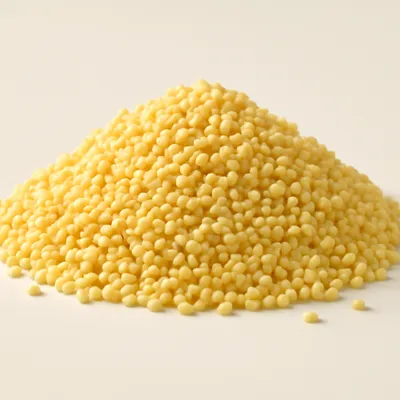
Nutty and slightly sweet, millet has a delightful texture that is both fluffy and hearty when cooked. This ancient grain offers a wholesome base for dishes, celebrating its versatility across cuisines.
Where it comes from
Millet, one of the oldest cultivated grains, has origins in Africa and Asia, where it has been a staple food source for millennia, contributing to traditional diets and agricultural practices.
In the kitchen
In cooking, millet is often used as a grain base in salads, pilafs, or porridge, providing a nutritious and gluten-free alternative. It can also be ground into flour for baking.
Across cuisines
Millet — the Sahel staple ground for boule (millet porridge ball), the universal Chadian carbohydrate. Source: Wikipedia (Chadian cuisine).
Millet — ground for tô (saghbo in Mooré language), the polenta-style cake that is the daily Burkinabé staple.
Millet — the drought-hardy grain ground into porridge (aseeda) and flatbreads. Source: Wikipedia (Sahrawi cuisine).
Nutrition (per 100g)
AI-estimated; model and run unavailable.


