
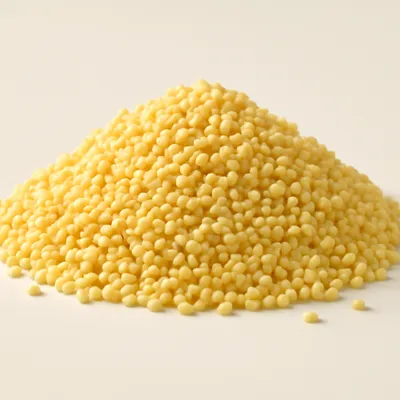
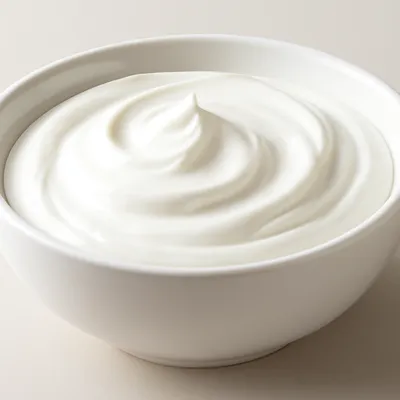



Kossam ak souna (literally 'sour milk and millet' in Pulaar — the Fulani language) is the central beverage-meal of the Fulani pastoralists who herd cattle across the Sahel from Mauritania through Senegal to Niger. The drink is the perfect product of pastoral economy: kossam is the over-soured fermented milk (a step past yogurt, almost cheese-cultured) from the household's cattle, and souna is the pearl millet that grows where other grains can't. The combination is hydrating, mildly nutritive, naturally probiotic, and uses ingredients that travel — the Fulani version of the cowboy trail-meal. Found across the Sahel; in Senegal it appears at Toucouleur-Fulani breakfasts and during the long hot Saint-Louis summer.
Stir kossam ak souna with a long spoon before each sip: the cold tangy fermented milk pulls up clusters of toasted millet pearls. The millet pearls pop with a slight chew between the teeth, releasing the toasted-grain note. The fermented-milk tang is sharp like 24-hour yogurt, with bright sourness and almost-cheese funk. A spoonful of sugar makes it dessert-adjacent; without sugar it's a savory Sahel-trail drink. Cooling, hydrating, the perfect 40°C-afternoon beverage.
Kossam's tang comes from extended bacterial fermentation — Lactobacillus plantarum and casei convert lactose to lactic acid past the yogurt stage, dropping pH below 4.0 and creating sharper flavor than commercial yogurt. The toasted millet's nutty notes come from Maillard browning of the grain proteins during dry-pan toasting; this is also what makes the millet less starchy-sticky and more pearly-individual when boiled. Combined, the drink is naturally probiotic, electrolyte-rich, and energy-balanced — perfect for hot-climate hydration.
Variations
Mauritanian Fulani version is barely sweet and uses raw camel milk fermented; Saint-Louis (Senegal) version uses cow milk and is slightly sweeter; modern Dakar restaurants offer a 'kossam smoothie' blended with mango or hibiscus; some versions add a drizzle of honey instead of sugar for Halal-friendly sweetening.
On the Palate
Where Kossam ak Souna sits in the Senegalese flavor cloud
Toast the millet dry until it smells nutty and popcorn-like before boiling — this Maillard step is what keeps the grains pearly and separate instead of a sticky starch clump.
Ingredients
Serves 4
How it's made
5 steps · 20 min active + 40 min waiting
- 18 min
Toast 200g pearl millet (souna or fonio, both work): in a dry pan over medium heat, toast 6-8 min, stirring constantly, until grains turn deep-golden and smell nutty-popcorn-like. Cool.
Watch outThe millet is toasted right when it smells like fresh popcorn and the grains look deep-golden, before any scorching.
- 222 min
Cook the toasted millet: add to a pot with 600ml water + 1 pinch salt. Bring to boil, reduce to simmer, cover and cook 15 min until grains have plumped and are tender but still chewy. Drain any excess water. Cool to room temperature.
Watch outCook only until the grains plump and turn tender-chewy; drain off any water clinging so they don't go soggy.
- 335 min
Make kossam substitute (since true kossam requires cattle ownership): in a bowl, mix 500g full-fat Greek yogurt with 200ml cultured buttermilk + 2 tbsp lemon juice + pinch of salt. Stir until smooth. Refrigerate 30 min to develop tangy sharpness.
Watch outAfter 30 min chilling the mixture should taste distinctly sharp-sour, not mild — that tang is the whole character.
- 43 min
Lightly crush or grind the cooled millet so each spoonful breaks into smaller bits (not powder — keep some texture). Divide millet into 4 tall glasses.
- 54 min
Pour the kossam mixture over the millet — about 200ml per glass. Add 1-2 tsp sugar per glass to taste (Fulani version is barely sweet; tourist version is sweeter). Stir gently. Serve cold with a tall spoon — the millet sinks, the drink layer floats on top.


