
Çay: strong black tea brewed in a stacked double teapot (çaydanlık), where a concentrate steeped in the upper pot is diluted to taste with hot water from the lower pot, then served in small tulip-shaped glasses. It is the everyday national drink of Turkey, poured from breakfast to late evening, and offered as a gesture of hospitality almost everywhere. Most of the leaf is grown on the rainy Black Sea slopes around Rize.
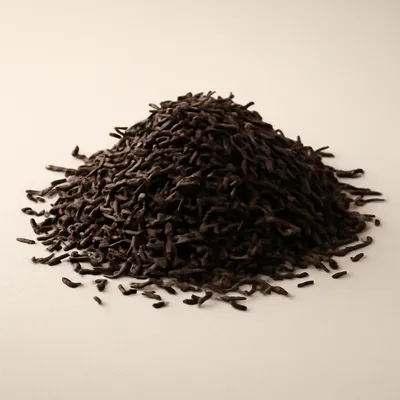



Although tea is now inseparable from Turkish daily life, it is a relatively recent national habit. Large-scale cultivation began only in the 20th century: after the loss of the coffee-producing Arab provinces and rising coffee prices, the early republic promoted tea-growing in the humid climate around Rize on the eastern Black Sea coast, and domestic production took off from the 1940s onward. Cheap, home-grown tea steadily overtook coffee as the everyday drink, and the stacked çaydanlık and tulip glass became fixtures of homes, workplaces and tea gardens. Turkey is today among the heaviest per-capita tea-drinking nations in the world.
Deep mahogany-red and clear in the glass, the color judged by eye through the thin tulip walls. Brewed strong it is brisk and astringent with a malty depth, softened by sugar dropped in cube by cube; taken açık (light) it is gentler and amber. Served scalding hot in a small glass held by the rim, it is sipped slowly rather than gulped. No milk.
The stacked çaydanlık separates concentration from dilution. Water boils in the lower pot; a generous dose of leaf steeps in the smaller upper pot with water drawn from below, producing a dark concentrate (demli). Each glass is then poured part concentrate, part fresh hot water from the lower pot, so every drinker dials the strength they want from the same brew. Keeping the concentrate hot but not boiling, and topping the lower pot through the day, lets a household serve glass after glass without re-steeping from scratch.
Variations
Strength is ordered by name: koyu (dark and strong), tavşan kanı (the prized clear bright red, literally rabbit's blood), and açık (light). Sugar is taken to taste, milk almost never. Folk additions in some regions include sage tea (ada çayı) and linden, though these are herbal infusions rather than true çay. Glass tea has also given way in some homes to convenience, but the çaydanlık remains the standard.
On the Palate
Where Turkish Tea sits in the Turkish flavor cloud
Ingredients
Serves 4How it's made
5 steps · 10 min active + 15 min waiting
- 18 min
Fill the lower pot with water and bring to a boil.
- 22 min
Add loose black tea to the empty upper pot, pour in some boiling water from below, and seat it on top.
- 312 min
Refill and return the lower pot to a low boil so steam keeps the upper pot hot; let the leaf steep into a dark concentrate.
Watch outKeep the concentrate on a low steam, never a hard boil — boiling it turns the brew flat and bitter, so it just needs the rising steam to stay hot.
- 42 min
Pour each glass part concentrate, then top up with hot water from the lower pot to the strength desired.
- 51 min
Serve scalding in tulip glasses with sugar cubes on the side; keep the pot going and re-pour as needed.
Archive tool suggestions — not reviewed
These legacy suggestions have not been evidence-reviewed and are not presented as required tools.


