A pale green, finely pressed sweet cake made from cooked and sieved mung beans, served cold. A classic Dragon Boat Festival confection prized for its melt-on-the-tongue texture and cooling properties.
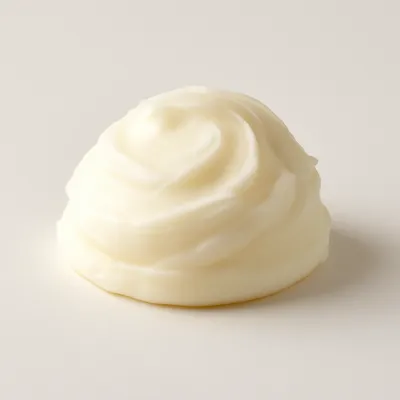

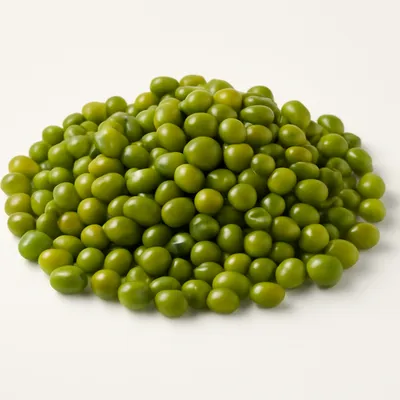
Mung bean preparations appear in Chinese culinary texts at least by the late Song or Yuan dynasty: the Wushi Zhongkui Lu (《吴氏中馈录》), attributed to a woman of the Wu family, lists bean-paste confections regarded as ancestors of the modern cake. The Dragon Boat Festival association solidified by the Ming dynasty, when seasonal cooling foods — mung beans, salted duck eggs, zongzi — were grouped as protection against summer heat and pestilence. The Qing dynasty saw regional styles diverge clearly: Suzhou and Yangzhou craftsmen incorporated lard for a richer, silkier crumb, while Beijing-style remained austere and oil-free, shaped in carved wooden molds with decorative relief patterns.
Dissolves on the tongue almost immediately — dry and powdery yet impossibly smooth, lightly sweet, with a clean, slightly earthy mung bean flavor. The Suzhou style adds a silkier, oilier richness; a faint floral note from osmanthus perfumes some versions.
Mung beans are approximately 50% starch and 25% protein. After steaming and sieving, the starch is fully gelatinized. Once dried by stir-frying and pressed into molds, the mass forms a compressed powder matrix that fractures cleanly and dissolves rapidly with saliva. The high starch-to-fat ratio in the Beijing style produces the characteristic powdery melt, while lard in the Suzhou style coats individual starch granules, lubricating them against each other and giving a softer, more cohesive texture with a longer finish.
Variations
Three canonical styles: Beijing (oil-free, driest, shaped in decorative molds), Suzhou (lard-enriched, smooth and moist), and Yangzhou (similar to Suzhou, slightly sweeter). Osmanthus-scented versions are widespread across the south. Modern iterations add matcha, purple sweet potato, or taro powder. Vietnamese husband-wife cakes and Indonesian versions with coconut milk are distant relatives.
On the Palate
Where Mung Bean Cake sits in the Chinese flavor cloud
Ingredients
Serves 8How it's made
7 steps · 1 hour active + 30 min waiting
- 15 min
Soak hulled mung beans in cold water for 4 hours; drain and steam over high heat for 25 minutes until fully soft.
- 225 min
While hot, pass the cooked beans through a fine-mesh sieve to produce a smooth paste; discard any fibrous residue.
- 315 min
Transfer paste to a non-stick pan; add sugar and lard (for Suzhou style) or omit lard (for Beijing style); stir-fry over low heat until the mixture pulls away cleanly from the sides of the pan.
Watch outStop stir-frying the moment the paste balls up and pulls cleanly off the pan sides — go further and it dries out and won't press into a clean cake.
- 410 min
Spread the paste on a tray; cool completely; sieve once more through a fine strainer to break up any lumps into a fine, even powder.
- 52 min
Add dried osmanthus flowers if using; mix gently without pressing to avoid releasing oil.
- 610 min
Press the mixture firmly into wooden or silicone molds; tap out onto a lined tray.
Watch outPress the powder in firmly and evenly — a loosely packed cake crumbles when you turn it out, a rock-hard one won't melt on the tongue.
- 730 min
Refrigerate for 30 minutes to firm up; remove and allow to come to cool room temperature before serving.
Archive tool suggestions — not reviewed
These legacy suggestions have not been evidence-reviewed and are not presented as required tools.


