Glutinous rice packed into a young coconut shell and slow-cooked for three to four hours until every grain absorbs the surrounding coconut milk and emerges translucent, pearl-like, and deeply fragrant. Cut into boat-shaped wedges and eaten at room temperature, it is one of Hainan's most iconic street snacks.



Coconut rice, also called 'coconut boat' in Hainanese, is a traditional farmhouse snack with roots said to stretch back to the Song dynasty, when islanders first learned to use the coconut shell itself as a cooking vessel. An older method involved sealing the filled coconut and baking it inside a lime kiln—a technique later replaced by slow boiling. In 2012 the dish was officially named one of Hainan's Ten Famous Snacks, chosen through public vote and expert panel, alongside Hainan rice noodles, Baoluo noodles, Lingshui sour noodles, and other provincial staples. The core tradition of cooking the rice inside the living coconut has been preserved intact across the centuries.
The first wedge yields a faint resistance before splitting cleanly along the grain—the rice is chewy yet yielding, the coconut flesh pressed against each piece still slightly firm. The dominant note is a warm, milky sweetness that breathes outward from deep within the rice, not a surface coating but a flavor baked entirely through.
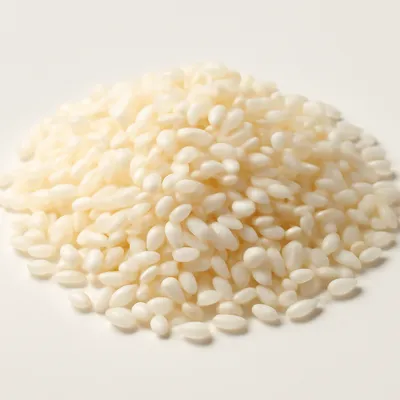
Glutinous rice is about ninety percent amylopectin—a highly branched starch that gelatinizes to a smooth, cohesive gel rather than the loose granules of ordinary long-grain rice. During the three-to-four-hour slow cook, coconut oil composed chiefly of medium-chain fatty acids, particularly lauric acid, penetrates the swelling starch granules, imparting a sustained aromatic richness. The sealed coconut shell builds mild internal steam pressure, ensuring even heat transfer throughout the dense rice mass. Where coconut flesh presses against cooked rice, the fat-rich meat dehydrates slightly, creating the characteristic hard-soft contrast.
Variations
In some villages, pandan leaves are tucked into the rice before sealing for a floral green fragrance. A savory variant adds salt-cured pork or dried shrimp to the glutinous rice. Urban vendors sometimes substitute coconut milk poured over sticky rice in a simple mold, though connoisseurs consider this a shortcut that sacrifices the shell's aromatic contribution.
On the Palate
Where Hainan Coconut Stuffed Rice sits in the Chinese flavor cloud
Ingredients
Serves 4How it's made
7 steps · 4 hours 20 min
- 110 min
Select young coconuts with full white flesh; cut a small lid from the top, pour the coconut water into a bowl and reserve, then trim the opening so rice can be poured in easily.
- 260 min
Rinse glutinous rice until the water runs clear, then soak in fresh water for one hour; drain completely.
- 35 min
Mix the drained glutinous rice with the reserved coconut water, white sugar, and a pinch of salt until evenly coated.
- 410 min
Spoon the seasoned rice into the coconut shell, filling to about three-quarters capacity to allow for expansion; pour in fresh coconut milk to just cover the rice, replace the coconut cap, and tie tightly with string.
Watch outFill the shell only three-quarters — the glutinous rice swells a lot and an over-packed coconut splits open as it cooks.
- 55 min
Place the sealed coconut in a deep pot; add cold water to reach two-thirds up the side and bring to a boil over high heat, then reduce to a gentle simmer.
- 6210 min
Simmer on low heat for three to four hours, checking the water level and topping up as needed, until the rice has expanded to fill the shell and is fully cooked through.
Watch outSimmer three to four hours and keep topping up the pot — done when the rice has swelled to fill the whole shell and cooked through with no chalky core.
- 710 min
Remove the coconut from the pot, allow to cool completely, then split with a knife into wedge-shaped boat pieces and arrange on a plate.
Archive tool suggestions — not reviewed
These legacy suggestions have not been evidence-reviewed and are not presented as required tools.


