A Hefei specialty inseparable from the legend of Song Dynasty judge Bao Zheng: lotus roots grown in the Bao River moat, their unusually large air channels and sparse nodes producing a crisper, near-fiberless flesh. Traditionally stuffed with glutinous rice, steamed until the lotus flavors the grain, then glazed with osmanthus-scented rock sugar — a dish as much about moral symbolism as it is about eating.



The Bao River (包河) runs through the southern outskirts of Hefei, and its origins as a moat trace to the Northern Song Dynasty. According to historical tradition recorded in multiple Hefei local chronicles, Emperor Renzong (宋仁宗, r. 1022–1063) rewarded the incorruptible official Bao Zheng (包拯, 999–1062) with a large tract of land — which Bao declined — and finally accepted a neglected stretch of silted moat. Bao Zheng cleared the silt and instructed his family to plant lotus and raise fish there, strictly forbidding commercial profit: 'only to benefit the people.' The wordplay enshrined the lotus root in local memory: in Chinese, 丝 (silk fiber) is a homophone of 私 (private gain), making 包河藕无丝 — 'the moat lotus has no fiber' — a pun for Bao Zheng's legendary selflessness. His descendants maintained a Mid-Autumn tradition of gathering to eat the lotus root with rock sugar, reciting '此藕无丝(私),冰心可鉴' — 'this root has no selfishness; a pure heart can be verified.' Two independent Hefei sources (澎湃新闻 2023; 新浪 合肥包公故里 travel blog) record this tradition.
Unlike the starchy, slightly floury lotus root common in markets, Baohe root is distinctly crisp and sweet-milky when eaten raw or barely cooked. The steamed glutinous rice version softens the lotus's crunch while absorbing its clean, slightly green, mineral quality — the osmanthus and rock sugar glaze adds floral sweetness without masking the root's own delicate flavor.
The 'stringless' quality of Baohe lotus root has a botanical explanation: the fibers visible when lotus root is broken are the stretched spiral thickening bands (螺纹导管) of the vascular xylem conduits — the same helical lignin-cellulose strands that act like compressed springs, elongating dramatically when the root snaps. The Baohe variety has larger air-channel pores and looser nodal tissue compared to common market varieties (such as the nine-hole Hubei cultivar), meaning the spiral conduits are more dispersed and less prominent, producing fewer visible fibers. The higher water content also dilutes the starch-to-water ratio, making the texture crisper. Glutinous rice (糯米) is high in amylopectin starch, which gelatinizes around 65–70 °C into a cohesive, chewy mass, while the tightly fitting lotus-root channels compress the rice as it swells, producing a dense, slightly sticky bite.
Variations
The simplest preparation is to eat the fresh lotus root raw or thinly sliced and chilled with a little sugar and osmanthus syrup (冰心藕片). Stir-fried with garlic and a splash of rice vinegar, it makes a bright, crunchy side. The festive Mid-Autumn version as described — steamed with glutinous rice — can be chilled and sliced to serve as a dessert course. Some Hefei restaurants pickle thin lotus slices in sweet vinegar brine, offering a lighter sour-sweet counterpoint.
On the Palate
Where Baohe Stringless Lotus Root sits in the Chinese flavor cloud
Ingredients
Serves 4How it's made
6 steps · 20 min
- 1120 min
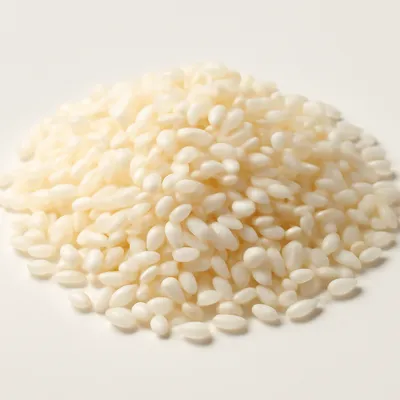
Rinse the lotus root sections. Cut a 2 cm cap off one end of each section and set aside (this will serve as the 'lid'). Soak glutinous rice in cold water for 2 hours, then drain.
- 210 min
Using a chopstick, push soaked glutinous rice firmly into each channel of the lotus root, tamping down to fill all air pockets. Replace the cap and secure with two toothpicks.
Watch outTamp the soaked rice into every channel with a chopstick until packed solid — air pockets left inside cook up hollow and uneven.
- 360 min
Place the stuffed lotus root in a steamer insert. Steam over high heat for 60 minutes, until a skewer passes through the root with no resistance.
Watch outSteam a full 60 minutes until a skewer slides through with no resistance — underdone, the rice inside stays chalky and hard.
- 410 min
While the lotus steams, prepare the glaze: melt rock sugar in a small saucepan with 60 ml water and a tablespoon of dried osmanthus flowers over low heat until lightly syrupy.
- 55 min
Remove the cooked lotus root; allow to cool slightly, then slice into 1.5 cm rounds. Arrange on a platter.
- 65 min
Pour the warm osmanthus rock-sugar glaze over the slices, ensuring the exposed rice faces upward to soak in the syrup. Serve at room temperature or chilled.
Archive tool suggestions — not reviewed
These legacy suggestions have not been evidence-reviewed and are not presented as required tools.


