A Lingnan classic cooked in a seasoned earthen pot — long-grain rice simmered over charcoal until a golden, crispy crust (鍋巴) forms at the bottom, then layered with Cantonese preserved sausage and duck. A winter staple of Hong Kong's open-air 大牌檔 stalls, now eaten year-round.





Clay pot rice traces to the Lingnan custom of slow-cooking rice with ingredients in earthenware — a tradition with deep roots in the region's long history of ceramic cookware. Writer Shèng Huì (盛慧) recorded in 《粵菜記》 that the technique descended from Shunde's 五更飯 (five-watch rice), originally prepared for postpartum women before dawn with catfish and coarse rice for their warming, restorative properties, the dish taking its name from the hour at which it was made. During the late Qing and early Republican era, the dish was renamed 煲仔飯 and spread across Guangdong, Hong Kong, and Macau. By the 1950s, charcoal-fired clay pot rice had become a defining offering of Hong Kong's 大牌檔 stalls. The 廣式臘味煲仔飯 craft was inscribed on Guangzhou Tianhe district's intangible cultural heritage list in 2024.
Scoop through the caramelized bottom crust, fat-glazed preserved sausage slices, and a soft upper layer steamed to translucent purity — three textures in one pot, unified the moment sweet soy sauce is poured tableside and fragrant steam billows up.
The clay pot's porous walls conduct heat slowly and retain it evenly, allowing starch in every grain to fully gelatinize without scorching the upper layers. As the water column drops, the pot base reaches temperatures above 200 °C, driving off residual moisture; the surface starch then dehydrates and undergoes Maillard browning with residual reducing sugars, producing the signature golden 鍋巴. Lard rendered from preserved sausage migrates downward during cooking, lubricating and flavoring the crust from within.
Variations
Preserved sausage and duck (腊味) is the definitive Hong Kong version; eel with black bean sauce (黃鱔豉汁) is a Guangzhou specialty; frog leg rice (田雞飯) is prized in Shunde; modern tea restaurants offer chicken-mushroom or pork-rib-taro variations all year.
On the Palate
Where Clay Pot Rice sits in the Chinese flavor cloud
Ingredients
Serves 2How it's made
7 steps · 20 min
- 120 min
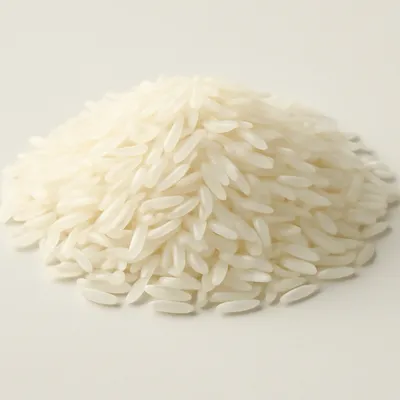
Rinse jasmine rice twice, soak 20 minutes, then drain. Rub the interior of a clay pot with a thin coat of lard.
- 210 min
Add rice and water (ratio 1:1.2) to the clay pot. Place over medium-high heat and bring to an uncovered boil.
- 38 min
Once the surface water is absorbed and steam vents appear through the rice (about 8 minutes), reduce to the lowest heat.
Watch outCut to low heat only once the surface water is absorbed and steam vents pock the rice — too early and the base scorches while the top stays wet.
- 410 min
Lay sliced preserved sausage and preserved duck evenly over the rice surface. Cover and cook 10 minutes.
- 51 min
Drizzle sesame oil around the inner edge of the pot. Briefly raise to high heat for 30 seconds to char and set the bottom crust.
Watch outDrizzle oil down the edge and blast 30 seconds of high heat to set the crust — that direct heat is what makes the golden 锅巴.
- 65 min
Turn off heat. Rest covered for 5 minutes. Meanwhile, mix light soy sauce, oyster sauce, a pinch of sugar, and sesame oil into a dipping sauce.
- 72 min
Pour sauce over the rice at the table. Use a spoon to scrape up the golden 鍋巴 from the bottom and mix through when serving.
Archive tool suggestions — not reviewed
These legacy suggestions have not been evidence-reviewed and are not presented as required tools.


