
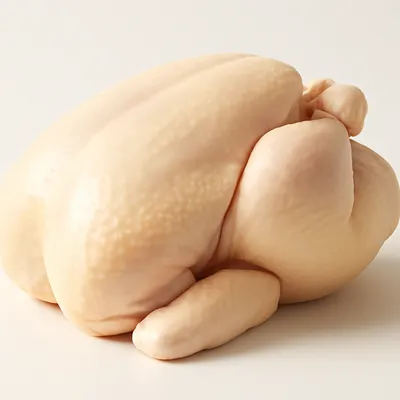
A New-Year reunion centerpiece from Ziyang county in Ankang, in the mountainous south of Shaanxi along the Han River. A large basin is layered with a whole free-range chicken, pig trotters chopped into rounds, hand-made egg dumplings (a thin egg wrapper folded around a pork filling), and winter and root vegetables such as lotus root, daikon, dried day lily, wood ear, and shiitake. The whole basin is then steamed over water for many hours — at least four, often six to eight — so that everything cooks into a single deep, clear, broth-laden basin where the flavors of meat and vegetable merge. It is set in the middle of the table as the final, anchoring dish of the New Year's Eve dinner, and is shared straight from the basin.





Ziyang steamed basin is the signature dish of Ziyang county in Ankang, southern Shaanxi, and is most strongly tied to Hanwang township on the Han River; its making technique was listed among Shaanxi's second batch of provincial intangible cultural heritage in 2009. The credible account of its origin is humble: it began as a pooled, communal dish of the Han River boatmen and trackers who worked the Ren and Han rivers, who would put together whatever meat and vegetables they had into one basin and steam it while they rested, and over time it grew into the centerpiece of the local New Year's Eve reunion table. A popular legend instead traces it back two thousand years to the Chu-Han era and the founding Han emperor Liu Bang, said to have camped and built an earthen wall along the Han River — but that ancient attribution is folk lore and is not documented, so the boatmen's account is the one to trust. The name simply describes the form: a whole banquet's worth of ingredients steamed together and served in one basin (盆).
The broth at the bottom is the heart of it: clear and golden, light on the tongue but profoundly deep, carrying chicken, pork, and the sweetness of long-steamed root vegetables all at once, with no single ingredient shouting over the rest. The chicken falls off the bone, the trotter is soft and sticky with skin, the egg dumplings are tender little pillows soaked through with the broth, and the lotus root and daikon are silky and sweet. Everything is hot, soft, and unified — this is a dish of melting textures, not contrast. Done well, the broth is clear and the layers hold their shape when served. Done badly, it is greasy and cloudy from too hard a heat, the chicken is dry, or it was rushed and the flavors never married into the single deep taste that is the whole point.
The dish is built on long, gentle steaming in a covered basin, which is really a slow, sealed extraction. Set over simmering water and steamed for many hours at around 100°C, the chicken bones, trotters, and skin slowly give up their collagen, which hydrolyzes into gelatin and bodies the liquid that gathers in the basin, while the vegetables release their own sugars and water — the basin makes its own broth as it cooks, drawing the separate ingredients into one shared flavor. Steam is chosen over a stovetop boil for two reasons: the gentle vapor heat keeps the chicken whole and the egg dumplings intact rather than churning them apart, and because nothing is stirred or boiled hard, the fat and protein are not emulsified into the liquid, so the broth settles clear and golden rather than turning into a cloudy, greasy soup. The cook starts on high heat to bring the basin up to steam, then drops to steady heat to hold that bare tremble for the hours needed; the egg dumplings are made first by setting a thin egg crepe in a hot ladle and folding it around minced pork, and they are layered in to finish soft and saturated. Time is the real ingredient — under four hours the flavors stay separate, while six to eight hours is what merges them.
Variations
As a home-and-banquet dish there is no single fixed recipe, and families differ in what goes into the basin: most keep the core of whole chicken, trotter, and egg dumplings, but some add rehydrated cuttlefish or other dried seafood, pork meatballs, soybean products, or seasonal mountain vegetables, and the vegetable layer shifts with what the household has put up for winter. Restaurant versions may set the chicken upright in the center for presentation and steam in a metal basin for a shorter run, while traditional home versions use an earthenware basin and the longest steam. It is a cousin in spirit to other steamed-together festival 'basin' and 'big-bowl' dishes of the region, but the Ziyang version is the one recognized as a provincial heritage craft.
On the Palate
Where Ziyang Steamed Basin sits in the Chinese flavor cloud
Ingredients
Serves 8


How it's made
7 steps · 1 hour 30 min
- 125 min
Clean a whole free-range chicken and a pair of pig trotters; chop the trotters crosswise into rounds and blanch the chicken and trotters to remove blood and scum, then rinse clean.
- 230 min
Make the egg dumplings: beat eggs, set a thin egg crepe in a hot oiled ladle, place a spoon of seasoned minced pork in the center, and fold the crepe over into a half-moon; cook just to set and repeat.
Watch outCook the egg crepe just to set before folding — over-cook it and the dumpling wrapper cracks and the pork filling leaks in the steam.
- 315 min
Prepare the vegetables: slice lotus root and daikon, rehydrate dried day lily, wood ear, and shiitake, and have them ready.
- 412 min
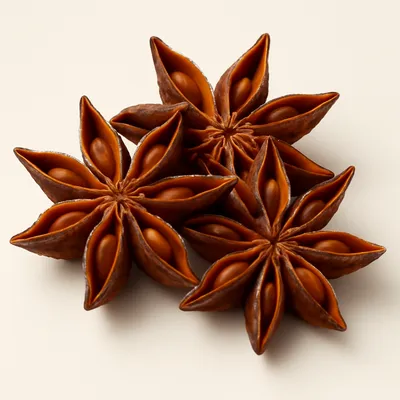
Layer a large basin: trotter rounds on the bottom, the whole chicken set in the center, then the egg dumplings and vegetables packed around, with star anise, cassia, ginger, and salt.
- 55 min
Add hot water or light stock to come partway up the basin, cover, and set it in a steamer over boiling water.
- 6450 min
Steam over high heat until it comes up to full steam, then steady heat for six to eight hours (at minimum four), topping up the steamer water as needed, until everything is meltingly tender and the broth is clear.
Watch outSteam gently for many hours, topping up the steamer water — the collagen slowly renders so the chicken and trotters turn meltingly tender and the broth stays clear.
- 75 min
Check the seasoning of the broth, scatter over coriander or scallion, and bring the whole basin to the table to share.
Archive tool suggestions — not reviewed
These legacy suggestions have not been evidence-reviewed and are not presented as required tools.


