
A dry-fried diced-rabbit dish from Zigong, Sichuan, eaten cold rather than hot. Boneless rabbit is cut into small cubes, marinated, then slow-fried in plenty of oil with dried chilies and Sichuan peppercorns until the meat is dehydrated, dark, and oil-saturated. It is cooled before serving and keeps for several days at room temperature. The flavor is dry, chewy, numbing-hot, and faintly sweet on the finish — distinct from spiced rabbit heads and from any wok-hot stir-fry. It is the signature dish of Zigong's salt-merchant cuisine (盐帮菜).
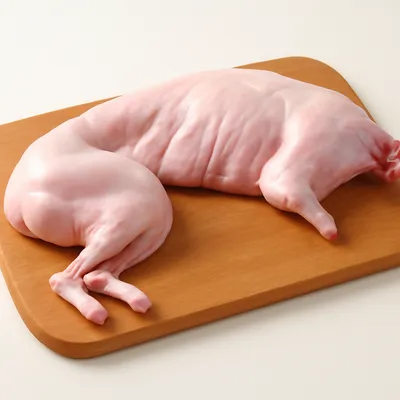




Cold-Eaten Rabbit grew out of Zigong's salt industry and has roughly a century of history; by the 1920s and 1930s its reputation in the Ziliujing district rivaled the local Fire-Whip Beef. In the Republican era it was also called Strong-Flavor Cold-Eaten Rabbit (浓味冷吃兔) and is traditionally credited to a Liu-surnamed tavern keeper at Denggan Dam in Ziliujing, who is said to have recorded the method in a private recipe book, the Fuxi Cai Lu (《釜溪菜录》). On 13 February 2014, China's former General Administration of Quality Supervision approved Geographic Indication protection for Zigong Cold-Eaten Rabbit.
The cubes are small — roughly 1.5 cm — dark, dry, and shrunk tight, with a deep chew that holds rather than falling apart. There is no sauce: each piece is coated in a thin film of chili oil, not sitting in it. Numbing Sichuan peppercorn arrives first, then the toasted heat of dried chili, then a faint sweetness underneath; the cold serving lets the spice settle into the meat. Done right it is dry and resilient with a clean finish. Done wrong it is either still damp and limp, or scorched bitter from a fire pushed too hard.
The dish is built on dehydration. Rabbit is lean and low in fat, so it is dry-fried (干煸) in generous oil over a falling heat — started hotter to seize and brown the cubes, then dropped to low so the meat slowly gives up its water without scorching. As moisture leaves, Maillard browning deepens the color and flavor, and oil moves into the dried muscle. Dried chilies and Sichuan peppercorns go in once the surface water is gone, fried at about a six-tenths-hot oil (六成热) until the chilies turn red-brown and aromatic but not black, releasing the toasted-pungent (糊辣) note; the peppercorns' hydroxy-alpha-sanshool drives the tingling numbness. Cooking the water out and sealing the meat in oil is also what preserves it: low water activity plus an oil barrier limits spoilage, so it keeps for days at room temperature — and the cooling lets the chili oil and spice infuse the meat, which is why it tastes better cold.
Variations
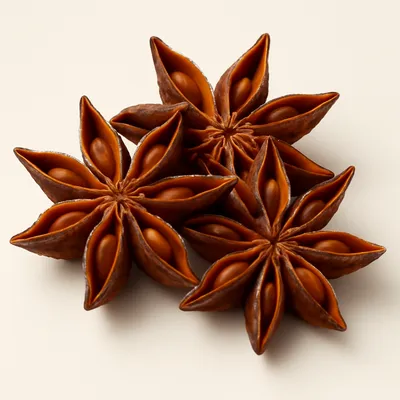
Cold-Eaten Beef (冷吃牛肉) is the same technique applied to beef and is equally a Zigong classic. Spicing varies: two-jingtiao chilies are used for fragrance (often with some seeds left in), bullet-head chilies whole for color and shape, and many cooks add star anise, cassia bark, bay leaf, and tsaoko for depth. Some versions blanch the rabbit first with ginger and peppercorn to remove gaminess, then dry-fry; others go straight to the wok. The chilies are often added in two stages — part fried with the meat, part near the end for color and crispness. Mass-produced vacuum-packed diced rabbit is now sold across China as a snack food.
On the Palate
Where Zigong Cold-Eaten Rabbit sits in the Chinese flavor cloud
Ingredients
Serves 4


How it's made
6 steps · 30 min
- 130 min
Debone the rabbit and cut it into small cubes about 1.5 cm; rinse and drain well, then marinate 20-30 minutes with salt, ginger, and a splash of Shaoxing wine.
- 210 min
Optionally blanch the cubes briefly in water with ginger and a few Sichuan peppercorns to remove gaminess, then drain and pat thoroughly dry.
- 38 min
Heat generous oil in a wok to about six-tenths hot, add the rabbit, and fry over medium heat until the cubes shrink, lose their surface moisture, and turn golden, several minutes.
Watch outFry the cubes over medium until they shrink, shed their surface moisture and turn golden — this drying-out is what gives the finished rabbit its chew.
- 46 min
Lower the heat and add dried chilies, Sichuan peppercorns, sliced ginger, garlic, and whole spices such as star anise and cassia; stir constantly so the chilies turn red-brown and fragrant without burning.
Watch outDrop the heat and stir the chilies constantly until they turn red-brown and fragrant — let them blacken and the oil goes bitter.
- 512 min
Season with salt and a little sugar, and continue dry-frying patiently over low heat until the meat is dry, dark, and saturated with oil, with no liquid pooling.
Watch outKeep dry-frying patiently over low heat until the meat is dark and oil-saturated with no liquid pooling — that's the sign it's fully dehydrated and will keep.
- 6150 min
Turn off the heat, let it rest in the wok a moment, then spread it out and cool completely to room temperature before serving; store any extra in its oil.


