
A modern Wuhan snack of duck necks braised in a heavily spiced, numbing-hot Sichuan-style master sauce, eaten cold as a beer-and-snack or street nibble. Cleaned duck necks are blanched, then simmered and steeped in a 卤水 loaded with dried chilli, Sichuan pepper, star anise, cassia and a long list of spices and medicinal aromatics, so the lean neck meat takes on a deep red, glossy, mala flavor. They are sold by the catty, chopped into chunks, and gnawed off the bone — the appeal is as much the work of chewing and sucking the spice-soaked meat from the vertebrae as the meat itself. Named for 精武路 in Hankou, where the snack took off, it spread from Wuhan across the whole country.


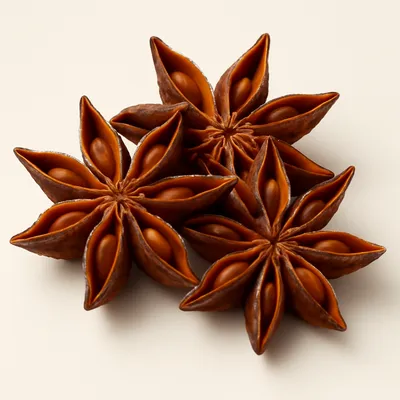


Jingwu duck necks are a recent dish, named for 精武路 in Hankou, Wuhan, where the snack first caught on; the Hubei provincial culture-and-tourism account states plainly that the snack 'is named because it originated on 精武路 in Hankou.' By the standard telling it appeared around the late 1980s to early 1990s, when cooks at the busy 精武路 restaurants — working from Sichuan-style braising methods — began braising cheap cuts like duck necks and tails in a spice-and-herb master sauce to give waiting diners and ball-game crowds something to gnaw on; several versions name different cooks and exact years (one common account credits a Sichuanese cook around 1991), so no single inventor is settled. What is documented is the speed of its rise: by the late 1990s the trademark was already being contested, and 精武路 grew into a 'duck-neck street' of dozens of shops. The braise is an adapted Sichuan 卤 — red chilli, Sichuan pepper, star anise and dozens of natural spices — and the dish has since spawned many regional offshoots nationwide.
Cold from the sauce, the neck meat is dark red, dense and lean, with almost no fat — it clings to the knobbed vertebrae and has to be torn and sucked off, which is the whole point. The first hit is salt and a deep braised-spice fragrance, then the chilli heat builds and the Sichuan pepper sets in with its creeping numbness, so your lips tingle and you keep reaching for the next piece. Done well the spice has soaked all the way to the bone and the meat is chewy-tender, not dry; the marrow in the split bones is savory and worth sucking out. Done badly the necks are bland because they were boiled fast instead of steeped, or rubbery and over-salted, or merely hot up front with none of the layered, lingering mala that makes them addictive.
The technique is 卤 — braising and steeping in a reusable spiced master sauce — not stir-frying. Duck neck is mostly lean meat over knobbly vertebrae, so it carries flavor only if it has time to absorb it: a blanch first removes blood and raw smell, then the necks are simmered in the 卤水 and, crucially, left to steep off the heat as the sauce cools, when the meat fibers relax and draw the salt, glutamates and fat-soluble spice compounds deep inside. The heat is built from two compounds working differently — capsaicin from dried chilli for burning heat, and hydroxy-sanshool from Sichuan pepper for the tingling numbness — the 麻辣 pairing. Star anise, cassia, fennel and the other aromatics give their fragrance to the oil and sauce; the master sauce deepens with reuse as it accumulates flavor batch after batch. The necks are cooked through but kept just firm, because over-boiling makes the little meat that there is dry and stringy.
Variations
Wuhan duck necks come in the original mala style and in milder 五香 (five-spice) and sweeter 酱香 versions for those who cannot take the heat. The same master sauce is used across a whole family of braised snacks sold together — duck wings, gizzards, hearts, feet and webs, lotus root, kelp knots and dried tofu — so the 鸭脖 stall is really a 卤味 stall. The idea spread far beyond Wuhan and seeded national brands and regional offshoots, including the chilli-forward Hunan 'Juewei'-style necks that grew out of it. Recipes differ in chilli-to-pepper ratio and in their list of medicinal aromatics, which each shop guards; some braise the necks whole and chop to order, others sell them pre-cut.
On the Palate
Where Jingwu Spicy Duck Necks sits in the Chinese flavor cloud
Ingredients
Serves 4



How it's made
7 steps · 40 min active + 50 min waiting
- 110 min
Trim and clean fresh duck necks, removing any remaining skin fat and glands, and rinse well.
- 28 min
Blanch the necks in boiling water with ginger and a splash of wine to draw out blood and raw smell, then rinse.
Watch outBlanch the necks with ginger and wine to draw out the blood and raw smell — skip it and that off-smell braises right into the master sauce.
- 312 min
Toast and bag the spices — dried chilli, Sichuan pepper, star anise, cassia, fennel, bay, sand ginger and the rest — and build a master sauce with stock, soy, sugar color, salt and a knob of ginger.
- 44 min
Fry chilli and Sichuan pepper briefly in a little oil to bloom them, then add to the master sauce and bring it to a gentle simmer.
- 525 min
Add the duck necks, simmer them gently until just cooked through, skimming as needed.
- 630 min
Turn off the heat and leave the necks to steep in the cooling master sauce for a good while so the flavor soaks to the bone.
Watch outTurn off the heat and let the necks steep in the cooling sauce a good while — this is where the flavor soaks to the bone; simmering alone will not season lean neck through.
- 76 min
Lift out, cool to room temperature, chop into chunks, and brush with a little of the spiced sauce-oil before serving.


