
A Chengdu street staple: hand-pressed sweet-potato starch noodles, slick and resilient, drowned in a red, mala broth simmered from pork bone and braised pork intestine. The bowl is laid over crunchy soybeans, mung-bean sprouts and pickled mustard, then crowned with soft-braised intestine and, in the classic version, jiezi — little knots tied from the small intestine. A flaky guokui flatbread is torn in alongside. Born in Baijia, the dish is the morning sound of old Shuangliu.


Pork-intestine noodles trace to Baijia, then a town of Huayang county in the Chengdu prefecture and today part of Shuangliu, where they are reckoned to date from the late Qing, the Guangxu reign. The first documentary trace is indirect: Fu Chongju's 1909 survey 'A Complete Account of Chengdu' lists, among the city's famous shops, the pork intestine of Kejia Lane and the water-noodles by the Guanyin pavilion at Qingshi Bridge — the two halves of the dish, already renowned. The thrifty street logic is plain enough: cheap offal and cheap starch noodles, braised and boiled into something that ate rich. The named houses — Baijia Gaoji, Zhuji, Fuxing — only opened storefronts in the 1980s, though several claim a family line of noodle-selling back to the late Qing.
The noodles are the point: pressed by hand from sweet-potato starch, they come out translucent, slippery, and springy with a clean bite, never mushy. The broth is dark red and openly mala — chili oil and Sichuan pepper over a long pork-bone-and-intestine stock — numbing on the lips, deep underneath. The braised intestine is tender with the faint clean funk that fans want; the jiezi knots burst with a little hot juice. Underneath, soybeans and pickled mustard add crunch and sour. You tear the flaky guokui and soak it until the edges go soft.
Everything hangs on the noodle and the stock. Sweet-potato starch is almost pure amylose-rich starch with no gluten, so the noodle is built by gelatinization, not dough: the starch is scalded into a stretchy paste, packed into a perforated ladle, and the cook pounds it with a fist so threads extrude through the holes and drop straight into boiling water, where they set on contact. That high-amylose network is what gives the cooked strand its glassy translucence and snappy, slip-not-stick chew — and why it holds in hot broth without turning to mush. The intestine is cleaned hard with flour, salt and vinegar to strip its musk, then long-braised until the collagen melts to gelatin and it turns soft. The broth is the third leg: pork bone simmered for hours frees gelatin and glutamates for body and savor, then chili oil and toasted Sichuan pepper carry the mala — capsaicin for the burn, hydroxy-alpha-sanshool for the buzzing numbness on the lips.
Variations
The split is whole-intestine versus jiezi: a plain feichangfen tops with sliced braised intestine, while the classic maojiezi adds the knotted small-intestine pieces. Some shops thicken with a starch-slurry into a clingier broth; others keep it thin and clear-red. The near-universal partner is guokui — most famously the flaky lard-pastry Juntun guokui — torn into the bowl. Common add-ins are extra crunchy soybeans, mung-bean sprouts, pickled mustard and pea-tips. The dish belongs to a Sichuan family of starch-noodle bowls; the same sweet-potato noodle turns up dry-tossed, and a halal cook will build the broth on beef instead of pork.
On the Palate
Where Pork-Intestine Noodles sits in the Chinese flavor cloud
Ingredients
Serves 4

How it's made
8 steps · 1 hour active + 3 hours waiting
- 115 min
Clean the pork intestine hard: rub repeatedly with flour, salt and vinegar to strip the slime and musk, rinse, then blanch with ginger and scallion and rinse again.
Watch outRub the intestine hard with flour, salt and vinegar until the slime and musk are gone — under-cleaned, it stays funky and ruins the bowl.
- 290 min
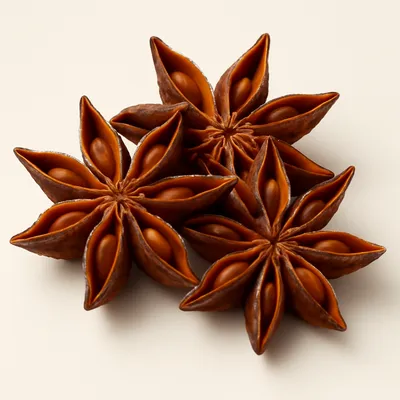
Braise the intestine: simmer with ginger, scallion, star anise, dried chili and a splash of cooking wine until tender and soft, then cut into pieces; tie some lengths of small intestine into jiezi knots and simmer those too.
- 3150 min
Build the stock: simmer pork bones (and the intestine braising liquor) over low heat for two to three hours into a rich, savory broth; keep it hot.
- 410 min
Make the noodle paste: scald sweet-potato starch into a stretchy, lump-free paste; load it into a perforated ladle.
- 510 min
Press and set the noodles: pound the ladle with your fist so threads drop into boiling water; once they float, lift with chopsticks and shock in cold water.
Watch outPound the threads into boiling water and lift them once they float, then shock cold — that sets the glassy, snappy chew.
- 65 min
Assemble: lay crunchy soybeans, mung-bean sprouts and pickled mustard in the bowl; reheat the noodles in the hot broth in a bamboo strainer and tip in.
- 73 min
Dress and top: ladle over the red broth, spoon on chili oil and toasted ground Sichuan pepper, crown with the braised intestine and jiezi, and finish with scallion.
- 82 min
Serve at once with a flaky guokui flatbread torn in alongside.


