From the mountain-pass town of Jiange in northern Sichuan, Jianmen Tofu is a National Geographic Indication product prized for a texture no other Chinese regional tofu can match: snow-white, fine-grained, and so resilient it can be pulled into strips, shaved into sheets, or braised for an hour without losing its form. The secret lies in the coagulation method — fermented sour whey rather than brine or gypsum — and in the local small-grain yellow soybeans pressed with limestone spring water from the Jianmen peaks. The classic home preparation pan-fries thick slabs until the exterior crisps to a thin golden shell, then braises them in doubanjiang, Sichuan peppercorn, and dried chili until the sauce soaks into every crust edge while the interior stays tender and springy. A saying follows it wherever it goes: to visit the great pass without eating Jianmen Tofu is to have made a wasted trip.
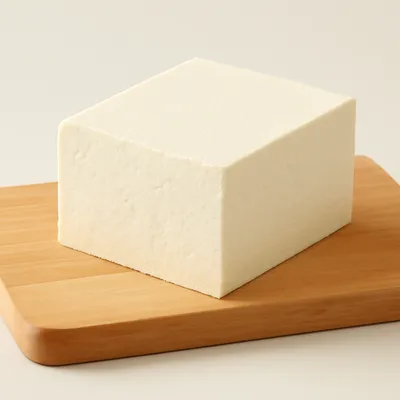



Jianmen Tofu comes from Jiange County, a mountain district historically serving as the strategic gateway between the Sichuan basin and the north. A legend recorded in local gazetteers traces it to the Three Kingdoms period: after General Jiang Wei of Shu Han retreated to the Jianmen Pass following defeat by Wei forces, local people ground soybeans and fed the exhausted troops with tofu while the bean pulp went to the cavalry horses — three days later the army recovered enough strength to break through. This story is framed as 相传 (it is said) because primary-source corroboration is thin; what is more firmly established is that Jiange's role as a major waypoint on the Sichuan-Shaanxi road created a constant stream of travellers, and tofu — cheap, protein-dense, and easily made in large quantities — became the region's signature hospitality food over centuries. The 剑门豆腐宴 (Jianmen Tofu Banquet), which builds more than 200 distinct dishes from a single batch of this tofu, grew from that tradition into one of Sichuan's most celebrated single-ingredient feasts. In 2011 the tofu was officially granted National Geographic Indication Protected Product status, recognising the irreplaceable combination of local soybeans, Jianmen limestone spring water, and the traditional fermented-whey coagulation technique.
Two layers, two textures: the pan-fried exterior arrives as a thin golden-brown shell with a faint snap of resistance and a caramel note where the protein crisped against the oil. Then the interior — pale, gently elastic, closer in density to a firm custard than to the wobbly softness of ordinary silken tofu, with a clean bean fragrance and almost no raw edge. The doubanjiang sauce has wicked into the crust from the braise: a brick-red wash of fermented-paste umami, with Sichuan peppercorn's citrus-electric tingle arriving ahead of the chili heat, both accumulating slowly across the meal. The block does not collapse in the bowl; you can lift a whole slab with chopsticks, and it holds. One of the few tofu dishes where the tofu itself, not the sauce, is the reason to order it.
Jianmen Tofu's signature resilience comes from how it is set. Conventional Chinese tofu uses either brine (magnesium chloride, 卤水) — which produces a firm but slightly granular curd — or gypsum (calcium sulfate, 石膏) — which yields a smoother, higher-moisture block. Jianmen Tofu uses fermented sour whey (酸浆, suān jiāng): the liquid collected from a previous batch of tofu, allowed to ferment until it develops lactic and other organic acids. When this acidified whey is stirred slowly into hot soy milk, the falling pH causes the soy proteins to aggregate gradually and evenly rather than snapping together in large ionic clusters. The resulting gel network is finer and more uniform, trapping less free water — finished cakes run under 40% moisture versus 80–90% for silken tofu, with protein content more than double the national standard. Higher protein density at lower hydration means greater structural resilience: the block can be sliced into ribbons, braised for an extended time, and still hold its shape. The local small-grain soybeans, grown in the limestone-gravel soils of the Jianmen Mountains, carry elevated native protein content; the spring water, filtered through karst limestone, is low in impurities and carries trace calcium that further assists the gel structure. Terrain and technique reinforce each other in a way that is genuinely difficult to replicate outside the region.
Variations
The 剑门豆腐宴 (Jianmen Tofu Banquet) builds more than 200 distinct dishes around this one tofu — the largest single-ingredient banquet tradition in Sichuan. Signature set pieces include 崩山豆腐 (dry-fried over fierce heat until the exterior shatters into a crust, finished with Sichuan pepper-salt), 锦囊豆腐 (tofu hollowed out, stuffed with minced pork, steamed), and three-kingdoms-themed 八卦豆腐 and 草船借箭 (cut and arranged in battle-array formations). Mapo Tofu made with Jianmen Tofu instead of standard silken tofu delivers a noticeably different result — the blocks hold their shape in the red-oil sauce, and the texture contrast with the ground meat is more defined. The same tofu made into cold dressed slices (凉拌豆腐) — dressed with chili oil, soy sauce, and crushed garlic — is the simplest way to taste the ingredient without any cooking interference.
On the Palate
Where Jianmen Tofu sits in the Chinese flavor cloud
Ingredients
Serves 4


How it's made
7 steps · 10 min
- 15 min
Cut the tofu into slabs about 1.5 cm thick and roughly 6 cm square. Lay on a clean cloth or paper towels and press gently to remove surface moisture; let rest 5 minutes.
- 26 min
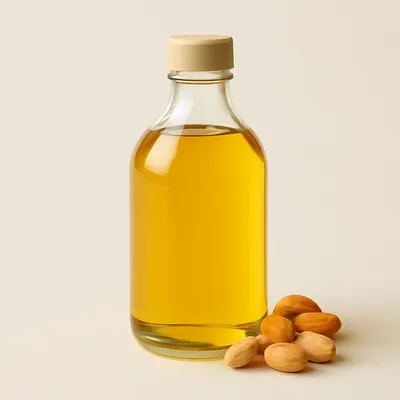
Heat peanut oil in a flat-bottomed wok or heavy skillet over medium-high heat until the oil shimmers. Add the tofu slabs in a single layer — do not move them. Pan-fry until the underside is golden and lightly crisped, about 3 minutes. Carefully flip each piece and fry the other side, another 3 minutes. Transfer to a plate.
- 33 min
Pour off most of the oil, leaving about 2 tablespoons in the wok. Reduce to medium heat. Add ginger and garlic; stir-fry until fragrant, about 30 seconds. Add the doubanjiang and stir-fry, breaking it up, until the oil turns brick-red and the paste smells cooked and no longer raw, about 2 minutes.
Watch outFry the doubanjiang until the oil turns brick-red and the paste smells cooked, not raw — this red oil carries the whole flavor; rush it and it tastes flat and beany.
- 41 min
Add the dried chili and Sichuan peppercorn; stir another 30 seconds to bloom the spices in the oil.
- 51 min
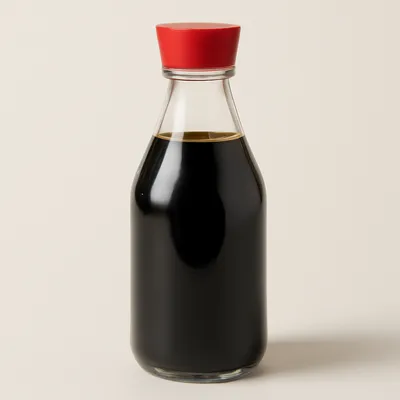
Return the pan-fried tofu to the wok. Add soy sauce, dark soy sauce, sugar, and enough water to come halfway up the tofu slabs. Bring to a gentle boil, then reduce heat to a steady simmer.
- 67 min
Braise uncovered for 5–7 minutes, occasionally spooning the sauce over the top surface of the tofu, until the tofu has absorbed the seasonings and the sauce has reduced to a glossy coating.
Watch outBraise uncovered, spooning sauce over the top, until it reduces to a glossy coat that clings to the tofu — watery sauce means it hasn't soaked in yet.
- 72 min
Taste and adjust salt. Scatter sliced scallion over the top and serve immediately with steamed white rice.


