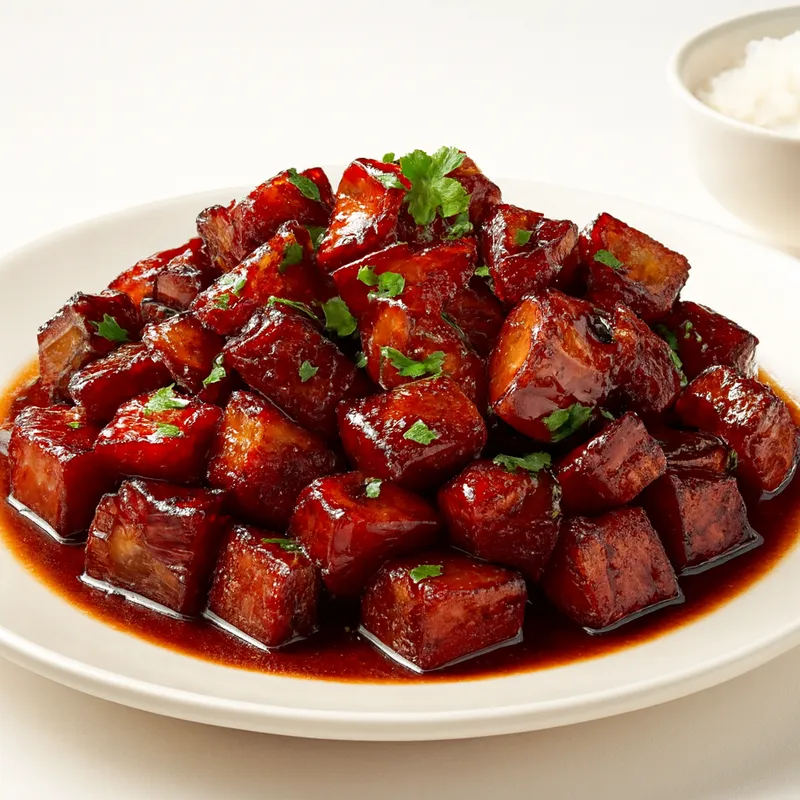
Whole rabbit heads braised in a numbing-spicy brine of Sichuan pepper and dried chili, then dressed in red chili oil — a Chengdu late-night nibble eaten by hand. Rabbit is a signature Sichuan protein, and the head, taken apart and sucked clean, is its most beloved street form.
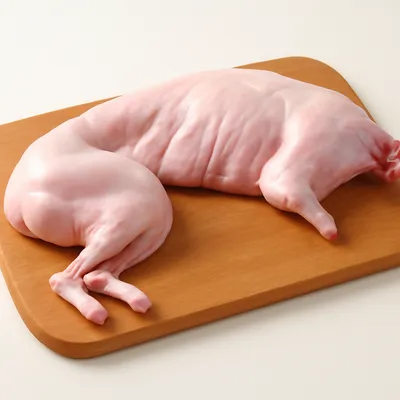



The mala rabbit head was popularized by the Shuangliu Laoma brand in Shuangliu, a district of Chengdu, in the 1990s. The widely told account credits a woman named Shi Guiru, who ran a spicy hot-pot stall and dropped rabbit heads into the pot to cook for her son; customers saw him relish them, asked to try, and the snack caught on — and because everyone called her laoma ("Ma"), the shop took the name. No exact founding year is recorded, and details of the story vary, so it is best held as a popular origin rather than documented fact. What is well attested is the appetite behind it: Sichuan, and Chengdu above all, eats the overwhelming share of China's rabbit — by reckonings repeated across Chinese food media, the country eats on the order of five hundred million rabbit heads a year, of which Sichuan accounts for two to three hundred million, with the province consuming well over half of China's rabbit meat and the great majority of its heads.
There is little meat on a head, so the pleasure is in the working for it. The numbing-spicy brine has soaked deep into every crevice: the cheek meat is soft and falls away at a suck of the lips, the tongue is tender with a slight chewy snap, and the brain pulled from the back of the skull is silky, like custard or the softest tofu. You suck the bones clean, fingers and lips slicked red with oil, and the Sichuan-pepper numbing rises and lingers long after. It is unhurried, communal food — a snack to drink beer over, deep into a Chengdu night.
The technique is the lu braise. A head is mostly skull and bone with thin meat hidden in its crevices, so the seasoning has to be driven in: it simmers gently in a spiced brine for the better part of an hour, then steeps off the heat for ten to twenty minutes, the residual warmth carrying the flavor deeper into the meat and the brain than active boiling would. The mala is built in two layers — Sichuan pepper for the numbing and dried chili for the heat, dissolved into the brine, then reinforced at the end with a toss of red chili oil and ground or infused pepper (the five-spice version simply skips the chili). The numbing itself comes from hydroxy-alpha-sanshool in Sichuan pepper, an alkylamide that fires the skin's touch receptors to produce a tingling, near-vibrating sensation rather than a true taste. The heads are blanched first from cold water with ginger, scallion and wine to draw out blood and skim away the off-odors, so the long braise reads as clean mala rather than gamy. The head suits the method precisely: lots of bone and surface, little meat, cheap and abundant where a province eats rabbit by the hundred million — and a heavy spiced brine that turns an offcut into something worth sucking clean.
Variations
There are two canonical styles: the red, numbing-spicy mala version, and a milder five-spice braise that leaves the chili out. To eat one, you split the head along the jaw, take the soft cheek meat and the tongue, hook out and suck the brain from the back of the skull, then work the lean meat around the eye — leaving only the long nasal cavity, said to taste poor. The originating brand, Shuangliu Laoma, and many imitators now sell vacuum-packed heads shipped across the country and online. Rabbit head is its own thing — distinct from Sichuan's other rabbit preparations like dry-spiced cold-eaten rabbit, hand-shredded rabbit and the cured silk-wrapped rabbit, all of which use the body, not the head.
On the Palate
Where Spicy Rabbit Head sits in the Chinese flavor cloud
Ingredients
Serves 4


How it's made
7 steps · 35 min active + 55 min waiting
- 120 min
Rinse the rabbit heads and soak them in cold water to draw out the blood, changing the water once or twice; pluck off any stray hairs.
- 212 min
Blanch from cold water with ginger, scallion, a splash of cooking wine and a few Sichuan peppercorns. Bring to a boil, skim off the grey foam, then drain and rinse the heads clean.
- 310 min
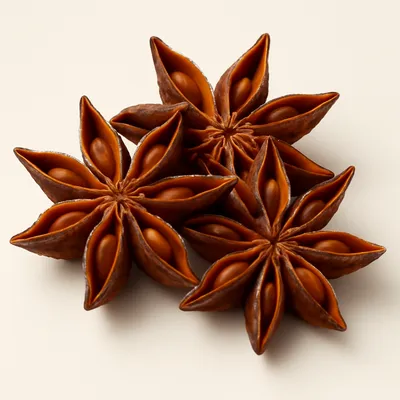
Build the brine: gently fry doubanjiang and dried chilies in oil, then add water, star anise, cassia bark, Sichuan peppercorns, ginger and scallion and bring to a simmer.
- 445 min
Slide the heads into the brine and braise over low heat for about 45 minutes, keeping them just submerged.
Watch outKeep the braise at a low simmer, heads just submerged — a hard boil toughens the thin meat before the flavor soaks in.
- 515 min
Turn off the heat and let the heads steep in the brine for 10 to 20 minutes so the flavor soaks deep into the meat and brain.
Watch outOff the heat, let them steep 10-20 minutes — that residual warmth drives the flavor deeper into the meat and brain than boiling would.
- 64 min
Lift the heads out. For the mala version, toss them while warm with red chili oil and ground Sichuan pepper; for a five-spice version, skip the chili.
- 72 min
Scatter with toasted sesame and serve warm or at room temperature, to be taken apart and eaten by hand.
Archive tool suggestions — not reviewed
These legacy suggestions have not been evidence-reviewed and are not presented as required tools.