Pork brine-soaked, air-dried for five hours, then slow-roasted over orchard-wood for four: the skin erupts golden, the fat turns ivory, the lean stays crimson — Boshan's signature three-color cut, fragrant with apple and persimmon wood smoke, a technique documented since the Northern Wei.


The roasting technique's antecedents appear in 《齐民要术》 (ca. 544 CE), authored by Jia Sixie (贾思勰), a Northern Wei agricultural official from Yidu in Shandong, which records炙法 for large pork cuts. The modern Boshan form crystallized around 1905 (清光绪三十一年) when Qian Zhenyuan (钱振远), owner of 远兴斋 in Boshan, discovered by accident that pork skin blistering during frying released extraordinary fragrance. He reduced cut size and replaced common firewood with orchard wood — apple, persimmon, jujube, Sichuan pepper tree. By the Republic era more than ten roast-pork establishments had opened in Boshan. The dish received the Ministry of Commerce Quality Special Products Award in both 1982 and 1984.
The skin shatters at a tap, releasing a puff of orchard-wood smoke; underneath, the lean is still rosy and moist, barely touched by the heat. The fruit-wood smoke — apple, persimmon — lingers in the mouth long after the last slice.
Air-drying for 4–5 hours reduces surface moisture, ensuring rapid crust formation when roasting begins. Fruit-wood combustion (apple, persimmon, jujube) generates guaiacol and syringol — aromatic phenol compounds responsible for the distinctive orchardwood smoke that differentiates Boshan roast from standard pork. The subcutaneous fat layer acts as a thermal insulator, protecting the lean meat from drying during the 3.5–4 hour roast. The 'three-color' cross-section (golden skin, ivory fat, crimson lean) is both visual marker and proof of correct technique.
Variations
Traditionally served hot with raw cane sugar and fresh lotus leaves for wrapping — the sweetness cuts the richness. Cold leftovers are plated as hors d'oeuvres or incorporated into 博山豆腐箱 (Boshan stuffed tofu) as a flavoring component. A summer variant pairs cold-sliced roast pork with mung-bean noodles and poached egg in a light broth.
On the Palate
Where Boshan Roast Pork sits in the Chinese flavor cloud
Ingredients
Serves 8How it's made
7 steps · 1 hour active + 9 hours 30 min waiting
- 120 min
Scald and scrape the pig; split into two sides; debone and discard legs, belly section, and leaf fat; cut the remaining meat into strips 15–30 cm long and 5 cm wide.
- 240 min
Rub thoroughly with coarse salt and crushed Sichuan peppercorns; submerge in brine for 40 minutes.
Watch outRub coarse salt and crushed peppercorns in hard and brine the full time — under-salted strips stay bland deep in and won't keep.
- 3300 min
Hang the strips in a cool, ventilated place to air-dry for 4–5 hours until the surface is completely dry to the touch — essential for crisp skin formation.
Watch outAir-dry the strips until the surface is completely dry to the touch — any surface moisture and the skin steams instead of blistering into crisp crackling.
- 410 min
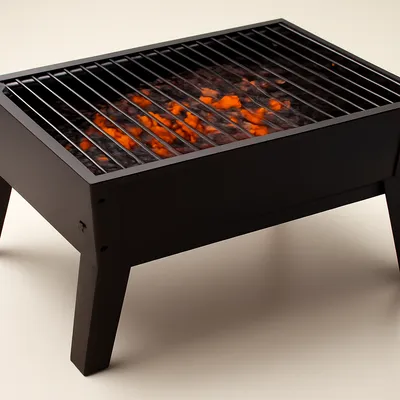
Build a sustained fire in the roasting oven using orchard-wood only: apple, persimmon, jujube, or Sichuan pepper tree; pine and cypress are strictly forbidden for their resinous off-flavors.
Watch outBurn only orchard wood — apple, persimmon, jujube; pine and cypress resin taint the meat with an off-flavor.
- 5240 min
Arrange the pork strips in the oven; roast for 3.5–4 hours, turning periodically, until the skin erupts into golden blisters and the fat layer turns translucent ivory.
Watch outRoast until the skin erupts into golden blisters and the fat turns translucent ivory — that blistering is the mark of crisp skin done right.
- 615 min
Remove and rest for 15 minutes; slice crosswise to reveal the three-color cross-section: golden skin, ivory fat, crimson lean.
- 75 min
Serve hot wrapped in fresh lotus leaves with raw cane sugar; or cool and plate cold as hors d'oeuvres; or incorporate into braised dishes.
Archive tool suggestions — not reviewed
These legacy suggestions have not been evidence-reviewed and are not presented as required tools.