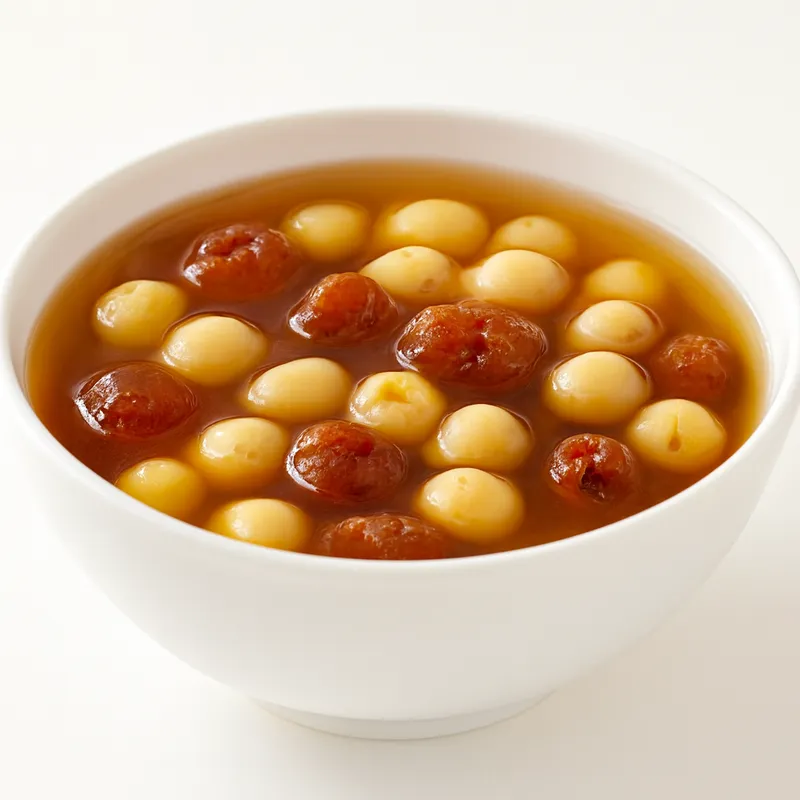
Deep-fried sweet potato cubes coated in molten rock-sugar caramel — chopsticks pull meter-long sugar threads off each piece at the table.
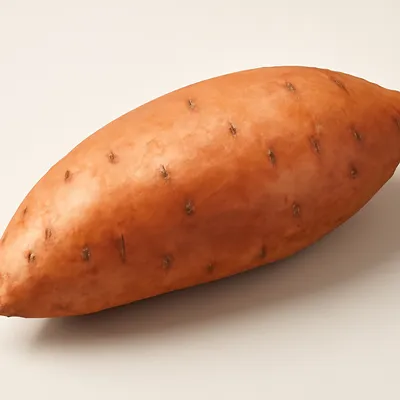


「拔丝」 dishes — pulling sugar threads — entered the Lu (Shandong) banquet repertoire by the Qing dynasty as the closing sweet, then traveled north into Liaoning, Jilin, Heilongjiang and became Northeast Chinese banquet standard, often the dish that ends a wedding table. Sweet potato is the cheapest, most foolproof base; apple, banana, taro, and yam (拔丝山药) all use the same caramel technique.
「拔丝」 entered the Lu (Shandong) banquet repertoire by the Qing as a closing sweet, then traveled north into Liaoning, Jilin, Heilongjiang. Sucrose has a 160-170°C window — past it, the syrup goes bitter; stir it, and seed crystals make the whole pot grainy.
Lift one piece, threads stretch a meter behind your chopsticks, and the table laughs. Dunk it in ice water for two seconds and the sugar shell hardens to glass; bite through it and the inside is soft, hot, sweet potato. The contrast — glass shell, molten core — is the whole point. If the sugar is grainy, the cook stirred. If it's brown and bitter, the wok went past amber.
Sucrose hits a narrow pulling window around 150-160°C where the syrup turns clear, thick and amber but hasn't yet broken into bitter caramel; pushed past ~160°C it darkens fast, and near ~190°C it caramelizes into bitter brown sugar-color. Stirring introduces seed crystals and the whole pot goes grainy (recrystallization). The two-stage fry matters because a single fry leaves the potato shell soft, and soft shell absorbs the syrup instead of holding it on the surface — no shell, no thread.
Variations
Shandong banquet uses apple (拔丝苹果); Liaoning weddings standardize sweet potato; Heilongjiang households reach for yam (拔丝山药) when winter cellars run low.
On the Palate
Where Caramel-Pulled Sweet Potato sits in the Chinese flavor cloud
Ingredients
Serves 4How it's made
6 steps · 15 min
- 18 min
Peel 500g yellow-flesh sweet potato (red-skin variety pulls cleaner threads than purple). Cut into 3cm rolling-knife pieces — irregular faces give more surface for the caramel to grip. Soak 5 minutes in cold water to wash starch off, drain, pat completely dry.
- 26 min
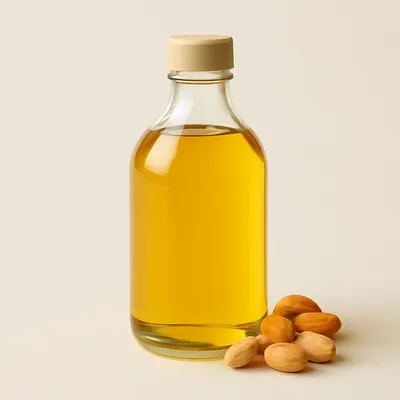
Heat 600ml peanut oil to 160°C. Fry sweet potato 4 minutes until edges go gold and a chopstick slides through with slight resistance. Lift out, raise oil to 190°C, drop them back in for 30 seconds — the second fry sets a hard shell that won't sog under the syrup.
Watch outGive it a second fry in hotter oil until the shell goes hard and taps crisp — a soft shell drinks the syrup instead of holding threads on the surface.
- 31 min
Brush a flat plate with a thin film of oil so the finished pieces won't fuse to it. Set a bowl of ice water on the table — diners will dunk pieces to harden the sugar shell. Pre-warm a serving plate.
- 44 min
In a clean dry wok, melt 150g rock sugar with 2 tbsp water on low — no stirring, only a gentle swirl. The syrup goes through clear → big bubbles → small dense bubbles → pale amber. Pull off heat the second the color shifts amber, around 165°C. Past 175°C it goes bitter.
Watch outMelt the sugar with only a gentle swirl, no stirring, and pull it off heat the instant it turns pale amber — stirring seeds crystals, and past amber it scorches bitter.
- 51 min
Tip the hot sweet potato into the caramel. Toss fast — 15 seconds maximum — until every piece is glossy and threads form when you lift one with chopsticks. Slide onto the oiled plate, separating pieces.
Watch outTip the potato in and toss fast, fifteen seconds tops, until each piece glistens and lifts a thread from your chopsticks — dawdle and the caramel sets before it coats.
- 60 min
Serve immediately alongside the ice-water bowl. The dish dies in 3 minutes — caramel either crystallizes (grainy) or absorbs humidity (limp) past that window.
Watch outServe the instant it's done with the ice water — the dish dies in three minutes as the caramel either grains up or goes limp.