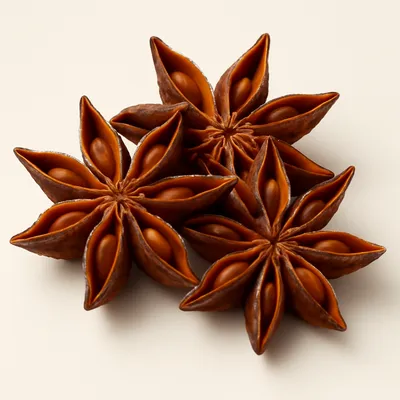
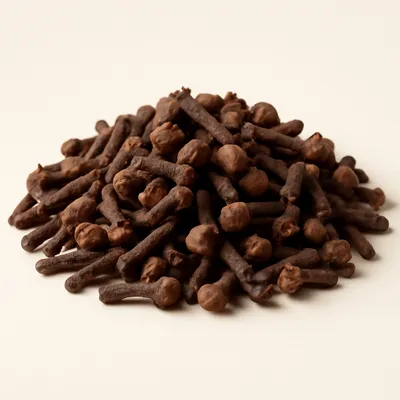
Linyi's iconic breakfast soup: a thick, peppery amber broth of long-simmered whole hen and plump wheat kernels, perfumed with star anise, cassia, cloves, and dried tangerine peel, then thickened with a flour slurry. Served scalding hot with sesame oil and vinegar at the table, its four hallmarks are heat, spice, fragrance, and richness.




The character 糁 appears in the Warring States text Mozi: 'Confucius, impoverished between Chen and Cai, had vegetable broth without grain mash (藜羹不糁),' attesting to a thick grain-broth tradition over 2,400 years old. The Linyi-specific version, according to local historical accounts, was brought during the Yuan dynasty by a Hui Muslim couple who migrated from the capital (modern Beijing) to Yizhou (modern Linyi), carrying a thick spiced meat broth initially called 肉糊 ('meat paste'). By the Ming dynasty it had been renamed 糁 and standardized as the city's canonical morning meal. Linyi 糁 is inscribed on the Shandong Intangible Cultural Heritage List.
The soup arrives nearly bubbling — a glossy, amber broth thick enough to coat the spoon. Wheat kernels give a gentle, starchy chew; strands of chicken yield easily. A strong wave of white pepper tingles on the tongue before you even swallow, followed by warming spice notes that linger through the whole bowl.
The whole hen is simmered for 2.5–3 hours; collagen from the bones and connective tissue hydrolyzes to gelatin at sustained temperatures of around 70–80 °C, building body and the characteristic golden sheen in the broth. Wheat kernels release starch that further thickens the soup during cooking; the flour slurry added at the end raises viscosity rapidly by gelatinizing starch granules at around 65 °C. White pepper's piperine activates both the heat receptor and the irritant receptor on oral mucosa, generating a sharp, penetrating warmth that outlasts the burn of capsaicin — the reason a cold-weather bowl feels warming long after the last sip.
Variations
Beef shank 糁 (牛肉糁) is the most common alternative, simmered with the same spice set; mutton 糁 (羊肉糁) is considered the richest version with a pronounced tallow note, especially popular in winter. Chicken drumstick 糁 made from thighs rather than a whole bird produces a fattier, more unctuous bowl. Modern Linyi restaurants offer a lighter 'clear' version with reduced flour slurry for those who prefer a thinner broth.
On the Palate
Where Linyi Sa Meat Soup sits in the Chinese flavor cloud
Ingredients
Serves 6


How it's made
7 steps · 55 min active + 11 hours waiting
- 1480 min
Rinse wheat kernels; soak in cold water overnight (at least 8 hours); drain and set aside.
- 220 min
Clean the whole hen; place in a large pot with cold water to cover generously; bring to a full boil and skim all foam thoroughly, then reduce heat to low.
- 3180 min
Add the soaked wheat kernels and spice bundle (star anise, cassia bark, white cardamom, dried tangerine peel, white angelica root, fennel seeds, cloves, dried ginger); simmer on low heat for 2.5–3 hours until the chicken falls freely from the bone.
Watch outSimmer low and slow until the chicken slips clean off the bone — rush it on high heat and the broth turns greasy and thin instead of golden and full-bodied.
- 415 min
Remove the whole chicken; pull meat into thin shreds; discard bones and spice bundle; keep the broth simmering gently.
- 510 min
Mix flour with cold water in a ratio of about 1:5 into a smooth, lump-free slurry; stream slowly into the simmering broth while stirring constantly until the soup reaches a thick, spoon-coating consistency.
Watch outStream the slurry in a thin thread while stirring nonstop until the soup coats a spoon — dump it in and it seizes into flour lumps.
- 65 min
Return shredded chicken to the pot; season generously with salt, a splash of soy sauce, and a large amount of white pepper; stir well and taste.
Watch outGo heavy on the white pepper — its sharp warmth is the soul of this soup, meant to bite deeper and linger longer than chili heat.
- 75 min
Ladle into bowls; offer sesame oil and rice vinegar at the table for self-seasoning; serve alongside fried crullers or sesame flatbread.
Archive tool suggestions — not reviewed
These legacy suggestions have not been evidence-reviewed and are not presented as required tools.


