A pale ivory broth of pure dissolved rice starch—made by simmering long-grain rice for hours until every grain dissolves, then straining away the solids. What remains is silky, faintly sweet, and so smooth it coats the tongue like satin. Served alone as a restorative, or kept simmering at the table as a hotpot base for raw seafood.



The technique of simmering rice to dissolution and straining out the grain solids belongs to the broader Lingnan porridge tradition shared across Shunde, Guangzhou, and Teochew kitchens. The earliest documented practitioner in Shunde was a housewife surnamed Ou Yang (欧阳氏) in the mid-to-late nineteenth century, who developed the filtering method in domestic practice and taught it to her two daughters, Ou Yang Huansong and Ou Yang Huanyan. The sisters emigrated to Singapore as self-combing women (自梳女) seeking their own livelihoods and carried the technique into the overseas Lingnan community; the porridge-water craft was later inscribed on Shunde's list of intangible cultural heritage. Teochew cooks, who prize clarity and restraint—principles summarized as 清 (qīng)—adopted the strained broth as a hotpot base precisely because it would not overwhelm raw seafood: each round of dipping deposits umami from fish, crab, and oyster into the broth, so that by the meal's end the remaining porridge has become a layered consommé in its own right.
The broth is weightless yet coats every corner of the mouth with gentle starch. It tastes of pure rice—slightly sweet, faintly grassy—without a single grain to interrupt the silk. As a hotpot broth, it grows richer and deeper with every ingredient dipped into it, ending the meal as something entirely different from how it began.
Rice starch consists of amylose and amylopectin. During prolonged simmering at 98–100 °C, heat and water cause starch granules to swell and rupture—gelatinization—releasing amylose and amylopectin chains into the liquid as a true colloidal suspension. Straining removes intact grain fiber, bran proteins, and un-gelatinized fragments, leaving only the dissolved starch colloid. Although low in viscosity, this colloid achieves exceptional mouthfeel because long-chain starch polymers adsorb to tongue epithelium far more readily than free water, producing a satin sensation. The milky-white opacity of the finished broth arises from light scattering by suspended starch particles in the 50–200 nanometre range—the same Tyndall effect that makes whole milk opaque.
Variations
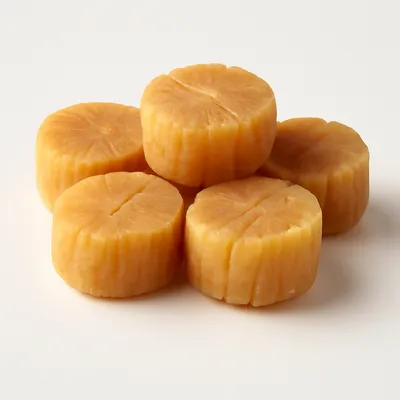
The strained broth serves as base for Teochew seafood hotpot (涮海鲜), where thin-sliced raw fish, crab, and oysters are dipped tableside. Some kitchens add a few dried scallops (瑶柱) during the long simmer for added depth. A lighter version using jasmine rice rather than starchier indica varieties yields a more translucent, floral broth. A small dish of minced garlic in soy sauce or Puning fermented bean sauce is a common accompaniment.
On the Palate
Where Rice-Free Porridge sits in the Chinese flavor cloud
Ingredients
Serves 4How it's made
7 steps · 1 hour 5 min
- 165 min
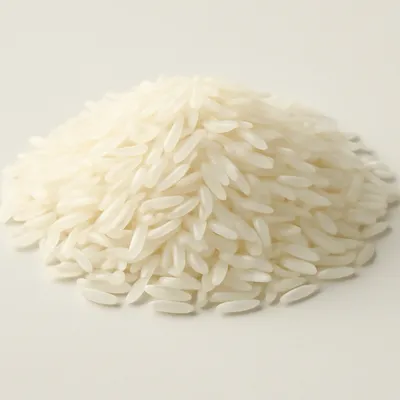
Rinse 200 g long-grain jasmine rice three times under cold water until the water runs clear; soak in cold water for 1 hour, then drain.
- 210 min
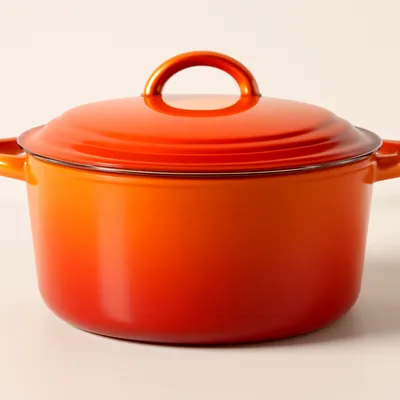
Place the rice in a clay pot or heavy-bottomed saucepan with 2.5 litres of cold water; bring to a rolling boil over high heat, skimming any foam.
- 3210 min
Reduce to the lowest possible simmer; cover with a heavy lid and cook for 3–4 hours, stirring from the bottom every 30 minutes to prevent settling and scorching.
Watch outStir from the bottom every half hour so it doesn't settle and scorch — a stuck bottom taints the whole pot with a burnt note.
- 45 min
When the grains have completely dissolved and the liquid is thick, opaque, and creamy with no intact grain visible, remove from heat.
Watch outCook until the grains fully dissolve and the liquid turns thick, opaque, and creamy — any intact grain left means the starch hasn't gone colloidal yet.
- 515 min
Set a fine-mesh sieve lined with muslin cloth over a clean pot; ladle the porridge through in batches, pressing lightly to extract all liquid while discarding the grain solids.
- 65 min
Return the strained broth to the stove; add a small pinch of salt and bring back to a gentle simmer over low heat.
- 75 min
Serve immediately in individual bowls as a restorative soup, or transfer to a tabletop clay pot as a hotpot base for seafood.
Archive tool suggestions — not reviewed
These legacy suggestions have not been evidence-reviewed and are not presented as required tools.