A thick, silky millet porridge crowned with a spiral of toasted sesame paste and a dusting of pepper-salt — the quintessential Beijing hutong breakfast, eaten by lifting the bowl and sipping around the rim without chopsticks or spoon.



Documented in the Qing-dynasty culinary classic Suiyuan Shidan (c. 1792) by the poet-gastronome Yuan Mei, which records a version made by steeping coarse tea leaves and blending in roasted flour with optional sesame paste, milk, or a pinch of salt. The Beijing street form evolved to drop actual tea in favour of pure millet or broomcorn-millet paste as the base, sold by afternoon hutong vendors. A classical couplet fixes the mood: 'After an afternoon nap, hot miancha; dried ginger and sesame paste always added.' The dish appears among the Thirteen Musts of Old Beijing Snacks, listed alongside jiaoquan and tang huoshao.
Each sip delivers a lusciously thick, slightly gritty millet paste cloaking the mouth, layered with the nutty richness of sesame paste and the tingly pop of pepper-salt — warming, deeply savoury, and old-Beijing in every mouthful.
Millet starch gelatinises fully at around 65–75°C, producing a viscous, semi-translucent paste that clings to the bowl. Sesame paste, rich in polyunsaturated fats and proteins, floats on top as a separate layer because its density is lower than the water-based millet base. When the eater lifts the bowl and sips in a circular motion around the rim — no utensils — paste and sesame sauce merge in the mouth rather than in the bowl; this is the traditional technique that prevents sesame oil from sinking and thinning the base, keeping each mouthful evenly distributed between thick paste and nutty sauce.
Variations
Oil Tea (油茶): a richer cousin made with roasted flour, rendered bone-marrow fat or lard, and warm spices rather than millet paste, sold alongside miancha at the same hutong stalls. Modern stalls sometimes add crushed peanuts, pine nuts, or dried osmanthus as toppings.
On the Palate
Where Millet Paste with Sesame Sauce sits in the Chinese flavor cloud
Ingredients
Serves 2How it's made
6 steps · 5 min
- 13 min
Combine millet flour (100 g) with cold water (80 ml) and whisk to form a smooth, lump-free slurry.
- 25 min
Bring 600 ml water to a rolling boil in a saucepan over medium-high heat.
- 32 min
Pour the millet slurry into the boiling water in a thin stream while stirring constantly to prevent lumps.
Watch outStream the slurry into boiling water while stirring constantly — poured in a lump it seizes; keep it moving for a smooth paste.
- 415 min
Reduce to the lowest heat and cook, stirring frequently, for 12–15 minutes until the paste is thick enough to coat the back of a spoon heavily and pulls cleanly from the sides.
Watch outCook on the lowest heat, stirring often, until it coats the spoon and pulls from the sides — twelve to fifteen minutes, don't rush.
- 53 min
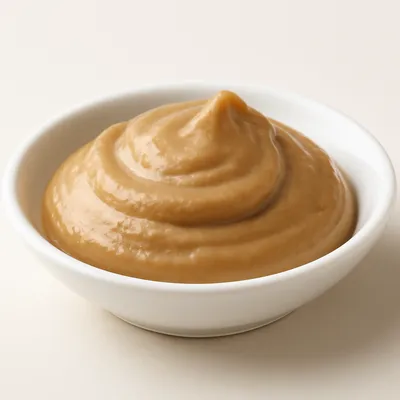
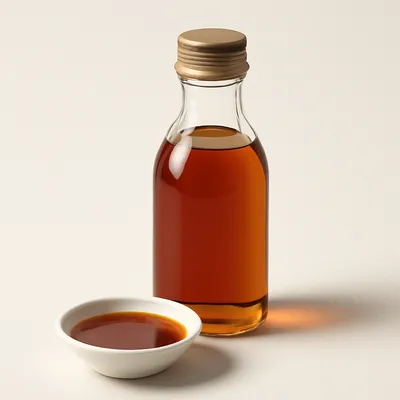
While the paste simmers, thin the sesame paste with a little sesame oil and warm water until pourable but still thick.
- 62 min
Ladle the hot paste into wide shallow bowls; drizzle sesame sauce in a spiral from the centre outward; sprinkle pepper-salt. Serve immediately — no utensils; sip by rotating the bowl at the rim.
Archive tool suggestions — not reviewed
These legacy suggestions have not been evidence-reviewed and are not presented as required tools.