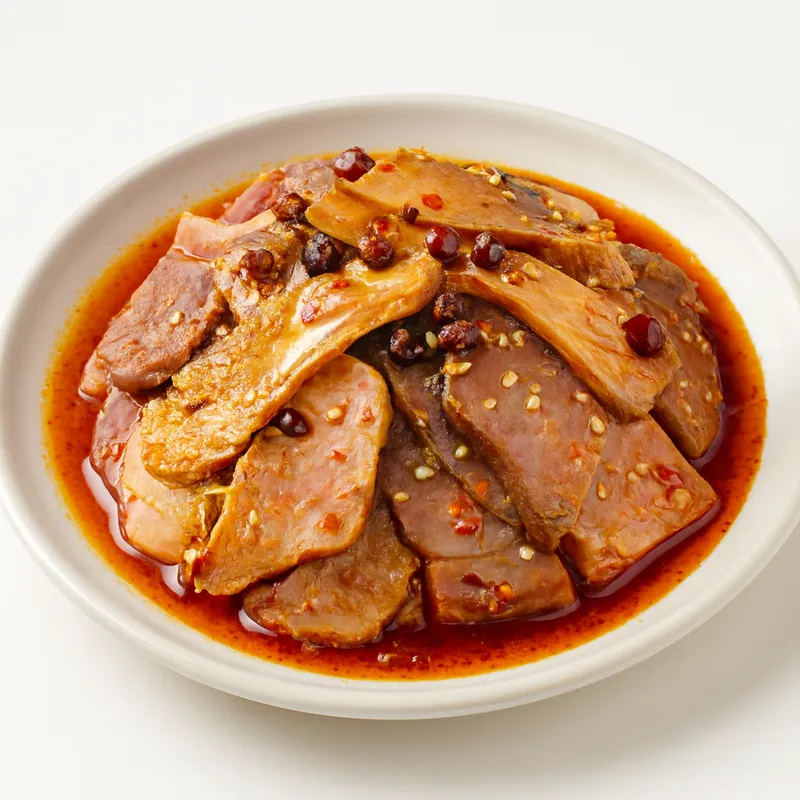
The everyday Chinese dumpling and the staple of the northern New Year table: a thin cold-water wheat wrapper pleated by hand around a juicy filling of fatty pork and chopped chives, then boiled until it floats and bulges. Dipped in black vinegar with raw crushed garlic. Not a soup dumpling, not a steamed snack — the plain boiled crescent (水饺), eaten by the platterful.





Dumplings essentially in today's crescent shape are old: wheat-flour ones about 5 cm long, still folded into half-moons, were excavated from the Tang-era Astana tombs at Turpan in Xinjiang, and dumpling-like remains there reach back to the Wei-Jin period some 1,700 years ago. A common folk story credits the Eastern Han physician Zhang Zhongjing with shaping warming dough parcels like little ears to treat frostbite, which is offered to explain the northern custom of eating dumplings at the Winter Solstice; it appears only in oral tradition. The New Year custom turns on a pun: jiaozi (饺子) echoes jiao-zi (交子), the midnight hour when the old year crosses into the new, so families eat them at the turn of the watch; the ingot-like shape adds a wish for wealth. Earlier names recorded for the dish include huntun, jiaozi (角子), bianshi, and fenjiao.
The wrapper has real chew — cold-water gluten gives it spring and a faint slip, thin but never collapsing. Bite in and the filling is hot and juicy: the fat and the beaten-in water give a small burst of broth, the pork savoury and tender, the chives sharp and green against the richness. Each one is dragged through the northern dip — black vinegar sharpened with raw crushed garlic, a slick of chili oil if you like — and eaten by the dozen.
Boiled dumplings live or die by cold-water dough. Cold water hydrates the wheat proteins glutenin and gliadin without cooking them, and kneading aligns them into a strong elastic gluten net — the wrapper stretches thin, holds its bite, and survives a rolling boil without tearing. Scalded (hot-water) dough is the opposite: heat sets the protein and gelatinises the starch into something soft and slightly sweet, suited to steamed dumplings but liable to slump in the pot. The juice comes from beating in water — cool ginger-scallion or Sichuan-peppercorn water worked into the meat in one direction until it turns tacky, which activates the salt-soluble muscle proteins (chiefly myosin) into a gel that locks the liquid in rather than weeping it out. The chives are tossed in oil and folded in last, the oil film slowing the salt from drawing out their water. Adding a splash of cold water three times once the pot boils — 'three boils, three additions' — drops the temperature so the thin skin does not thrash and burst before the raw filling cooks through.
Variations
By cooking method the same parcel becomes boiled (shuǐjiǎo, the classic, cold-water dough), steamed (zhēngjiǎo, often scalded dough so it stays soft and translucent), or pan-fried with a crisp base (jiānjiǎo / guōtiē). Fillings run by region and season: pork-and-napa is the everyday northern standard; 'three-fresh' pairs pork with shrimp and egg or chives; the northwest favours lamb with carrot or scallion; the northeast goes for fermented sour cabbage; and the Shandong coast around Qingdao prizes a Spanish-mackerel filling. At New Year the crescents are folded ingot-shaped for luck, and some northern households make the turn-of-the-year batch all-vegetable for a clean, peaceful start.
On the Palate
Where Jiaozi sits in the Chinese flavor cloud
Ingredients
Serves 4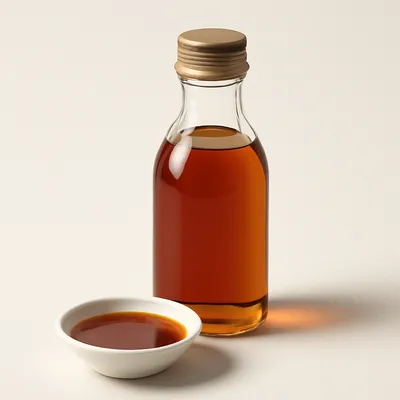


How it's made
8 steps · 1 hour active + 30 min waiting
- 135 min
Make a cold-water dough: stir 500 g plain flour with a pinch of salt, work in about 250 ml cold water until shaggy, then knead until smooth. Cover with a damp cloth and rest 30 minutes.
Watch outUse cold water and knead until the dough is truly smooth — cold hydrates the gluten without cooking it, so the wrapper stretches thin and won't tear in the boil.
- 212 min
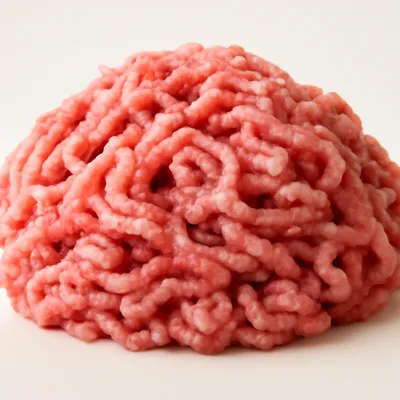
Mix the filling: to 450 g fatty ground pork (about 30 percent fat) add soy sauce, salt, white pepper, ginger and scallion. Beat in roughly 120 ml cool ginger-scallion water a little at a time, stirring one direction until the meat turns tacky and sticky.
Watch outBeat the ginger-scallion water in one direction until the meat turns tacky and sticky — that's the myosin taking up water, which is where the juice comes from.
- 35 min
Wash and dry 300 g chives well, chop finely, toss with a spoon of sesame oil to coat, then fold into the meat just before wrapping. Do not over-mix.
- 420 min
Roll the rested dough into a rope, cut into 40 to 50 pieces, and roll each into a round wrapper about 8 cm across, slightly thicker at the centre.
- 525 min
Place a spoon of filling in each wrapper, fold into a half-moon and pleat the edge shut, pressing firmly so it seals.
- 63 min
Bring a large pot of water to a hard boil, slide in the dumplings, and stir gently so they do not stick.
- 75 min
When the water returns to a rolling boil, add a small ladle of cold water; repeat this three times — three boils, three additions.
Watch outAdd a ladle of cold water each time it returns to a boil, three times — the 'three boils' keep the water just below violent so the wrappers cook through without splitting.
- 88 min
The dumplings are done when they float and bulge, about 6 to 8 minutes. Lift out and serve with a dip of black vinegar and crushed raw garlic.
Watch outThey're done when they float and bulge, about 6 to 8 minutes — a sunken, slack dumpling still needs a moment.
Archive tool suggestions — not reviewed
These legacy suggestions have not been evidence-reviewed and are not presented as required tools.