Pork belly cut to the size and color of cherries—deep ruby, lacquered, each piece a jewel of sweet-salty savor—the Suzhou spring banquet centerpiece that traveled from a local restaurant kitchen directly into the Qing imperial palace.



Cherry pork originated in Suzhou as a spring seasonal dish—pea-shoot season was the traditional pairing—before entering the imperial table during Qianlong's thirtieth year southern tour (1765). After tasting the dish at a Suzhou banquet, the emperor brought home chef Zhang Dongguan, originally cook of the Suzhou textile commissioner's household. Zhang adapted it into a yam-wine braised version recorded in the Qing court's Imperial Tea and Food Administration Archives as part of his Su-style series. Empress Dowager Cixi became an equally devoted admirer. Suzhou's folk tradition traces the dish to an earlier folk form called fruit-shaped meat, in which pork was shaped to resemble seasonal fruits.
Each piece yields at the gentlest pressure—fat melted to silk, lean still just holding shape—the sauce burnished to a gloss that stains the chopstick tips ruby. Sweetness leads, giving way to a long savory finish with a faint herbal undertone from the red yeast.
The deep ruby color results from two parallel reactions: red yeast rice provides heat-stable natural pigments (monascorubrin and rubropunctatin) that give a permanent crimson base, while caramelized rock sugar adds a Maillard-adjacent golden lacquer. The low braise at 85–90°C for 2–3 hours converts collagen in the pork belly's connective tissue into gelatin, tenderizing the meat and self-thickening the sauce. Aged rice vinegar added near the end mildly acidifies the sauce, brightening the red yeast pigments and cleaving some fat-protein bonds to reduce perceived richness.
Variations
The Suzhou home-style version typically omits red yeast and relies solely on soy sauce and caramelized sugar for color, resulting in a darker, more soy-forward flavor. Classic recipes require fresh pea shoots as an obligatory spring garnish, making the dish effectively seasonal. Contemporary Suzhou restaurants occasionally add small hawthorn fruits or dried longan for a fruity note—an invention the original, which contains no actual cherry, never possessed.
On the Palate
Where Cherry Pork sits in the Chinese flavor cloud
Ingredients
Serves 4

How it's made
8 steps · 43 min active + 2 hours 52 min waiting
- 110 min
Cut pork belly into 2cm cubes; blanch in boiling water with ginger and Shaoxing wine for 5 minutes; drain and pat dry.
- 25 min
Add a little oil to wok; melt rock sugar over medium heat, stirring until a deep amber caramel forms without burning.
Watch outMelt the rock sugar to a deep amber caramel and stop right there — one shade too dark and the whole braise turns bitter.
- 33 min
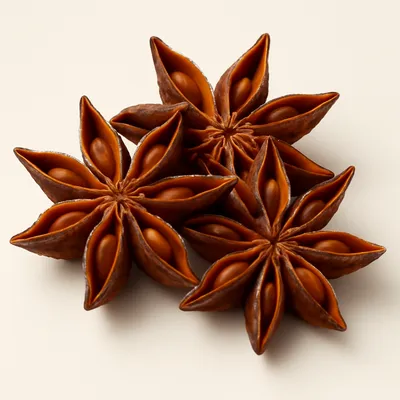
Add pork cubes; toss to coat in caramel; add dark soy sauce, red yeast powder, Shaoxing wine, star anise, cinnamon, and enough water to just cover.
- 45 min
Bring to a vigorous boil; skim foam meticulously; cover and reduce to the lowest possible heat.
Watch outSkim the foam meticulously at the first hard boil — whatever grey scum you leave now clouds the ruby sauce for good.
- 5165 min
Braise 2.5–3 hours, turning pieces once per hour, until colour is deep ruby and meat yields completely to chopstick pressure.
Watch outHold the barest simmer for the full 2.5–3 hours until the meat gives completely to a chopstick — a hard boil breaks the pieces before the collagen melts.
- 610 min
Add a teaspoon of aged rice vinegar; braise uncovered a further 10 minutes; remove spices.
- 710 min
Raise heat to medium; reduce sauce, stirring, until it coats the back of a spoon.
Watch outReduce until the sauce coats the spoon back and turns glossy — that's the gelatin thickening it, no starch needed.
- 85 min
Plate on a bed of blanched pea shoots; spoon sauce over each piece to glaze.
Archive tool suggestions — not reviewed
These legacy suggestions have not been evidence-reviewed and are not presented as required tools.