Golden, aromatic braised chicken feet from Honglai Town in Nan'an, simmered in a proprietary herbal brine until collagen-rich skin turns glossy and elastic. The aged brine tradition—balanced with star anise, cinnamon, chili, and a dozen other herbs—has made these among Fujian's most recognized snack exports, sold across China and overseas.
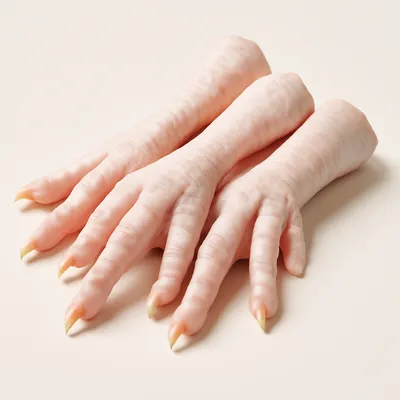
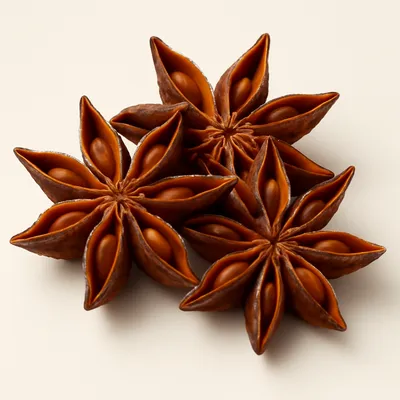



Honglai takes its name from the turbulent rocky rapids of the Jiuxi River—洪 (flood) and 濑 (rapids over stones)—that once defined this Nan'an County town. Southern Fujian has a longstanding folk tradition of brining meats in herbal spice baths, simultaneously preserving food and drawing on the tonic properties of Chinese medicine herbs. The modern Honglai chicken feet lineage traces directly to a local brine master named Yang Yiqing (杨贻庆); his nephew, known as Hongmao, apprenticed under him and then opened a rival shop directly opposite Yang's, establishing Honglai's original two-shop founding pair. A commercial trademark was registered around 2001–2002 by Li Jiaxing; the production company was formally incorporated in 2012. According to Quanzhou culinary industry sources, the first group standard for Honglai Chicken Feet was implemented in January 2026 under the Quanzhou Cuisine framework.
Golden skin that first resists, then yields with a clean soft snap—collagen-soft tendons beneath give one final bounce. Star anise and cinnamon perfume the meat deeply; warmly spiced, faintly sweet, the aftertaste lingers.
Chicken feet are predominantly connective tissue—collagen-rich tendons and skin (primarily collagen type I) with minimal muscle fiber. Slow brining at low-medium heat progressively hydrolyzes the triple-helix collagen structure into gelatin, softening the feet while retaining enough intact fiber for chew. Spice compounds are largely lipophilic: anethole from star anise, cinnamaldehyde from cinnamon, capsaicin from chili penetrate the collagen-gelatin matrix over extended brining time, flavoring from surface through to bone. The aged brine (老卤) accumulates Maillard reaction products and dissolved proteins from prior batches, deepening both umami and color with each successive use.
Variations
The same brining approach extends to duck wings (鸭翅), pork ears, and dried tofu skin. Commercially, spicy (麻辣) and fragrant five-spice (五香) brine styles are the two dominant variants. Aged brine versus fresh brine produces notably different depth: the aged version is richer and more complex.
On the Palate
Where Honglai Braised Chicken Feet sits in the Chinese flavor cloud
Ingredients
Serves 4

How it's made
7 steps · 20 min
- 110 min
Clean chicken feet thoroughly: remove nails with scissors, scrub skin, halve larger feet at the joint if desired.
- 25 min
Blanch in boiling water with ginger slices for 3 minutes; drain and rinse under cold running water to remove impurities.
Watch outBlanch the feet with ginger and rinse under cold running water — this strips the impurities so the brine stays clean and clear.
- 35 min
Combine water, soy sauce, star anise, cinnamon, dried chili, bay leaves, ginger, and rock sugar in a pot; bring to a boil over high heat.
- 440 min
Add chicken feet; reduce to low heat (approximately 70–80°C). Braise uncovered for 40 minutes, turning occasionally to ensure even coloring.
Watch outBraise low, around 70–80°C, never a rolling boil — a gentle heat softens the collagen to tender while keeping enough bite; boiled hard, the skin splits and slides off.
- 55 min
Taste and adjust seasoning with salt and sugar; briefly raise heat to concentrate brine if needed.
- 6120 min
Turn off heat; allow feet to rest in the brine for at least 2 hours, or refrigerate overnight, to absorb flavor fully.
Watch outLet the feet steep in the brine at least 2 hours off the heat — the flavor keeps soaking in from surface to bone as they rest.
- 75 min
Remove, drain, and serve at room temperature; drizzle with a spoonful of strained brine as a finishing sauce.
Archive tool suggestions — not reviewed
These legacy suggestions have not been evidence-reviewed and are not presented as required tools.


