Pig ears braised in five-spice brine until the skin is supple and the cartilage still has snap, then chilled and sliced paper-thin—one of the most beloved cold appetizers across Chinese cuisines.

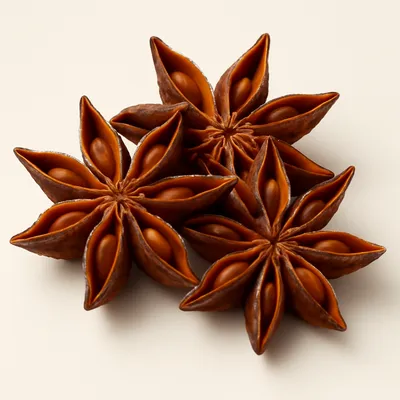

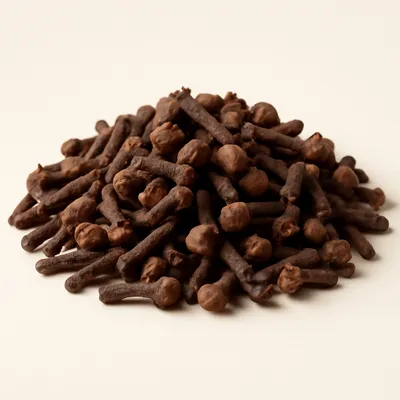


The braising of pork offal is inseparable from the broader lu-wei tradition, traceable in written form to at least the Song dynasty, when market-stall recordings in Meng Yuanlao's Dongjing Menghua Lu and Wu Zimu's Meng Liang Lu (c. 1274, describing Lin'an) describe vendors selling braised entrails and ears. 'Five-spice' (wu xiang) as a fixed aromatic formula—star anise, cinnamon, cloves, fennel seed, and Sichuan pepper—crystallized no later than the Ming dynasty, when Li Shizhen's Bencao Gangmu documents each ingredient's culinary and medicinal uses. Pig ear is valued precisely because it was cheap and structurally distinctive: its laminated cartilage-and-skin anatomy produces a texture unobtainable from any muscle meat, making it a prized cold-cut even as pork prices rose.
Cold pork ear is best eaten paper-thin and fanned out on the plate. The outer skin layer is translucent, gelatinous, with a slow give; the cartilage strip through the center is springy, almost rubbery—a bounce back against the teeth that is oddly satisfying. Five-spice warmth suffuses both layers evenly. The more you chew the more flavor emerges: this is a dish that rewards slow eating.
Pork ear's signature texture arises from its composite anatomy: the outer ear consists of dermis (Type I collagen and elastin fibers) surrounding a core of auricular cartilage (Type II collagen and proteoglycans). During braising, high-heat boiling (5 minutes) denatures surface proteins and kills pathogens; low-heat simmering (20 minutes) partially hydrolyzes Type I collagen into gelatin, softening the skin while leaving the Type II cartilage matrix intact—cartilage proteoglycans absorb water and swell but do not break down at normal cooking temperatures. The result is the dual texture: supple-gelatinous skin over springy cartilage. Chilling then contracts the protein matrix, sharpening the crunch of the cartilage further.
Variations
Mala versions finish with chili oil, sesame oil, and crushed Sichuan peppercorns—the standard Sichuan cold appetizer. 'Kou shui' (mouth-watering) pork ear adds sesame paste, Chinkiang vinegar, and raw garlic in the Sichuan style. Cantonese white-braised ear is served with ginger-scallion sauce rather than a soy brine. Northern barbecue stalls often grill pork ear over charcoal until the edges char and blister.
On the Palate
Where Five-Spice Braised Pork Ear sits in the Chinese flavor cloud
Ingredients
Serves 4


How it's made
7 steps · 2 hours 5 min
- 160 min
Sear off any residual hairs with an open flame; soak pig ears in cold water for 1 hour to purge blood.
- 28 min
Blanch in boiling water with ginger and Shaoxing wine for 5 minutes; drain and rinse under cold water.
Watch outBlanch just until the scum stops rising and the water goes cloudy — you're purging blood, not cooking the ear, so don't let it boil hard for long.
- 35 min
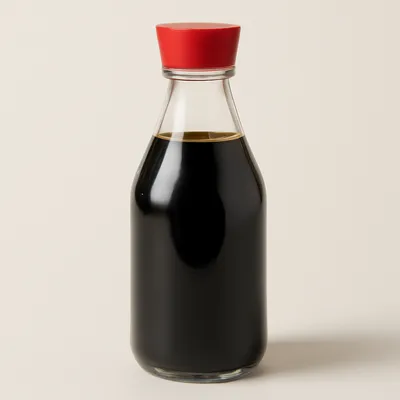
Prepare braising liquid: bring 1 liter of water to a boil with soy sauce, dark soy sauce, star anise, cinnamon, cloves, fennel seeds, Sichuan peppercorns, ginger, and rock sugar.
- 45 min
Add the pig ears; bring back to a full boil over high heat and cook for 5 minutes.
- 520 min
Reduce to a low simmer; cook for 20 minutes until the outer skin is just tender but the cartilage still has definite resistance.
Watch outPull it when the skin gives to a chopstick but the cartilage still snaps back with a crunch — over-simmer and you lose the signature crisp core.
- 620 min
Turn off heat and steep in the brine for 20 minutes; remove and cool to room temperature.
- 75 min
Refrigerate for at least 1 hour until fully chilled; slice on the bias as thin as possible and serve with chili oil or a sesame-vinegar dressing.
Watch outChill it stone-cold before slicing — a warm ear tears and won't cut into clean paper-thin slices.
Archive tool suggestions — not reviewed
These legacy suggestions have not been evidence-reviewed and are not presented as required tools.


