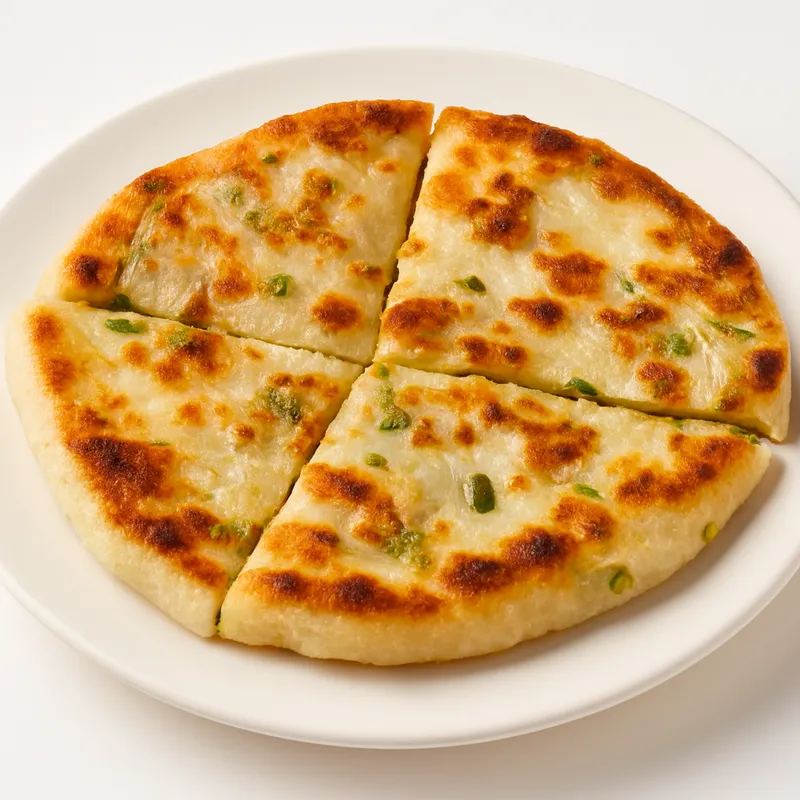
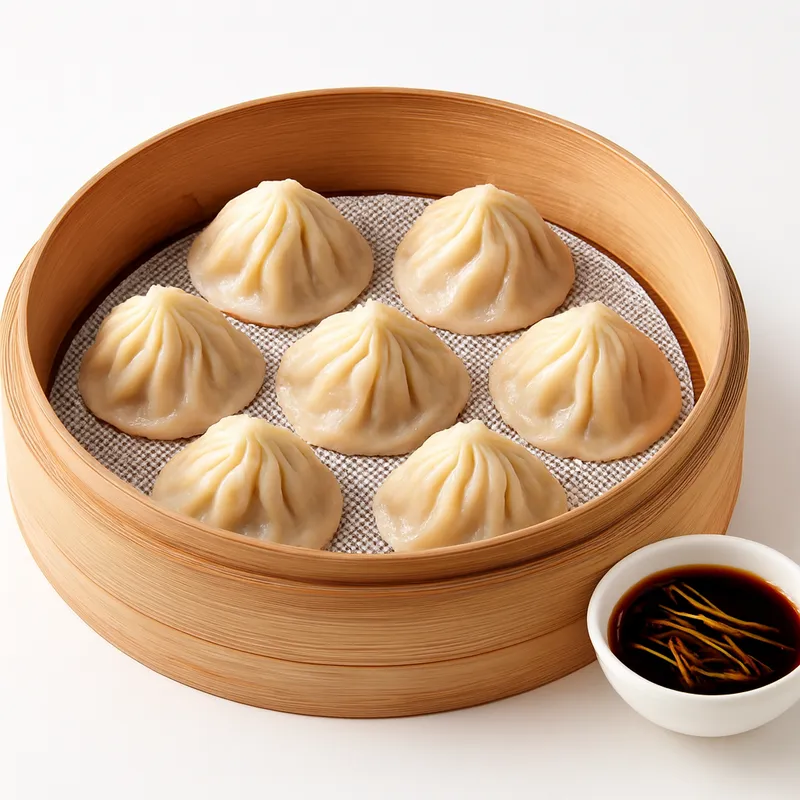
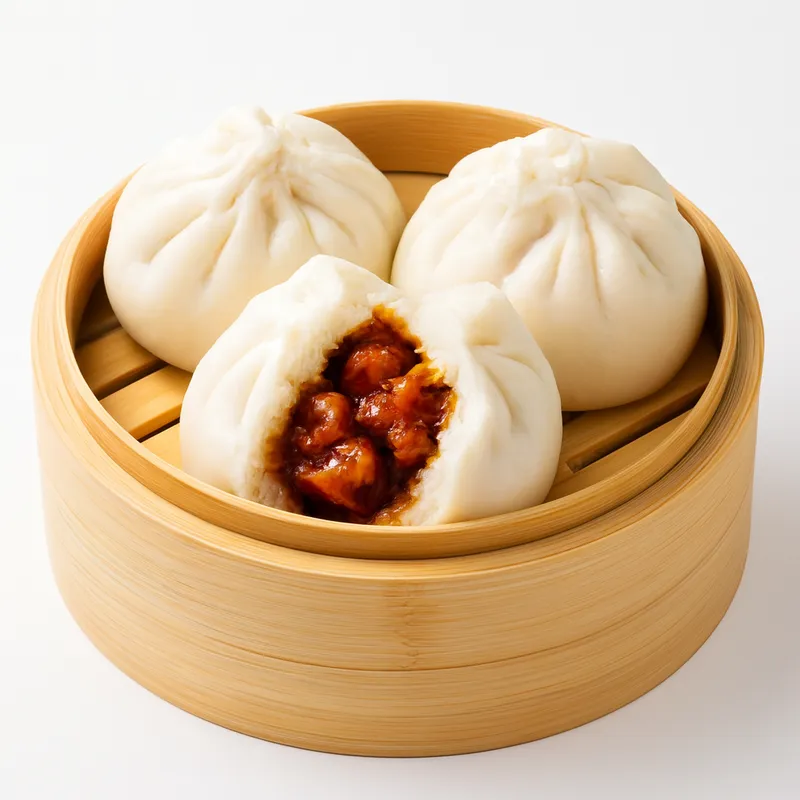
Crisp-bottomed, juicy pork dumplings bursting with savory aspic and fragrant ginger.





A Shanghai street food from the early 1920s, when small teahouses started selling them as morning snacks alongside dou jiang. The dish's roots trace to early-1900s Suzhou; in Shanghai it was made famous by the Luochun Ge teahouse on Zhejiang Road (owner Huang Chujiu), whose adjacent stall hung out the 'Luochun Ge sheng jian' sign. Distinct from xiaolongbao in two ways from the start: leavened dough (heavier, fills you up faster) and a dry-fry finish, suited to a worker's quick breakfast rather than a leisurely tea-house meal.
Shanghai 1920s teahouse breakfast, sold beside dou jiang. Leavened dough, not the unleavened xiaolongbao skin — heavier, fills you up. The bottom crust comes from a flour-water slurry steamed dry under a clamped lid.
A pan-fried bun, golden-crisp on the bottom, soft on top, sesame and scallion stuck to the lid. Bite the side and hot pork soup floods out — same aspic trick as xiaolongbao but the skin is thicker, leavened, fluffy. Eat with black vinegar. The signature crackle is the bottom; if it's pale or soggy, the cook didn't let the oil-water mix dry out fully on the pan.
The cook arranges raw buns pleat-side up in a flat-bottomed iron pan with oil, sears the bottoms, then pours in a thin water-flour slurry and clamps the lid — steam cooks the top, water boils off, oil takes over and crisps the bottom in one continuous move. Two-stage cooking in one pan. Buns must be packed tight against each other or they fall over and the seal collapses; loose pans are how home cooks get a soggy mess.
Variations
Da Hu Chun (est. 1932) carries the old fully-leavened, thick-skinned, clear-water style; Yang's near Wujiang Lu serves the thinner-skinned modern version; Da Hu Chun runs the 'clear-water' (qing shui) style: fully-leavened, thicker skin, little to no aspic and noticeably less soup, foregrounding the pork itself.
On the Palate
Where Sheng Jian Bao sits in the Chinese flavor cloud
Ingredients


How it's made
6 steps · 2 hours
- 121 min
Prepare dough by mixing flour and yeast with water, let it rise.
- 213 min
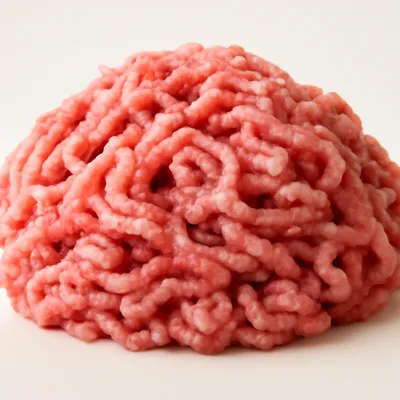
Mix ground pork with ginger, scallion, soy sauce, and pork skin aspic to form filling.
Watch outFold the skin aspic into the cold filling and stop while it's still tacky — it has to stay solid until the pan melts it into soup, so keep the mix chilled.
- 321 min
Roll dough into small balls, flatten and fill with pork mixture.
- 421 min
Pinch edges to seal, ensuring a tight closure.
Watch outPinch the pleats shut tight all the way up — one weak seam leaks the soup out and the bun collapses in the pan.
- 534 min
Pan-fry buns on medium heat until bottoms are golden and crispy, then add water and cover to steam until fully cooked.
Watch outStand the buns packed tight against each other, pour the water-flour slurry, then clamp the lid — listen for the sizzle to turn crisp and dry near the end, that's the bottom crusting; loose spacing tips them over and breaks the seal.
- 69 min
Sprinkle with sesame seeds before serving.