Duck heads braised in a mala-spiced brine—bold with Sichuan peppercorn heat and chili depth—a gnaw-every-crevice ritual that spread from Hunan's Dongting Lake region to the entire country.


The braised duck head's earliest documented regional home is Changde, Hunan, in the Dongting Lake basin—a major duck-farming area with a centuries-old tradition of braising waterfowl offal in spiced brines. Accounts trace the commercial mala duck head to Changde street vendors in the late Qing period, when duck heads and necks, considered by-products too awkward for mainstream cooking, were cheap enough for laborers. From Hunan the style spread to Sichuan and Hubei, where Wuhan's duck neck (ya bo) became its own institution. In the 1990s and 2000s, chain brands—including Zhou Heiya and Juewei—industrialized the formula and distributed it nationally, cementing mala duck head as one of China's defining packaged snack foods.
A duck head is a study in patience and reward. Start with the cheek meat—thin but deeply infused with brine. Work the jaw loose; the tongue, if present, is silky and intensely flavored. Then split the skull; the braised brain inside has a custardy softness that carries the full mala hit. Every crevice holds something: the flavor is highest where the broth had the longest path to travel.
The two-phase cooking technique—high boil then off-heat steep—is essential to penetrating the bony, complex structure of the duck head. The initial 20-minute boil over high heat drives heat quickly into the tissue and opens pores; switching off the heat and steeping for 40–60 minutes allows the brine to continue diffusing via osmotic pressure as the temperature gradually falls, reaching the brain cavity and bone marrow without overcooking the thin cheek meat. Capsaicin (in dried chilies) is non-polar and fat-soluble; it dissolves in the braising fat and carries into tissues. Hydroxy-alpha-sanshool in Sichuan peppercorns activates KCNK3 and KCNK9 potassium channels in skin nerve fibers, producing the characteristic 50 Hz vibrotactile 'numbing' sensation—a distinct neural pathway from capsaicin's TRPV1-mediated heat.
Variations
Five-spice versions omit the chili altogether, using only the warm spices for a gentler, drier flavor; popular among customers who cannot tolerate heat. The Sichuan 'strange-flavor' (guaiwei) duck head adds sesame paste and vinegar alongside the mala. Industrially produced vacuum-packed duck heads vary widely in heat level—Hunan-branded products are reliably fiercer than northern adaptations.
On the Palate
Where Lu-Braised Duck Head sits in the Chinese flavor cloud
Ingredients
Serves 4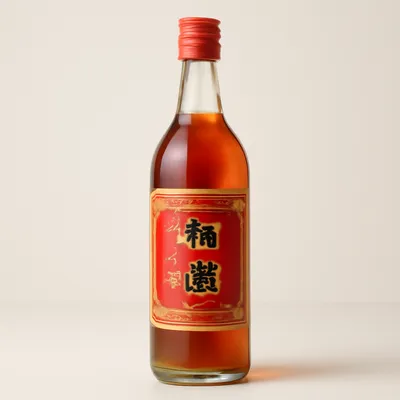



How it's made
7 steps · 1 hour 30 min
- 130 min
Rinse duck heads under cold water; remove residual feathers and trachea; soak in cold water for 30 minutes to purge blood.
- 25 min
Blanch in boiling water with ginger slices and Shaoxing wine for 3 minutes; drain and rinse.
- 35 min
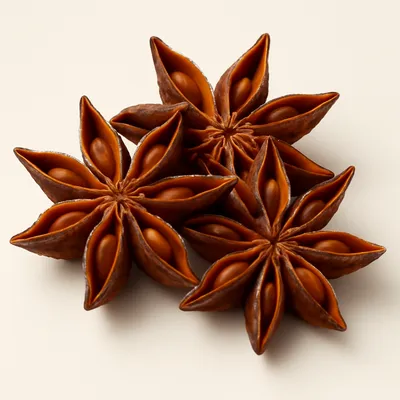
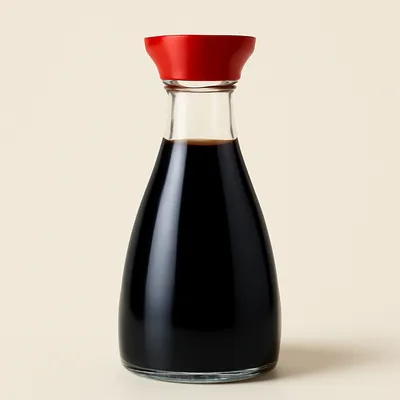
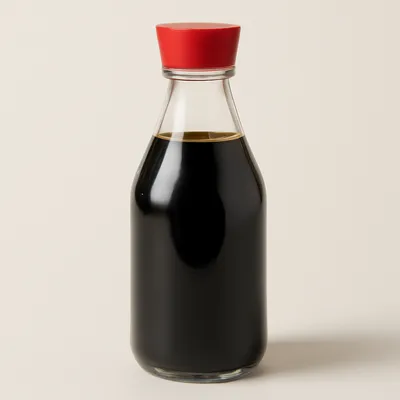
Bring a large pot of water to a boil; add soy sauce, dark soy sauce, Shaoxing wine, dried chilies, Sichuan peppercorns, star anise, cinnamon, ginger, and rock sugar to build the brine.
- 420 min
Add the duck heads; boil over high heat for 20 minutes.
Watch outA hard boil, only 20 minutes — this drives the heat in fast and opens the pores so the brine can reach the bone.
- 560 min
Turn off heat; let duck heads steep in the hot brine for 40–60 minutes—this is the step that drives flavor into the brain cavity and bone gaps.
Watch outKill the heat and let them steep 40–60 minutes — this off-heat soak is what carries the flavor into the brain cavity and bone gaps without overcooking the thin cheek meat.
- 63 min
Remove duck heads; brush lightly with chili oil for extra sheen if desired.
- 72 min
Serve at room temperature or slightly warm; split the skull at the crown to access the brain.
Archive tool suggestions — not reviewed
These legacy suggestions have not been evidence-reviewed and are not presented as required tools.



