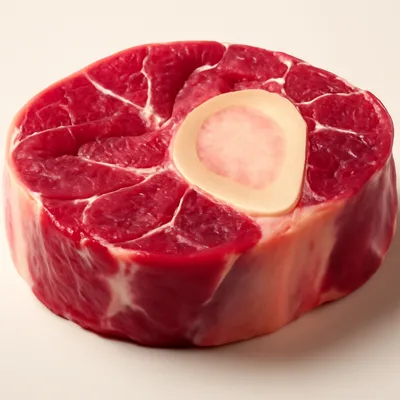
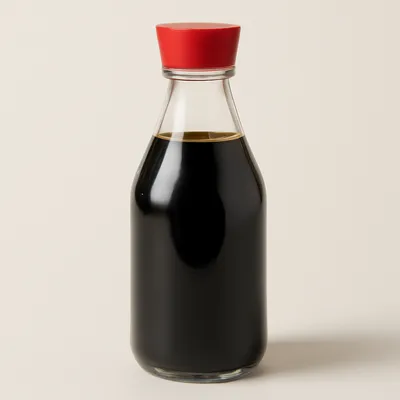
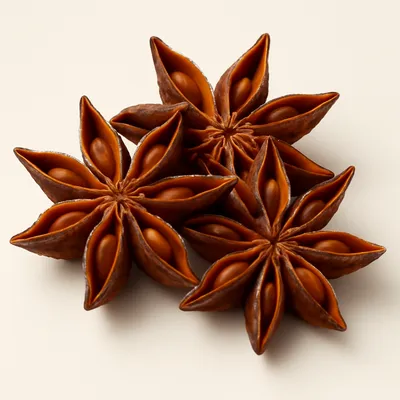
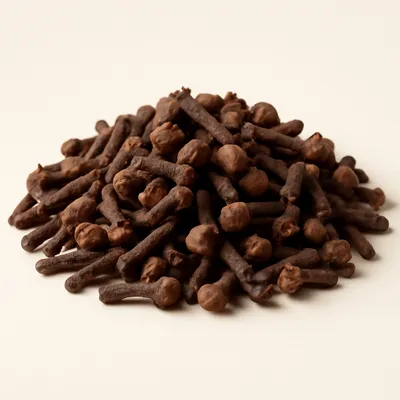
Beef shank simmered for hours in a master stock of soy sauce, yellow bean paste, and five aromatics—star anise, cinnamon, Sichuan pepper, cloves, fennel—then cooled and sliced thin. A north-China cold cut with a lacquered mahogany finish and springy, grain-clear texture.



The dish's most documented lineage runs through Yueshengzhai, a Beijing halal shop founded in 1775 (the fortieth year of Emperor Qianlong's reign) by the Ma family, who later refined the recipe with guidance from imperial physicians. The shop's braised-beef-and-mutton technique was inscribed on China's National Intangible Cultural Heritage list in 2008. A parallel northern strand traces to Liu Lu, a Hui Muslim from Cangzhou, Hebei, who in the mid-Qing period founded the Wanshengyong shop in Hohhot, spreading soy-braised beef across Inner Mongolia.
Cold, springy slices with a deep soy-lacquer sheen; five-spice warmth radiates slowly inward, finishing in a faint floral sweetness from the star anise.
Beef shank's muscle sheaths are dense with type-I collagen. Slow simmering below 90°C hydrolyses the triple-helix collagen chains into gelatin, which sets on cooling into the dish's characteristic springy texture. Soy sauce Maillard by-products and caramelised rock sugar build the lacquered mahogany colour. Cinnamaldehyde from cinnamon and anethole from star anise are fat-soluble volatiles that dissolve into braising fat and migrate deep into muscle fibres over hours of simmering.
Variations
Beijing Yueshengzhai court style uses yellow bean paste as the base, yielding a thick, dark brine. Inner Mongolia's Wanshengyong tradition leans on dark soy with less paste for a lighter hue. Muslim hawker stalls in Xi'an and Lanzhou add cumin and dried chilli for a northwest accent. Shanxi home cooks skip the paste altogether, relying on soy and aged vinegar for a sharper brine.
On the Palate
Where Soy-Braised Beef sits in the Chinese flavor cloud
Ingredients
Serves 6


How it's made
7 steps · 30 min active + 4 hours 30 min waiting
- 165 min
Trim beef shank of loose fat; soak in cold water 1 hour to draw out blood, then drain.
- 28 min
Blanch in boiling water with ginger slices and Shaoxing wine 5 minutes; skim foam, drain and rinse.
Watch outBlanch and skim off every bit of grey scum — leave it in and the braise turns cloudy and off-smelling instead of clear mahogany.
- 33 min
Bundle star anise, cinnamon stick, Sichuan peppercorns, cloves, and fennel seeds in a cheesecloth sachet.
- 45 min
In a heavy pot combine yellow bean paste, dark soy, light soy, rock sugar, and enough water to cover the beef; bring to a boil.
- 55 min
Add beef and spice sachet; return to a boil and skim any remaining foam.
- 6150 min
Reduce to the lowest heat; simmer uncovered 2 to 2.5 hours until a chopstick slides through the thickest part with gentle pressure.
Watch outHold it at the barest simmer, never a hard boil — a chopstick should slide through the thick part with light pressure; boil it too fast and the shank stays tight and dry.
- 760 min
Cool beef in the braising stock, then refrigerate at least 1 hour. Slice thin across the grain and serve cold.
Watch outLet the beef cool right in the braising stock — that's when it drinks the flavor back in and firms up for clean thin slices.
Archive tool suggestions — not reviewed
These legacy suggestions have not been evidence-reviewed and are not presented as required tools.


