
A savoury "pounded tea" of the Hakka and She peoples, made by grinding green tea leaves, fresh herbs, peanuts, sesame and often raw rice in a ridged earthenware mortar (lei bo) with a wooden pestle until they break down into a thick green paste, then whisking the paste with hot water into a fragrant, jade-green broth. It is most often eaten as a full meal, lei cha rice, where the broth is poured over rice spread with fried puffed rice, dried radish, long beans, sauteed greens and peanuts. Both drink and meal in one bowl, it is at once herbal, nutty and faintly bitter. Famous regional forms run from Jiexi and Luhe in Guangdong to Taoyuan in Hunan and Jiangle in Fujian, and several have been listed as intangible cultural heritage.



Lei cha is an old foodway shared across the Hakka diaspora of Fujian, Jiangxi, Hunan, Guangdong, Guangxi and Taiwan, but its exact beginnings are unrecorded; the antiquity tales attached to it are folklore. Hunan's Taoyuan form keeps the best-known legend: that during the Eastern Han the general Ma Yuan, marching south, lost many soldiers to disease until a local woman offered a folk remedy, "three-raw soup" (raw rice, raw ginger, raw tea pounded in a mortar and steeped in boiling water), which is said to have cured the camp; the Taoyuan brew is still called san sheng tang or wu wei tang. Guangdong's Hakka carry a parallel tale set at Hepo in Jiexi, where soldiers unused to the water were said to have been healed by lei cha. What is documented is the modern recognition of the custom: in 2014 the State Council listed "Hakka lei cha making technique," spanning Fujian, Jiangxi, Hunan, Guangdong, Guangxi and Taiwan, in the fourth batch of national intangible cultural heritage, and in 2022 the Gannan Hakka lei cha technique was included within "traditional tea processing techniques and associated social practices in China" on the UNESCO Representative List. Regional forms carry their own listings, including Luhe (Guangdong, provincial, 2012) and Jiangle (Fujian, provincial, 2006). The same lei cha lineage lives on among the Hakka of Taiwan, treated here as a separate cuisine.
Jade-green and opaque, thicker than tea and thinner than soup, with a fine grit of ground sesame and peanut hanging in it. The first taste is the cool grassy bite of raw green tea and fresh herbs, then the round, oily sweetness of nut paste, then a faint lingering bitterness that the herbs lift rather than mask. Drunk plain it is restorative and slightly astringent; ladled over rice as lei cha rice, it turns rich and savoury, the crunch of fried puffed rice and dried radish playing against the smooth broth. Served piping hot, it should smell of toasted sesame and green leaf before the bowl reaches your mouth.
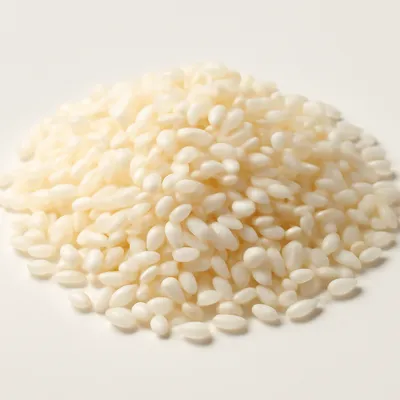
The whole drink is built by grinding, not cooking. Working the tea, herbs, peanuts and sesame against the ridged wall of the earthenware mortar tears open the leaf and seed cells: the friction draws out tea polyphenols, which are mostly catechins (around half to sixty percent of the leaf's polyphenols), giving the brew its green colour and astringent, faintly bitter edge, while the crushed peanut and sesame release their oils. Ground long enough, those oils, fine solids and the starch from any raw rice form a stable emulsion, so the paste suspends in hot water as an opaque, body-rich broth rather than separating like oil on tea. The water should be just off the boil and poured straight onto the fresh paste so the volatile green and herbal aromatics flash off into the steam at the moment of serving; over-boiling the paste flattens the colour and the fragrance. Raw rice is sometimes used for a rawer, more vegetal brew, toasted or puffed rice for a nuttier, rounder one.
Variations
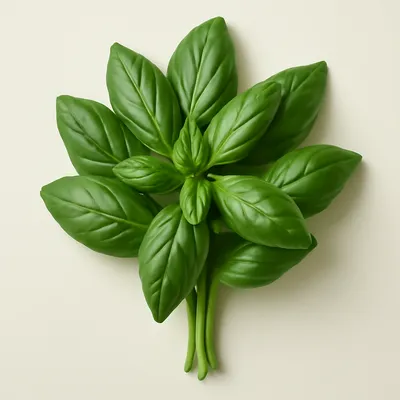
Guangdong's Hakka lei cha (Jiexi Hepo, Luhe) leans savoury and herbal, built on raw rice or puffed rice with peanut, sesame, tea and pungent herbs like Thai basil (jin bu huan), eaten as lei cha rice with a spread of fried rice, dried radish, long beans, soybeans and greens. Hunan's Taoyuan lei cha, the san sheng tang line, foregrounds raw rice, ginger and tea and is often taken as a daily drink. Fujian's Jiangle and Ninghua versions sit between the two. The She people keep their own grain-heavy style, and the Tujia of Hunan make a related grain lei cha. The Hakka of Taiwan grind in pumpkin and sunflower seeds and lean sweeter, sometimes served as a powder to be reconstituted, a distinct branch of the same custom.
On the Palate
Where Hakka Lei Cha sits in the Chinese flavor cloud
This is built by grinding, not cooking — work the tea, peanuts and sesame against the ridged mortar wall until their oils and solids form a smooth paste, then flood it with just-off-the-boil water so the fresh aromatics bloom instead of being boiled flat.
Ingredients
Serves 4


How it's made
7 steps · 15 min
- 15 min
Soak the green tea leaves in a little cool water for 5 minutes to soften, and if using raw rice, rinse and drain it.
- 28 min
Put the tea leaves and sesame seeds into a ridged earthenware mortar and grind with the wooden pestle in steady circles against the wall until pasty.
Watch outGrind against the ridged wall until the tea and sesame turn pasty — the ridges do the tearing, not force.
- 310 min
Add the peanuts and fresh herbs and keep grinding, drizzling in a little cool water now and then, until everything becomes a smooth thick green paste.
Watch outDrizzle in water only a little at a time — the paste should stay thick and smooth, never soupy.
- 45 min
Bring water to just below a boil; pour it straight onto the paste in the mortar and whisk hard with the pestle until the broth turns opaque and even, seasoning with salt.
Watch outWhisk hard the instant the hot water hits — you want the broth to turn opaque and even in seconds.
- 58 min
For lei cha rice, sautee dried radish, long beans and greens in a separate pan and ready bowls of fried puffed rice and roasted peanuts.
- 62 min
Strain the broth if you prefer it smooth, or leave it textured, and pour hot over bowls of rice.
- 72 min
Scatter the toppings over the rice and broth, or drink the tea on its own while piping hot.
Archive tool suggestions — not reviewed
These legacy suggestions have not been evidence-reviewed and are not presented as required tools.


