
A refined Anhui banquet dish built on the prized white tofu of Bagong Mountain near Huainan, where mineral-rich spring water and local Huai-river soybeans yield a curd celebrated as jade-smooth, glossy, and firm enough to simmer without crumbling. The tofu is cut into neat blocks or strips, blanched to firm it, then gently braised or simmered in a clear ham-and-mushroom stock with bamboo shoot and greens, sometimes lightly fried first for a golden skin. The flavor is delicate: the point is the tofu's silken tenderness carrying a savory stock, not a heavy sauce. Bagong Mountain has long been linked to the tofu-origin tradition, and the Compendium of Materia Medica records that tofu was attributed to Liu An, Prince of Huainan.




The dish is anchored in the tofu-origin tradition of Bagong Mountain (八公山) at Huainan, in Anhui's Huai-river belt. The Ming pharmacologist Li Shizhen's Compendium of Materia Medica (《本草纲目》, 1578), in its grains section, records that "the method of tofu began with Liu An, Prince of Huainan of the Former Han" (豆腐之法,始于前汉淮南王刘安) — Liu An being a Western Han prince (c. 179–122 BCE). This is the best-known textual attribution, but it is a later tradition, not corroborated history: no surviving text from the Han through the Tang mentions tofu at all, the name first appears in the early Song-era Qing Yi Lu (《清异录》), and the earliest clear Liu-An-tofu link is a self-annotation in a poem by the Southern Song scholar Zhu Xi. Modern food historians therefore treat the Liu An invention as attributed legend. Bagong Mountain's tofu is prized for the local spring water and Huai-river soybeans; the traditional tofu-making craft of the Huainan/Bagongshan area was inscribed on China's national list of intangible cultural heritage (fourth batch, 2014), and "Bagong Mountain tofu" received geographical-indication protection in 2008.
Good Bagong Mountain tofu trembles when the plate is moved and breaks along a clean, glassy face rather than crumbling. In the mouth it is custard-soft and slips apart, carrying the salt and umami of the ham-mushroom stock it was simmered in; if it was fried first, a thin springy skin gives way to a molten-soft interior. It should taste faintly sweet and clean, with no sour or beany "yellow-water" off-note. Overcooked or roughly stirred, the curd goes spongy and sheds into ragged shreds, and the broth turns cloudy — the dish is then ruined.
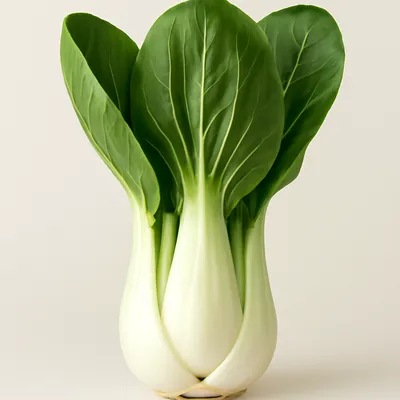
Tofu is a protein gel: soy proteins disperse in soy milk as negatively charged colloidal particles that repel one another, and a coagulant supplies metal ions that neutralize that surface charge so the proteins cross-link into a water-trapping network. Gypsum (calcium sulfate, CaSO₄·2H₂O) is only slightly soluble, so its calcium ions release slowly and set a fine, even, tender curd; brine (nigari, mainly magnesium chloride) acts faster and firmer. Bagong Mountain's mineral-bearing spring water and good local soybeans, together with careful slow coagulation, are credited with the unusually smooth, dense curd that holds together in liquid. In the dish the heat must stay gentle — a bare simmer, not a hard boil — because violent bubbling tears the soft gel apart and clouds the stock; brief blanching or a light fry firms the surface so the blocks keep their shape.
Variations
The most famous form is the Bagong Mountain tofu banquet (八公山豆腐宴), a full spread of dishes built entirely around the local tofu. A common home-style treatment cuts the tofu into cubes, dusts them in starch and fries them golden, then braises them with bamboo shoot, wood-ear and shrimp roe in a light soy gravy thickened with starch slurry; a more banquet-style "white-braise" (高汤白烧) keeps the tofu pale and simmers it in clear ham-chicken stock with no soy, sometimes cut into thin fan or domino shapes. Sibling tofu dishes of the region include casserole (砂锅) tofu and the everyday Huainan tofu soups and tofu-skin preparations.
On the Palate
Where Bagong Mountain Tofu sits in the Chinese flavor cloud
Ingredients
Serves 4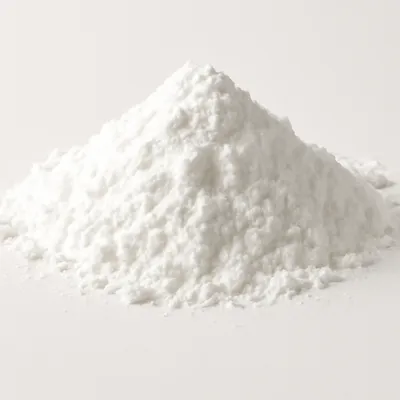

How it's made
8 steps · 25 min
- 14 min
Cut the tofu into neat 2 cm cubes or finger-width strips and handle gently so they keep their edges.
- 25 min
Slip the tofu into cold water, bring to a gentle simmer to firm it, then lift out and drain in a sieve.
Watch outSlip the tofu into cold water and bring it just to a bare simmer to firm it — start it in boiling water and the sudden heat pocks and breaks the delicate curd.
- 35 min
Optionally roll the drained tofu in a thin starch slurry and shallow-fry at about 150°C until just golden, then drain off the oil.
- 44 min
Soak the dried shiitake, slice them and the bamboo shoot thin; have the ham and greens ready.
- 53 min
Heat a little oil, lightly fry the ham, mushroom and bamboo shoot, then pour in the clear stock and season with salt (and soy if making the home-style version).
- 65 min
Slide in the tofu and keep at a bare simmer for 4–6 minutes so it takes up the stock without breaking up.
Watch outKeep it at a bare simmer 4 to 6 minutes so it drinks the stock without breaking — a hard boil tumbles the soft blocks apart.
- 72 min
Add the greens, then thicken with a little starch slurry, swirling rather than stirring.
Watch outThicken with a light starch slurry by swirling the pan, not stirring — stirring smashes the tofu; swirling keeps the blocks whole.
- 81 min
Spoon gently into a bowl, keeping the tofu blocks whole, and serve hot.
Archive tool suggestions — not reviewed
These legacy suggestions have not been evidence-reviewed and are not presented as required tools.


