Tiny flat steamed rice-flour discs in individual saucers, topped with dried shrimp powder, scallion oil, and crispy pork rind, dipped in nuoc mam — a Hue tea-saucer snack eaten by the dozen.
Banh beo is a Hue royal-court legacy dish, traceable to the Nguyen-dynasty practice (19th century) of presenting many small dishes at one meal — a court-kitchen aesthetic that survives today as Hue's mam tom and com hen culture of small-portion eating. The name 'beo' means water fern (or duckweed), referring to the disc's shape floating in its saucer. In Hue you order banh beo by the dozen at street stalls; in Saigon and Hanoi versions are larger and served on a single plate, but the small-saucer format is the original.
Hue royal-court legacy from the Nguyen-dynasty (19th century) practice of presenting many small dishes at one meal. The centre dimple is diagnostic — it forms because the saucer is preheated; the rim sets first, the slower-cooling centre contracts as it cures, pulling down a well for the topping. Cold saucer means flat top, no well.
Each saucer holds a single thumb-sized disc, ivory-white with a translucent rim and a centre dimple that catches the topping. The disc itself is barely seasoned — soft, slightly springy, almost tofu-textured. The work happens in the dimple: shrimp-floss salt, scallion-oil grease, pork-rind crunch, and a teaspoon of nuoc mam tying the four into one bite. You stack ten empty saucers as you go. Compare to dim sum cheong fun — same rice-flour base, but cheong fun is a continuous sheet; banh beo is portioned at the saucer.
The centre dimple is the diagnostic. It forms because the saucer is preheated: the batter sets first along the hotter rim, then the slower-cooling centre contracts as the gel cures, pulling down a shallow well. A cold saucer gives a flat top with no well — and nowhere for the topping to sit. Tapioca starch (15% of the dry flour) gives the disc its signature soft-chew; pure rice flour would be brittle.
Variations
Hue's Ba Cu and Ba Do are the named multi-saucer street stalls; Saigon and Hanoi versions are larger on a single plate (banh beo chen versus banh beo dia); Da Nang adds shrimp paste to the floss for a saltier register.
On the Palate
Where Banh Beo sits in the Vietnamese flavor cloud
Ingredients
Serves 4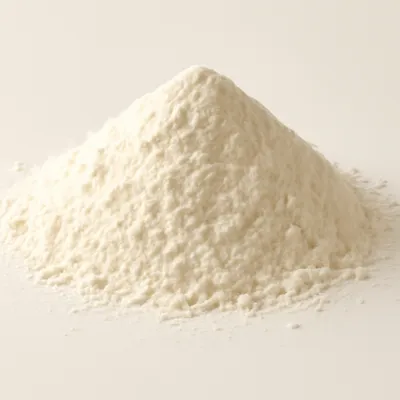





How it's made
7 steps · 50 min active + 40 min waiting
- 15 min
Whisk 200g rice flour + 30g tapioca starch with 600ml water, 1 tsp salt, 1 tbsp neutral oil. Rest 30 minutes — let starch hydrate so the discs set with a faint dimple in the centre.
- 25 min
Set 24-30 small ceramic saucers (5cm diameter) into a steamer in single layer. Heat steamer on high for 5 minutes until saucers are scorching.
Watch outSteam the empty saucers until they're scorching before any batter — a cold saucer sets flat with no center well and the topping has nowhere to sit.
- 38 min
Stir batter from the bottom (starch settles). Spoon 1.5 tbsp into each hot saucer — surface should hiss. Cover and steam 6-7 minutes until tops turn translucent and a centre dimple forms.
Watch outThe batter should hiss the instant it hits the saucer; steam until the top turns translucent and a shallow dimple pulls down in the center — that well is the whole point.
- 412 min
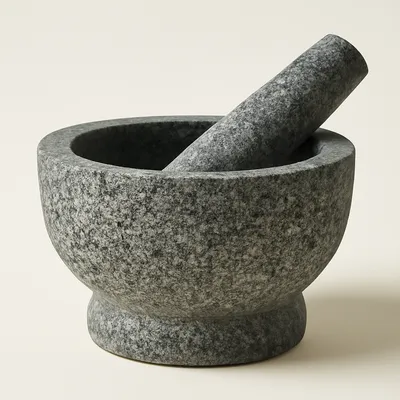
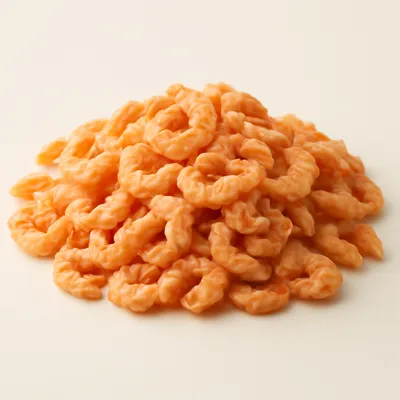
Pound 60g dried shrimp (rehydrated 10 min in warm water) in a mortar with a pinch of salt to a fluffy floss; toast dry in a pan 3 minutes until pale-orange and fragrant.
Watch outToast the shrimp floss dry and low until it's pale-orange and smells sweet-toasty — push past that and it turns brown and bitter.
- 58 min
Heat 60ml neutral oil to 90°C, pour over 4 tbsp finely sliced scallion greens — they sizzle and turn jade. Set aside. Fry 50g pork back-fat cubes until golden and crisp.
Watch outBring the oil to just 90°C — hot enough that the scallion sizzles and flashes jade, not so hot it browns; browned scallion goes bitter and dull.
- 64 min
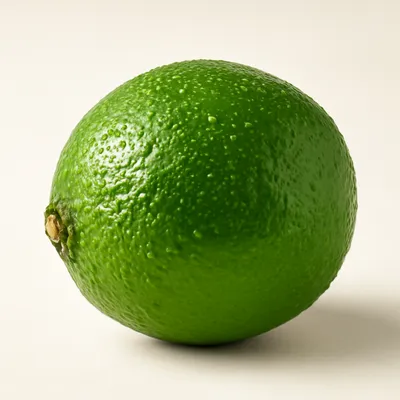
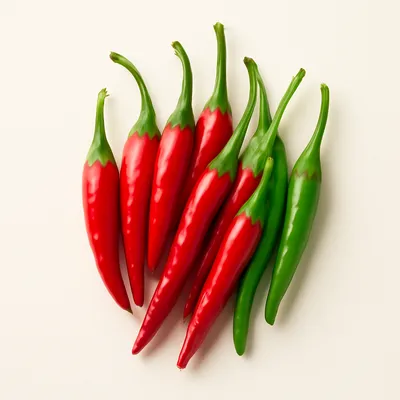
Whisk dipping sauce: 4 tbsp nuoc mam (fish sauce), 4 tbsp warm water, 2 tbsp sugar, 1 tbsp lime juice, 1 minced bird's eye chili, 1 minced garlic clove. Stir until sugar dissolves.
Watch outMake sure the sugar fully dissolves to avoid graininess in the sauce.
- 78 min
Top each warm disc in its saucer with a pinch of shrimp floss, a few pork-fat crisps, half-teaspoon scallion oil. Serve the saucers on a tray; eat by spooning nuoc mam into each saucer and lifting the disc out with a small bamboo skewer or spoon.
Archive tool suggestions — not reviewed
These legacy suggestions have not been evidence-reviewed and are not presented as required tools.