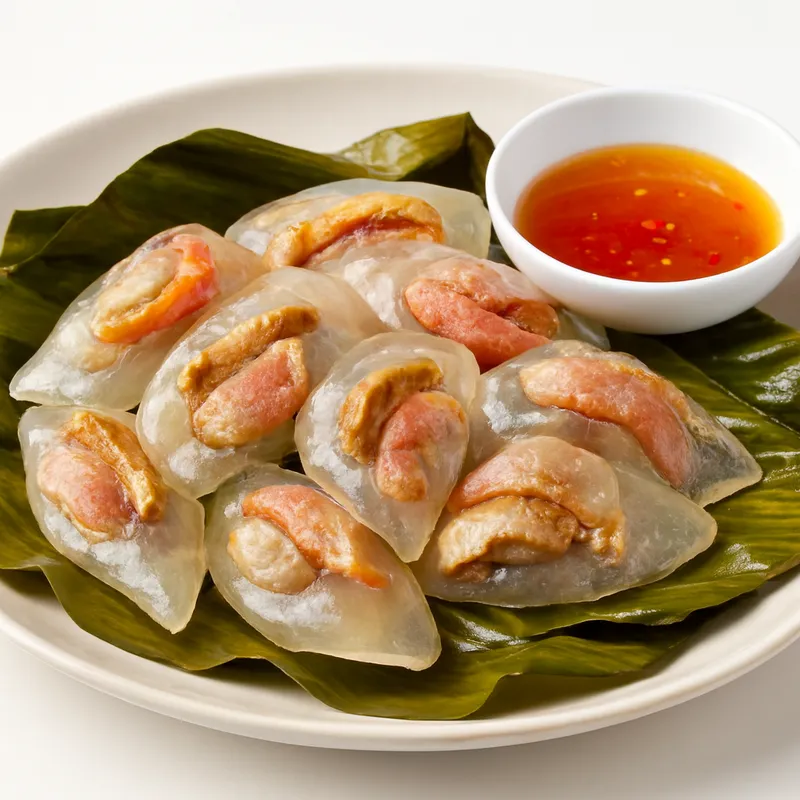
Banh com is a Hanoi sweet made from com, the young green rice of autumn, cooked down with sugar into a soft, sticky, jade-green paste and wrapped around a filling of sweet mung bean scented with grapefruit-flower essence. Cut into small squares and wrapped in banana leaf, it is the city's canonical engagement and wedding cake, presented in pairs alongside banh phu the. The taste is delicate and milky-green, the texture between mochi and a soft sweet.



While com, the pounded young green rice of the northern harvest, has been eaten for centuries, banh com itself dates only to the second half of the 19th century. By family tradition it was devised in 1865 by an ancestor of the Nguyen Duy household on Hang Than Street in Hanoi, who worked out how to dry the green rice flakes and cook them into a keeping cake, taking the sticky-rice tradition of banh chung as a starting point. The Hang Than workshops — the Nguyen Ninh name among the earliest — turned the street into Hanoi's banh com quarter, and the cake became indispensable to weddings, betrothals and death anniversaries, and a standard gift carried home by visitors.
Soft and yielding, with the faint pull of cooked sticky rice, the green paste tastes mildly sweet and milky, like very young grain. The mung bean centre is denser and rounder, lifted by a clean floral perfume of grapefruit blossom. It is not a sugary cake — the sweetness is restrained so the rice's own scent comes through. Eaten in small squares with tea, never in a hurry.
Everything turns on the com. The young rice is harvested while still milky, roasted and pounded flat, then either used fresh or dried for keeping; for banh com the flakes are softened and cooked patiently with sugar over low heat, stirred until they bind into a glossy, cohesive paste that will not slump. Too much heat dulls the green and turns it gummy. The mung-bean filling is steamed, mashed and sweetened, then perfumed with a drop of grapefruit-flower essence (hoa buoi), the classic Hanoi aromatic. Wrapping in banana leaf both shapes the squares and lends a faint leaf scent.
Variations
The standard cake pairs green com with sweet mung bean and grapefruit-flower essence; some makers tint or perfume more strongly, others keep it austere. Banh com is traditionally given together with banh phu the (the husband-and-wife cake) as a betrothal pair. Beyond the cake, the same young com is eaten plain by the handful, stirred into che, or made into com xao, lightly fried green rice — all autumn specialities of Hanoi.
On the Palate
Where Banh Com sits in the Vietnamese flavor cloud
Ingredients
Serves 8How it's made
7 steps · 40 min active + 40 min waiting
- 110 min
Soften young green rice flakes with a little water until pliable.
- 220 min
Cook the rice with sugar over low heat, stirring constantly, until it binds into a glossy, cohesive green paste; let cool slightly.
Watch outCook the rice with sugar over low heat, stirring constantly, until it binds into a glossy, cohesive paste — too much heat dulls the green and turns it gummy, so keep the flame gentle.
- 318 min
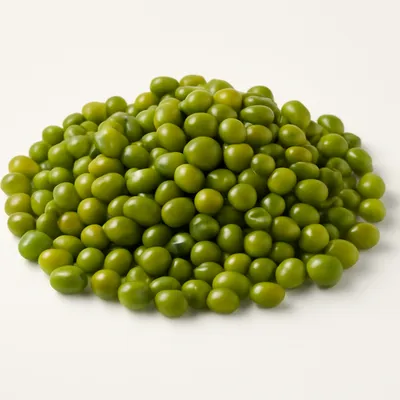
Steam mung beans until soft, mash smooth, and cook with sugar to a firm paste.
Watch outCook the mung beans down to a firm paste that holds a ball — too soft and the filling won't sit as a centre; too dry and it crumbles.
- 46 min
Stir a few drops of grapefruit-flower essence into the mung-bean filling and roll it into small balls.
- 58 min
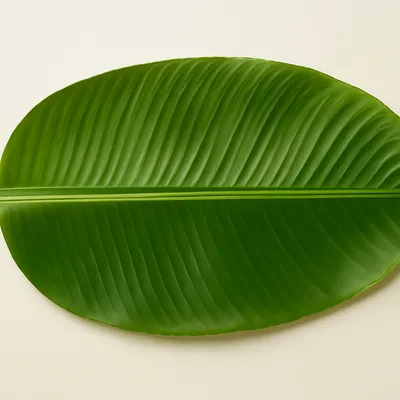
Spread a layer of green rice paste on oiled banana leaf, set a mung-bean ball in the centre, and enclose it.
- 65 min
Press into a neat square and wrap in banana leaf.
- 710 min
Rest until set, then unwrap and cut to serve with tea.
Archive tool suggestions — not reviewed
These legacy suggestions have not been evidence-reviewed and are not presented as required tools.