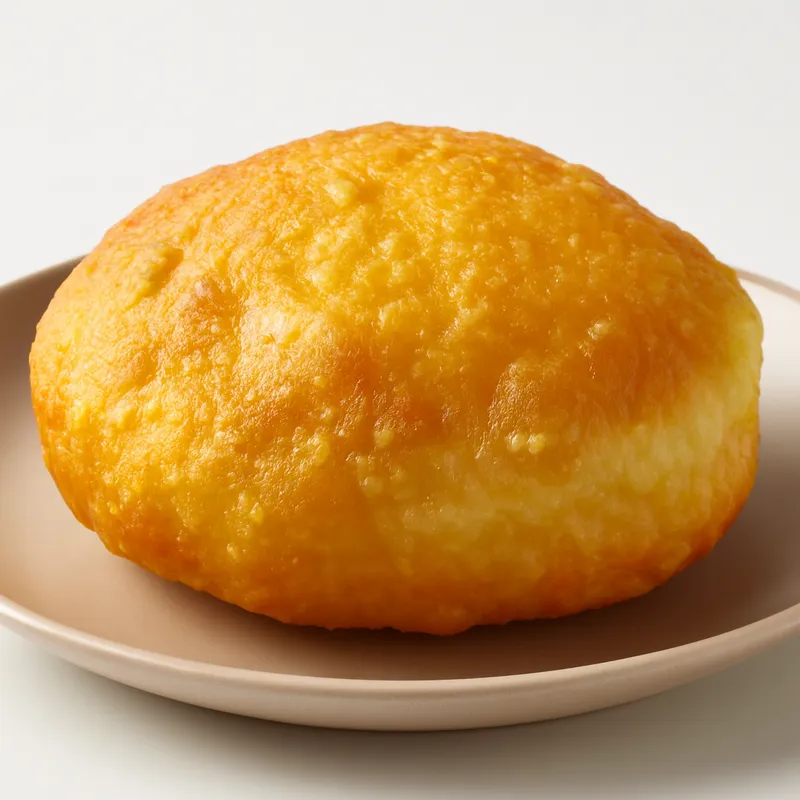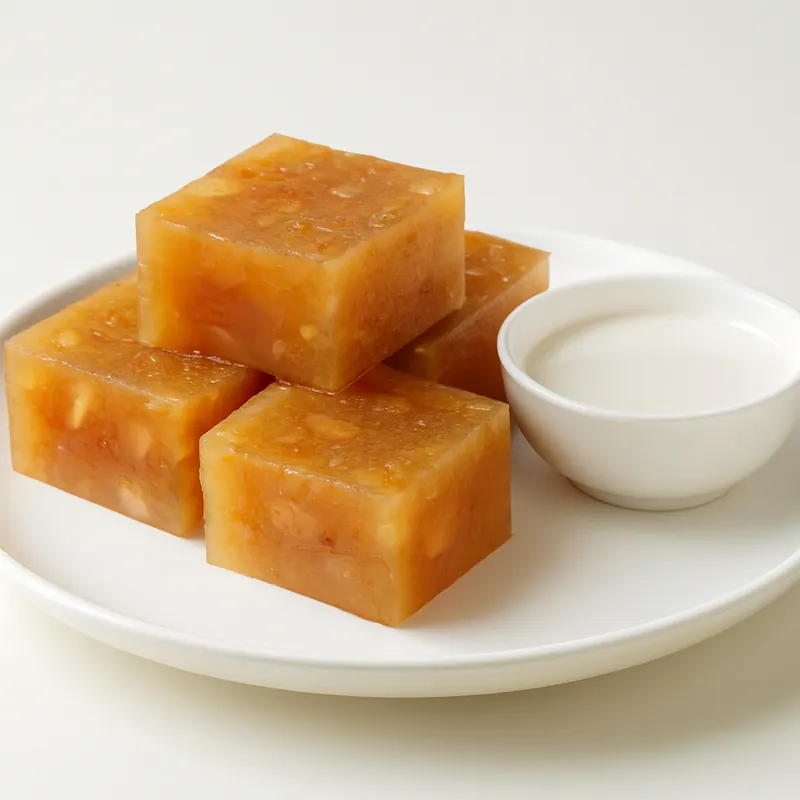
This Chinese dessert features a translucent, springy gel cake made from water chestnut flour, often served with a drizzle of coconut milk.


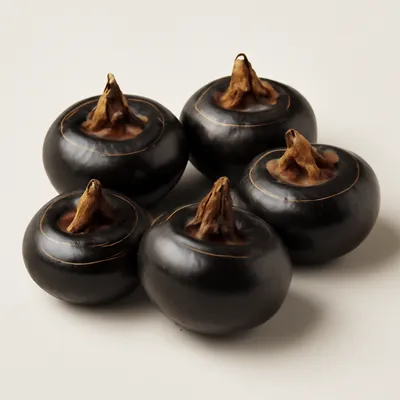


A Cantonese dim sum classic from Guangzhou's tea-house tradition, formalized in the late Qing dynasty (late 1800s) as part of the cha lau (茶楼) sweet-savory rotation. Water chestnuts grow in the Pearl River delta paddy fields; the cake originally exploited a glut crop. By the mid-20th century it was standard yum cha fare across Hong Kong and Guangzhou, and exported with diaspora dim sum to Southeast Asia and the West.
Ma ti gao — Cantonese dim sum cake of water-chestnut starch and sliced fresh ma ti, steamed to a translucent amber. Pan-fried slices on the dim-sum trolley are the second life; the fresh chestnut crunch survives steaming.
Translucent amber slabs cut into rectangles, jiggly, almost glassy. Cool to the tongue, lightly sweet, with crisp white flecks of chopped water chestnut breaking up the smooth gel. Eaten cold as dim sum or pan-fried in a little oil until the edges go golden and crackly while the inside stays translucent. Better cold than warm if you're after the texture; pan-fried for a contrast eat.
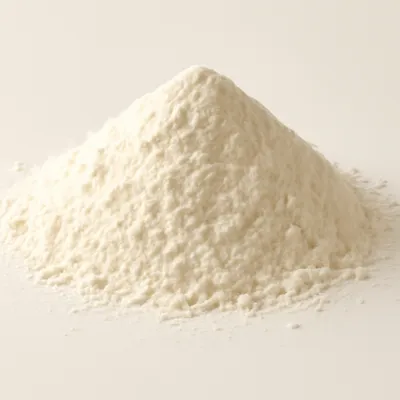
Water chestnut flour, not regular starch, is what gives the gel its characteristic translucent springy bite — wheat or corn starch makes a cloudy, soft cake instead. The classic Panting-style cake uses pure water chestnut flour and contains no water chestnut pieces at all; chopped fresh water chestnut is added in some versions for crunch, but it is a variant rather than the defining feature. Pan-frying is optional but creates a Maillard crust on the gel surface; the inside has to stay underdone or you get a chewy block.
Variations
Hong Kong tea-house steamed-then-pan-fried version; Foshan-style uses local ma ti and runs sweeter; Singapore-Malaysian kuih chestnut-cake with palm sugar; modern dim sum kitchens add osmanthus syrup as a twist.
On the Palate
Where Water Chestnut Cake sits in the Chinese flavor cloud
Use real water chestnut flour, not wheat or corn starch — it's what sets into the signature translucent, springy gel; other starches leave the cake cloudy and soft instead of bouncy.
Ingredients
How it's made
4 steps · 39 min
- 13 min
Dissolve the sugar in coconut milk over low heat in a saucepan, stirring constantly until completely melted, about 3 minutes.
Watch outStir until the sugar has fully dissolved and the coconut milk is just warm — don't let it come near a boil.
- 24 min
Mix rice flour with water chestnut flour in a large bowl. Gradually add the warm coconut milk mixture, stirring continuously to form a smooth batter.
Watch outThe finished batter should pour like thin cream with no grit or lumps clinging to the whisk.
- 32 min
Pour the batter into a greased steaming dish, smoothing the surface with a spatula. Place in a steamer over simmering water.
- 430 min
Steam the cake over medium-high heat until it sets and becomes translucent, about 30 minutes.
Watch outIt's done when the whole cake turns translucent and a skewer comes out clean, not milky-white in the middle.
Archive tool suggestions — not reviewed
These legacy suggestions have not been evidence-reviewed and are not presented as required tools.