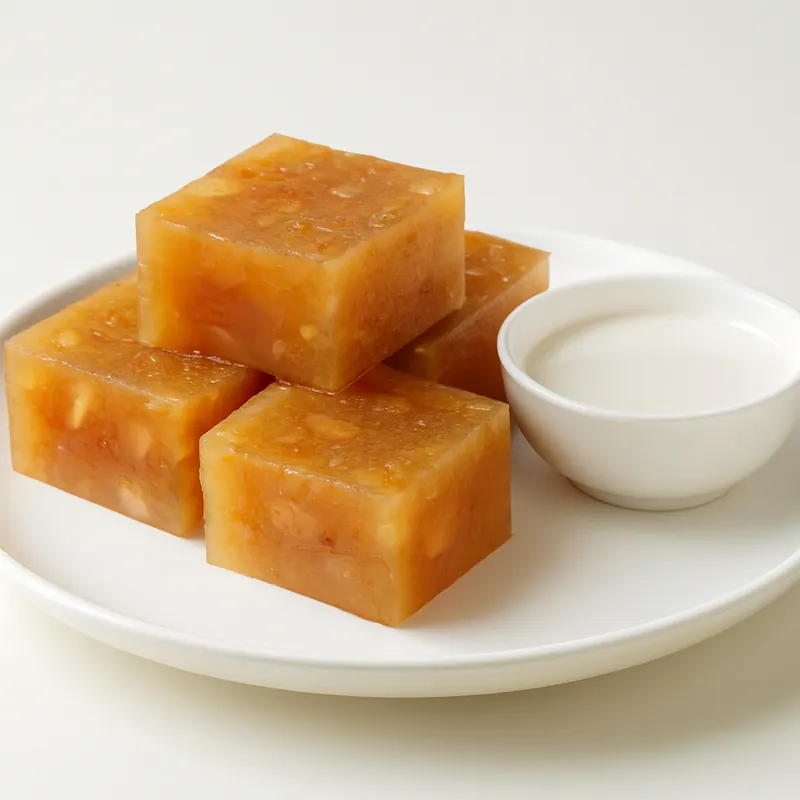
A delectable dessert made with sticky rice, filled with sweet bean paste and shaped into small cakes.



A Jiangnan dessert tradition with versions across Shanghai, Suzhou, and Ningbo, all rooted in glutinous rice cultivation around the lower Yangtze. The Shanghai variant likely formalized in late Qing tea-house dessert menus (late 1800s) as part of the dim-sum-style sweet rotation. Red bean paste (豆沙, dòushā) became the default sweet filling because azuki beans were locally cultivated and cheap, and the paste keeps for weeks.
Ba bao fan — Shanghai New Year sweet, glutinous rice molded over a layer of red-bean paste with eight 'treasures' on top: candied dates, lotus seed, melon seed, raisin, walnut, dried longan, hawthorn, sweet osmanthus. Steamed, inverted, drizzled with sugar syrup.
A small white-rice cake or roll, glutinous rice pressed around a soft red-bean-paste center. The rice is barely sweet; the bean paste does most of the sugar work. Texture is the point — the rice is dense and chewy, almost taffy-like, against the smooth paste. The authentic Shanghai finish for tiaotougao is a drizzle of candied osmanthus syrup (糖桂花), not sesame or coconut. Eaten at room temperature; cold makes the rice harden up.
The rice is steamed, not boiled — boiled glutinous rice goes mushy, but steamed rice keeps each grain intact while the surfaces fuse into the chewy mass. The bean paste should be a touch under-sweet; if the paste is too sweet, the dish reads as candy, not rice. The dough is glutinous-rice flour cut with about one-fifth non-glutinous (japonica) rice flour or wheat starch so the wrapper holds its shape and stays chewy rather than collapsing; the finishing osmanthus syrup adds aroma.
Variations
Within Shanghai's gao-tuan family the close relatives are 双酿团 (two fillings, balled), 年糕团 (rice-based, savory, often wrapping a fried dough stick), and 青团 (Qingming-season, mugwort-green); tiaotougao itself descends from Suzhou-style 苏式糕团, which runs sweeter and uses more lard.
- ·Filled with sweet bean paste, shaped into small cakes
On the Palate
Where Sticky Rice with Sweet Bean Paste sits in the Chinese flavor cloud
Steam the glutinous rice, never boil it: boiling turns the grains to mush, while steaming keeps each grain intact as the surfaces fuse into that signature chewy body — and keep the bean paste a touch under-sweet so the dish reads as rice, not candy.
Ingredients



How it's made
5 steps · 30 min active + 30 min waiting
- 15 min
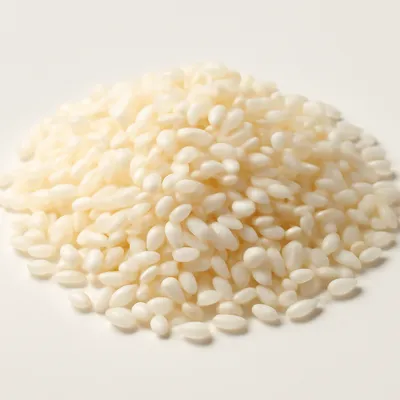
Rinse the sticky rice under cold water until the water runs clear. Drain thoroughly to remove excess starch.
Watch outRinse until the runoff is clear, not cloudy — leftover starch is what turns the finished rice gummy.
- 210 min
In a steamer basket lined with cheesecloth, spread the rinsed sticky rice evenly. Steam over boiling water for 30 minutes until the grains are tender.
Watch outThe rice is done when a grain presses soft all the way through with no hard chalky core — if the center's still firm, steam a few minutes more.
- 35 min
While the rice steams, gently heat coconut milk and sugar in a small saucepan until the sugar dissolves completely. Do not let it boil.
Watch outWatch for bubbling; if it starts to boil, remove from heat immediately to prevent separation.
- 45 min
Once the rice is cooked, transfer it to a large bowl. Pour the sweetened coconut milk over the rice, folding gently to ensure even absorption.
Watch outBe careful not to mash the rice; handle gently to maintain its texture.
- 55 min
Spread a layer of sweet bean paste on a serving dish. Top with the coconut-infused sticky rice, pressing gently to form an even layer. Serve warm.
Watch outPress the rice into an even layer while it's still warm and pliable — once it cools it stiffens and won't shape cleanly.
Archive tool suggestions — not reviewed
These legacy suggestions have not been evidence-reviewed and are not presented as required tools.