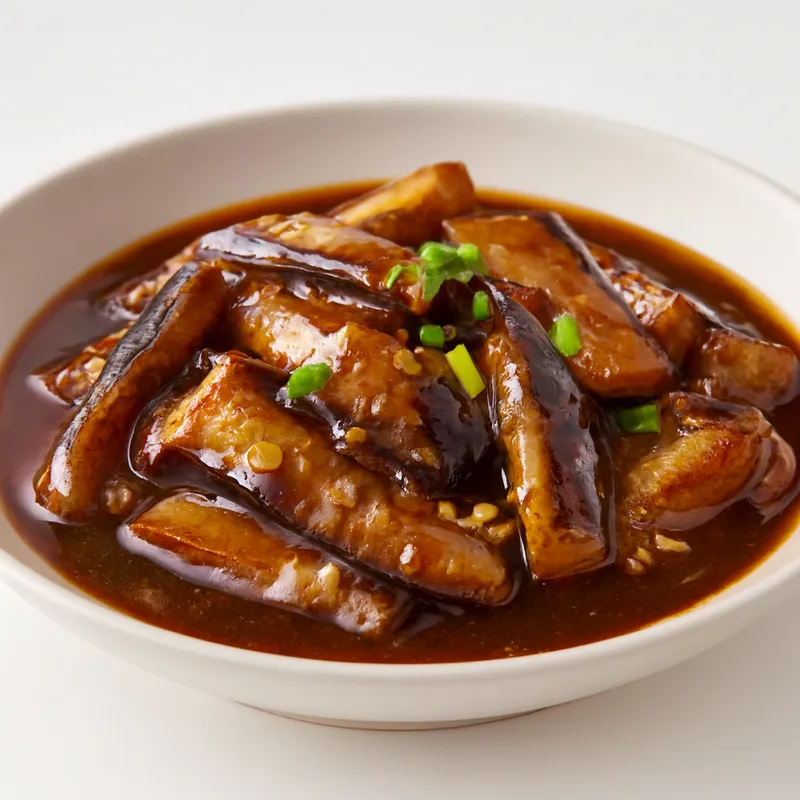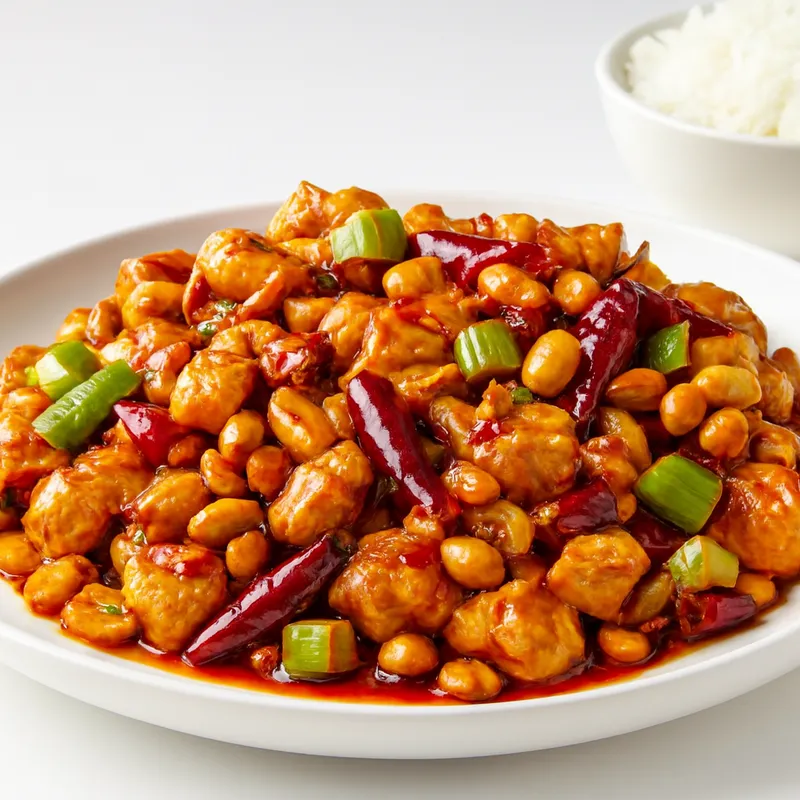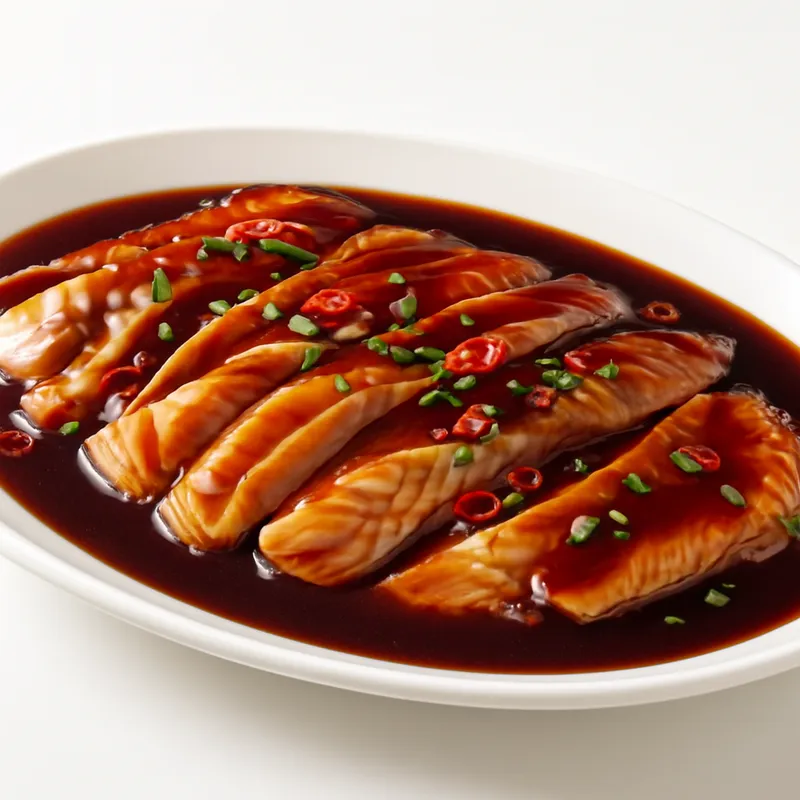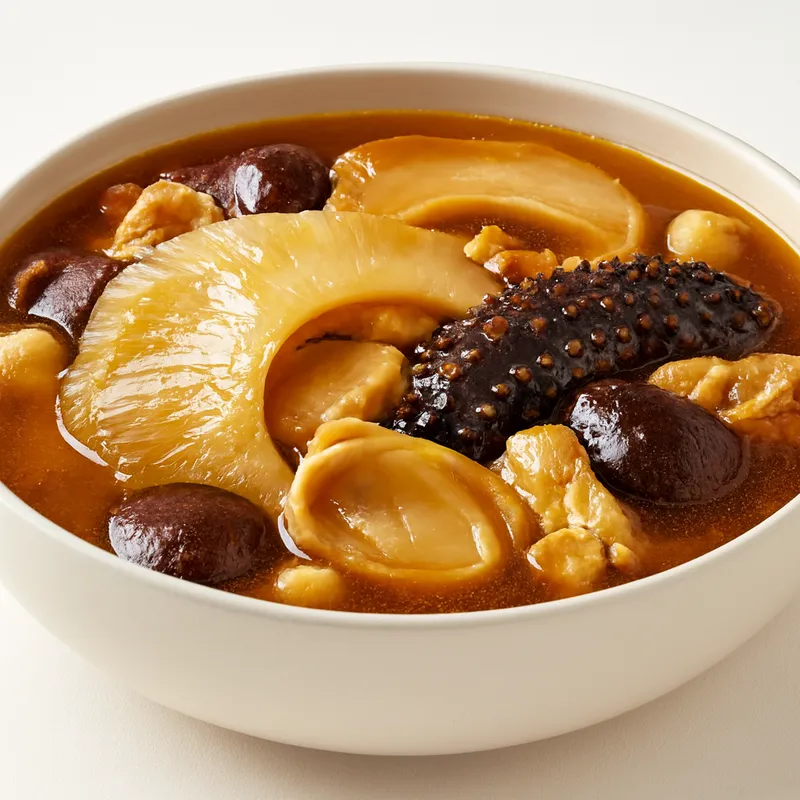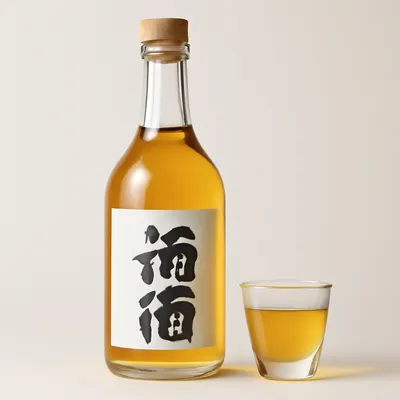


A pillar of Lu cuisine (Shandong), rooted in the Fushan/Yantai (Jiaodong) coastal tradition, with its definitive modern form perfected at Beijing's Fengzeyuan restaurant by Lu-cuisine grandmaster Wang Yijun, who won a national gold medal with it in 1983. Shandong sits on the Bohai sea cucumber grounds, and northern scallions (大葱) are a regional specialty; combining the two was natural. The technique of using scallion oil as the flavor backbone is distinctly Lu.
A Lu cuisine pillar from late-Qing Jinan, on the imperial banquet rotation by the 19th century. The cucumber is texture-only; the scallion oil — lard-fried with thick 大葱 whites until blackened, then discarded — does all the flavor work.
A whole rehydrated sea cucumber, glossy black, sitting in a shallow pool of dark sauce with sections of charred scallion alongside. The texture is the point — gelatinous, springy, almost no flavor of its own. The sauce carries the dish: deep scallion oil, soy, sugar, stock. Cut with a spoon; the cucumber yields without resistance.
Dried sea cucumber takes 3–5 days to rehydrate properly: cold soak, simmer, cool, repeat — any oil or salt during this stage halts swelling. The scallion oil is made by deep-frying thick scallion whites in lard until deep golden and aromatic, then discarding the scallion; that oil flavors everything (Fengzeyuan applies the scallion oil in three additions, and adds cilantro roots while rendering it). Fresh scallion goes in only at the end for color.
Variations
Jinan-style runs darker on soy and uses Zhangqiu scallions; Yantai coastal version cuts in dried scallop and lightens the sauce; banquet kitchens at Qufu finish with a starch glaze for extra cling.
On the Palate
Where Scallion-Braised Sea Cucumber sits in the Chinese flavor cloud
The scallion oil is the entire dish — deep-fry thick scallion whites in lard until deep golden, then discard them; that infused oil, not the scallions themselves, carries the flavor.
Ingredients


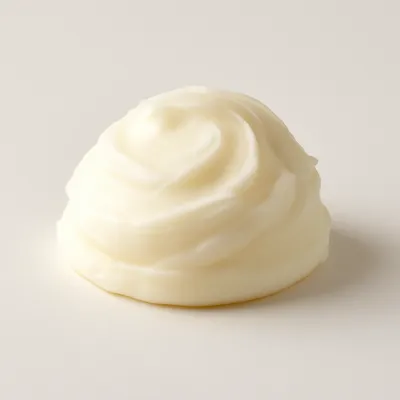


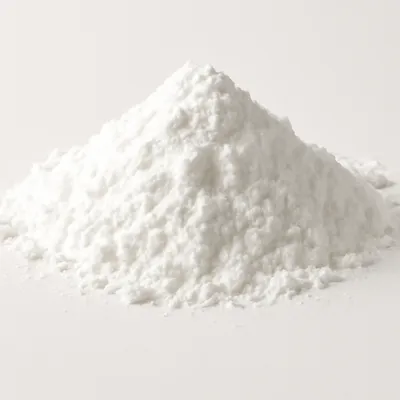
How it's made
5 steps · 22 min
- 110 min
Thoroughly rinse the sea cucumber under cold water. In a saucepan, bring chicken stock to a gentle simmer and add the sea cucumber. Simmer for 10 minutes until tender.
Watch outSimmer the sea cucumber just until it yields softly to a chopstick but still springs back — overcook and it goes to mush.
- 22 min
In a separate pan, heat 2 tablespoons of oil over medium-high heat. Add ginger slices and garlic, sautéing until fragrant, about 2 minutes.
Watch outAvoid burning the garlic, as it can turn bitter.
- 33 min
Add the chopped scallions to the pan and continue to sauté until they soften and release their aroma, about 3 minutes.
Watch outSauté the scallions only until they soften and smell sweet, not browned — they're for aroma and color here, not for frying dark.
- 42 min
Pour in the soy sauce, rice wine, and a pinch of sugar, stirring to combine. Let the sauce simmer for 2 minutes until slightly thickened.
Watch outMonitor the sauce closely to prevent it from becoming too thick or burning.
- 55 min
Gently add the sea cucumber to the pan, spooning the sauce over it. Braise for 5 minutes until the flavors meld and the sea cucumber is fully infused with the sauce.
Watch outSpoon the sauce over and braise until it glosses and clings to the sea cucumber — you want a glossy coat, not a watery pool.
Archive tool suggestions — not reviewed
These legacy suggestions have not been evidence-reviewed and are not presented as required tools.