The prototype was created in Fuzhou around 1876, when the Shaoxing-born wife of a local mint-bureau official cooked it for a banquet honoring Zhou Lian, the provincial administration commissioner; Zhou's chef Zheng Chunfa then refined it (more seafood, less meat, sealed with lotus leaf and slow-stewed over charcoal) and made it the signature dish at his Juchunyuan restaurant. The original name was 福寿全 (fu shou quan, "complete fortune and longevity"); a poet at a banquet improvised a couplet — "the aroma jumps the wall, even Buddha leaps for it" — and the new name stuck. It was originally a year-end banquet dish for wealthy households where each ingredient was rare on its own.
Created circa 1876 by Zheng Chunfa at Juchunyuan in Fuzhou; a poet at the banquet improvised 'the aroma jumps the wall, even Buddha leaps for it' and the name stuck. Each ingredient is cooked separately, then sealed with lotus leaf and dough for a 4–6 hour final steam.
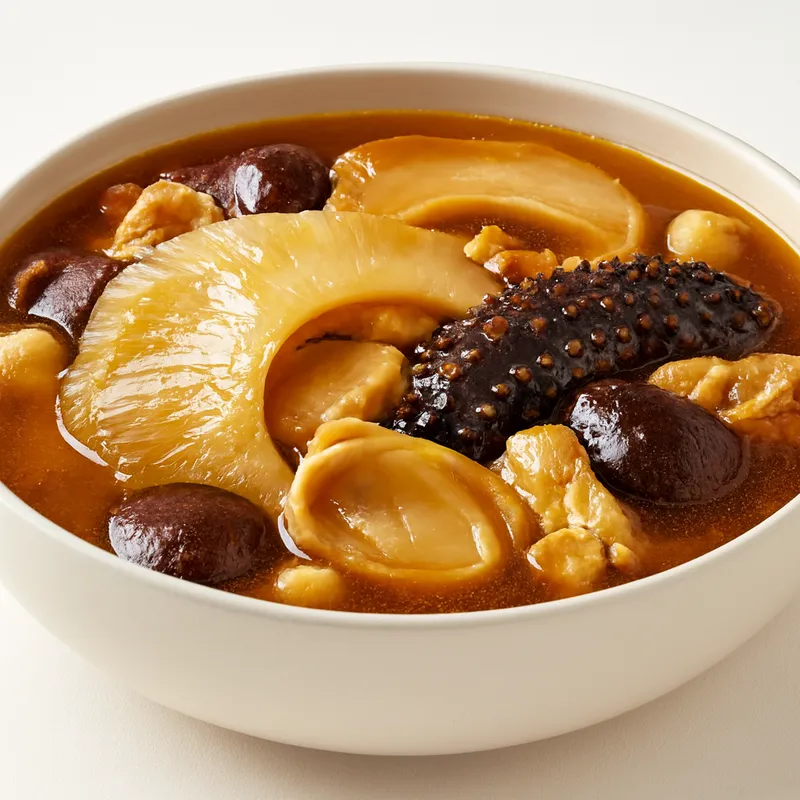
A sealed clay jar lifted to the table; lid pulled off and the steam alone tells you what's inside — abalone, sea cucumber, fish maw, scallop, quail egg, ham, mushroom, all stewed in chicken-pork-ham stock for hours. The broth is the dish: amber, viscous from collagen, deep enough that each ingredient tastes of the others. Eaten in small porcelain spoons.
Each ingredient is cooked separately to its proper doneness before assembly — abalone slow-braised, sea cucumber rehydrated for days, ham steamed for stock, mushroom soaked. They are layered into the jar with stock, sealed with lotus leaf and dough, and steamed for another 4–6 hours. The point of the long final steam is to fuse aromas without overcooking the seafood; rushing it gives a soup that tastes of nothing in particular.
Variations
Juchunyuan original holds the Fuzhou benchmark; Hong Kong banquet houses (Fook Lam Moon) cut the ham heavier and add fish maw; Singapore Hokkien shops shrink it into single-portion clay cups for hotel buffets, often skipping the 4-hour final steam.
On the Palate
Where Buddha Jumps Over the Wall sits in the Chinese flavor cloud
Ingredients










How it's made
5 steps · 1 hour 30 min
- 110 min
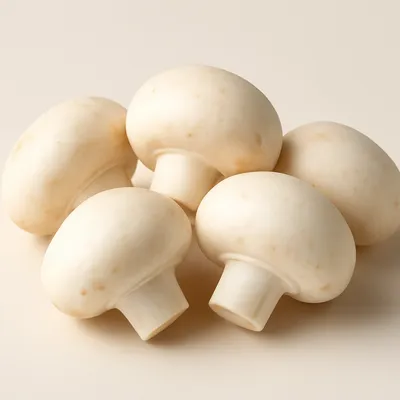
Soak the sea cucumber, abalone, and shiitake mushrooms in warm water until rehydrated, then drain and set aside.
Watch outThe dried goods are ready when fully plump and springy all the way through, with no hard core left.
- 220 min
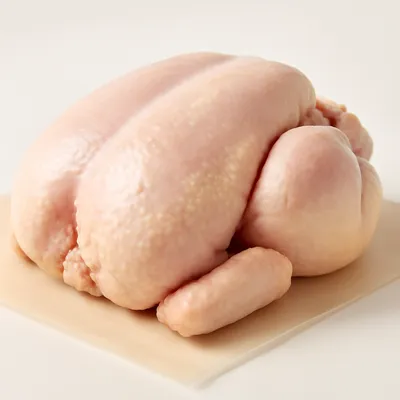
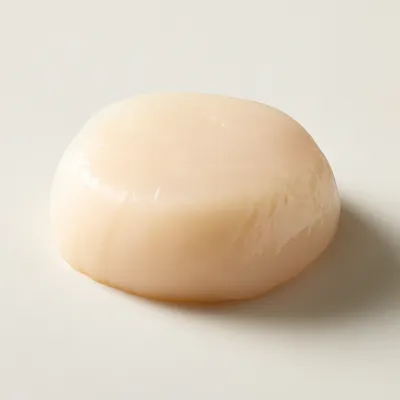
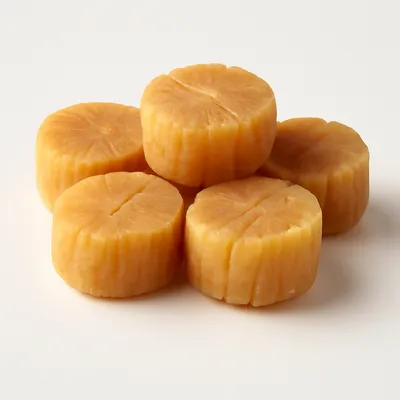
In a large pot, bring a mix of chicken and pork stock to a gentle simmer. Add the shark fin, scallops, chicken pieces, and pork, allowing them to cook slowly for 20 minutes.
Watch outHold the stock at a lazy shimmer, never a rolling boil, or it turns cloudy and harsh.
- 330 min
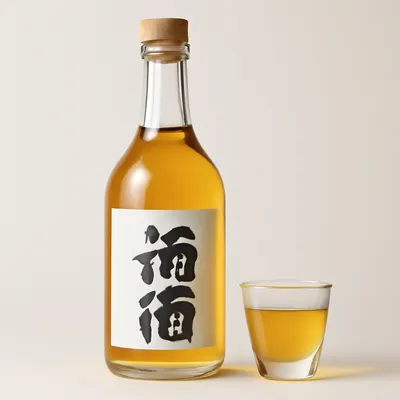
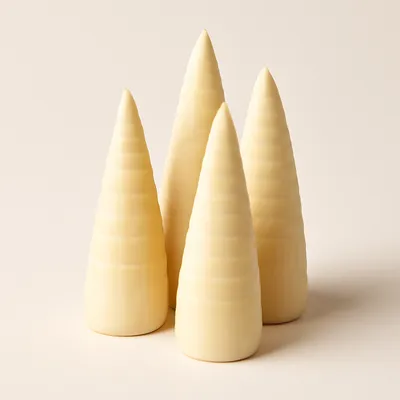
Add the rehydrated sea cucumber, abalone, and mushrooms to the pot, along with the bamboo shoots, fish, and quail eggs. Pour in rice wine and let the mixture simmer for another 30 minutes.
Watch outEnsure the mixture simmers gently to prevent the delicate ingredients from breaking apart.
- 415 min
Add slices of Jinhua ham and ginseng to the pot, continuing to simmer gently for 15 more minutes, allowing the flavors to deepen.
Watch outDo not rush this step; allowing the ham and ginseng to infuse properly enhances the broth's richness.
- 515 min
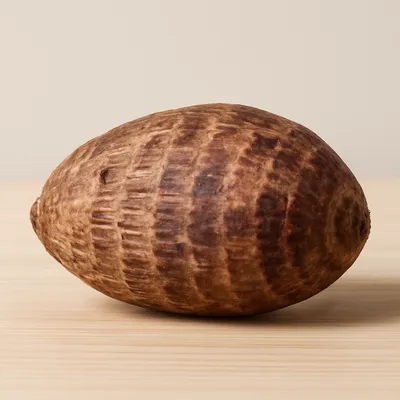
Finally, add the taro and tendon, cooking until everything is tender and the broth is rich and aromatic, about 15 more minutes.
Watch outIt's done when the tendon and taro yield to a spoon and the broth smells deep and layered.