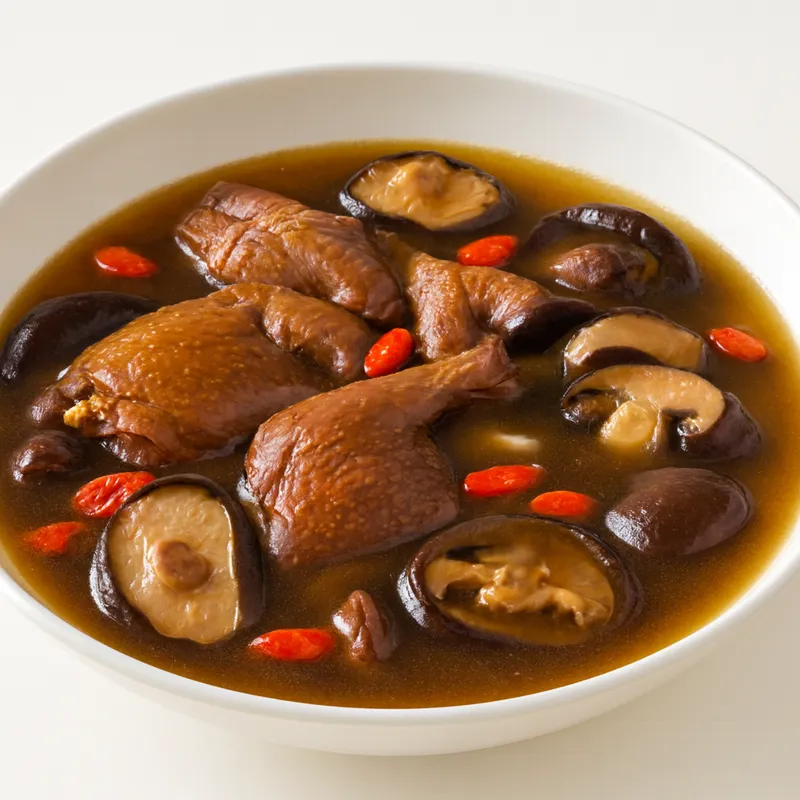






A Huizhou (Anhui) home-tonic preparation, well-established by the late Qing (19th century) when Huangshan became a destination for scholars and tea merchants. The dish belongs to the Chinese yao-shan (药膳) tradition — food cooked as medicine — and was given to women postpartum, the elderly, and convalescents. Goji and shiitake are not garnish; they're the prescription.
A late-Qing Huizhou yao-shan (药膳) preparation given to women postpartum and the elderly. Squab under 4 weeks gelatinizes in 90 minutes; older birds go stringy. The closed clay pot stays just below boil — open the lid mid-stew and the broth turns cloudy.
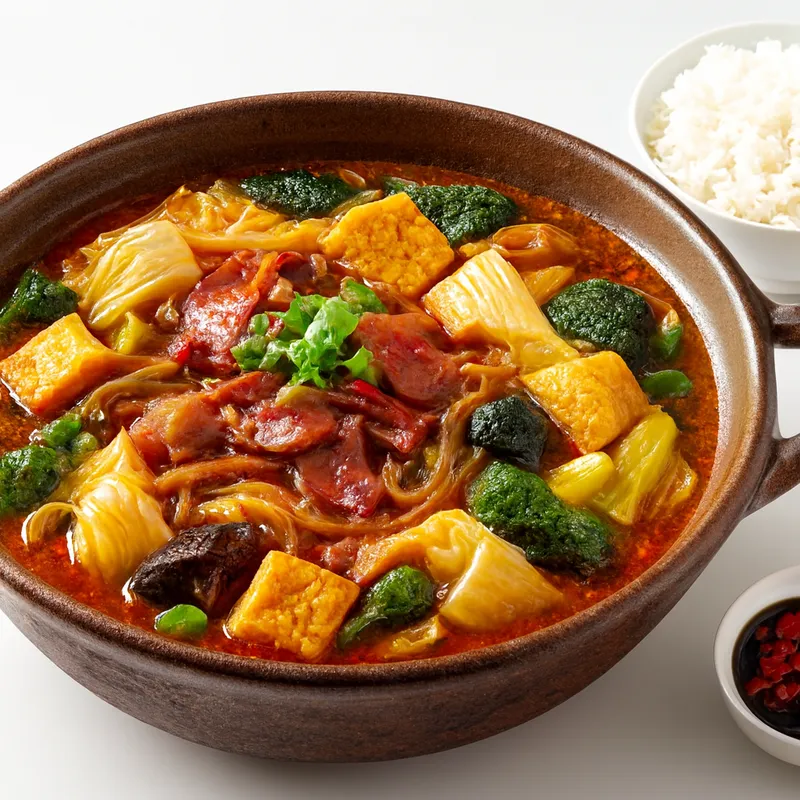
A small clay pot, lid still on at the table. Lifted: clear broth, one whole young pigeon, a few dried shiitake, a scatter of red goji berries. The meat pulls clean off the bone, gamier than chicken but lighter than duck. The broth is the prize — sip first, eat the bird second. Salt only, no soy; flavor comes from time, not seasoning.
Young pigeon (squab, under 4 weeks) has connective tissue that gelatinizes in 90 minutes — older birds need hours and still go stringy. The canonical method is double-boiling (geshui dun): the lidded bowl sits inside a steamer and cooks by vapor, never directly on the flame. The contents stay just below a boil and never agitate, so collagen and savor release slowly while the broth stays crystal-clear even after a two-hour stew — which is exactly why the soup is prized for being limpid (汤色清白) with the ingredients' flavor undiminished.
Variations
Tunxi clay-pot shops keep the canonical goji-shiitake; Hongcun village kitchens add American ginseng for a heavier tonic; Hong Kong 老火汤 traditions sub squab into double-boiled soups with wolfberry and dried longan, lighter on the meat focus.
On the Palate
Where Huangshan Stewed Pigeon sits in the Chinese flavor cloud
Ingredients





How it's made
4 steps · 14 min active + 1 hour waiting
- 11 min
In a large pot, heat a splash of oil over medium heat. Add sliced ginger and garlic, stirring until fragrant, about 1 minute.
Watch outEnsure the oil is not too hot to prevent burning the garlic.
- 25 min
Add the pigeon pieces and sear until browned on all sides, about 5 minutes. This will seal in the juices and create a flavorful base.
Watch outSear the pigeon until it colors on every side; even browning here is what gives the finished broth its depth.
- 33 min
Pour in the rice wine and soy sauce, stirring to deglaze the pot. Add the shiitake mushrooms and ham, stirring to combine.
Watch outMake sure to scrape the bottom of the pot to incorporate all the browned bits.
- 45 min
Add water to cover the ingredients and bring to a gentle simmer. Add the goji berries and pigeon peas. Cover and simmer until the pigeon is tender, about 1 hour.
Watch outOnce it comes up to heat, drop it to the faintest simmer with just a few bubbles breaking the surface, cover, and leave it undisturbed for about an hour.
Archive tool suggestions — not reviewed
These legacy suggestions have not been evidence-reviewed and are not presented as required tools.
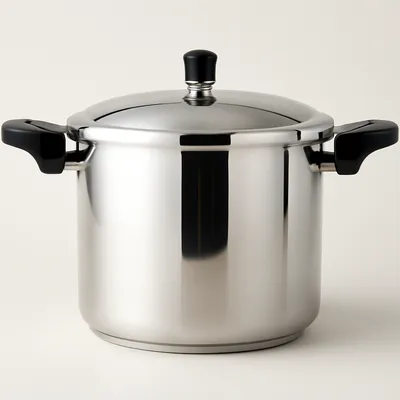
A sealed pot that lifts the boiling point of water from 100°C to ~120°C by trapping steam at 1 bar above ambient pressure. Tough cuts (oxtail, beef shank, dried beans) cook in 30 minutes instead of 4 hours; the higher heat denatures collagen faster than a long simmer. Modern electric versions (Instant Pot) automate the pressure cycle; old stovetop ones (Presto, Kuhn Rikon) hiss alarmingly but cost a fraction.

A round-bellied unglazed clay pot, 1.5-3 liters, with a domed lid and side handles, used for slow-cooking Chinese soups, claypot rice (煲仔饭), and stews. The clay's high porosity diffuses heat slowly so soups never come to a violent boil — flavor develops over 2-3 hours of low simmer. Cantonese claypot rice gets its prized crispy bottom (锅巴) from the same direct-flame stovetop heat that would crack a less robust pot.