Wugang's native copper goose — a storied Hunan breed named for its bronze bill and gong-like call — slow-brined for hours in a complex stock of twenty-plus medicinal and aromatic herbs drawn from Yunshan mountain. The result is deeply mahogany, gelatinous at the joints, and intensely layered, with a flavor tradition documented across more than a thousand years.

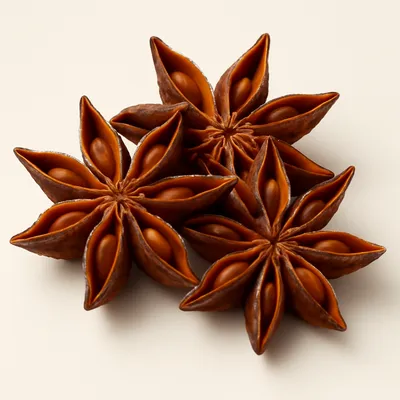



Wugang (武冈市), Shaoyang prefecture, Hunan — an ancient city with over 2,200 years of recorded history. The copper goose has been raised in Wugang for over 1,200 years, with the brining (卤) tradition traced to the Tang dynasty. By the early Southern Song the breed was already celebrated across the Hunan-Chu region under the accolade 'world's finest goose' (世之名鹅). Tradition holds that during the Jiajing reign (around 1550), the Wugang Min Prince Zhu Yurong (朱誉荣) presented copper geese and a skilled court cook to the emperor; the emperor is said to have received the banquet with great favour, further elevating the breed's imperial prestige — this account survives only in local gazetteers and is held as legend, and the '世之名鹅' reputation predates it by several centuries. In the Ming dynasty the copper goose was grouped with Dongting lake lotus and Ningxiang pig as one of Hunan's 'three agricultural treasures.' The brine formula, centered on spices and medicinal herbs from Wugang's Yunshan mountain — including star anise, fennel, cinnamon, and over twenty other ingredients — has been accumulated into aged brine (老卤) by successive generations of practitioners, each batch enriching the next.
The neck, wings, head, and tongue — the 'four treasures' (铜鹅四宝) — offer the most satisfying eating: chew through taut, mahogany-stained skin into dense muscle threaded with collagen that has melted to gelatin. Each bite releases a deep, layered spice perfume — star anise, cinnamon, clove — cushioned by the goose's own natural richness.
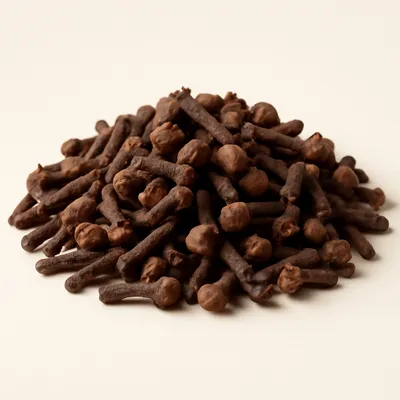
Extended brining (卤) maintained at 80–85°C holds the meat just above the collagen-conversion threshold (around 70°C) long enough for the triple-helix collagen in connective-rich parts — neck, wings, tongue — to unwind and hydrate into gelatin, transforming tough chew into yielding, unctuous texture. The copper goose's unusually dense musculature, bred through generations of open-water ranging, carries higher connective-tissue ratios than factory poultry, making it an especially rewarding subject for slow brining. The twenty-plus Yunshan herbs each contribute distinct volatile compounds: star anise provides trans-anethole, cinnamon provides cinnamaldehyde, cloves provide eugenol; together they penetrate the meat's myofibrillar water phase over many hours. Aged brine (老卤) is progressively enriched with Maillard reaction products, free amino acids, and dissolved gelatin from previous batches, creating a complexity that no freshly made stock can replicate.
Variations
The four treasures (neck, head, wings, tongue) are the most coveted and are sold separately at Wugang brine shops — prized for the satisfying gnawing required. An old-goose broth version simmers a three-year-old bird with Codonopsis and wolfberries for five to six hours until the broth turns golden, regarded locally as a tonic. A fusion 'Western lemon goose rack' dish, said to trace to early-20th-century German missionary influence in Wugang, has become a local curiosity.
On the Palate
Where Wugang Brined Goose sits in the Chinese flavor cloud
Ingredients
Serves 6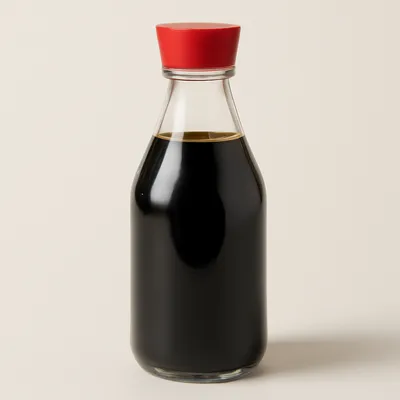


How it's made
7 steps · 1 hour
- 110 min
Clean the whole goose thoroughly inside and out. Bring a large pot of water to a rolling boil, blanch the whole goose for 3–4 minutes, then lift out and rinse under cold running water to firm the skin and remove impurities.
Watch outBlanch the goose then rinse it under cold water — the shock tightens the skin so it holds shape and stays smooth in the brine.
- 210 min
Prepare the brine: combine light soy sauce, dark soy sauce, rock sugar, salt, rice wine, and 3 liters of water in a large pot. Bundle all aromatics — star anise, fennel seeds, cinnamon, cloves, dried tangerine peel, and any additional Yunshan herbs — in a cheesecloth sachet.
- 320 min
Bring the brine to a boil over high heat, add the spice sachet, and simmer uncovered for 20 minutes to bloom the aromatics fully into the liquid. Taste and adjust salt and sugar balance.
- 45 min
Gently lower the blanched goose into the simmering brine breast-side down, ensuring it is fully submerged. Place a plate on top to weigh it down if it floats.
- 590 min
Reduce heat to maintain a gentle simmer at 80–85°C — the surface should quiver but not bubble vigorously. Braise for 90 minutes, turning the goose once at the 45-minute mark for even coloring and flavor penetration.
Watch outHold the brine at 80–85 degrees, quivering but not boiling — a hard boil toughens the skin and tears the meat before it colors.
- 660 min
Turn off the heat and allow the goose to rest in the brine for at least 1 hour — up to 3 hours for a deeper, more penetrating flavor. The residual heat continues the slow cook gently.
Watch outTurn off the heat and let the goose steep an hour or more — the residual warmth keeps drawing the brine deep into the meat.
- 715 min
Lift the goose out, brush the skin lightly with sesame oil while still warm, and rest for 10 minutes. Chop into serving pieces. Strain and reduce some brine to a glossy dipping sauce and serve alongside.
Archive tool suggestions — not reviewed
These legacy suggestions have not been evidence-reviewed and are not presented as required tools.