
Yangzhou thousand-layer oil cake is a steamed leavened sweet pastry of dozens of paper-thin, semi-translucent layers laminated with sugar and lard, cut into diamond-shaped pieces, and counted as one of Yangzhou's "Two Wonders" of dim sum.


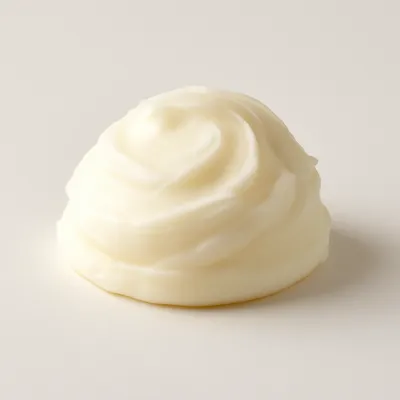

The thousand-layer oil cake is one of Yangzhou's classic dim-sum sweets, paired with crystal (jade) shaomai as the city's "Two Wonders." It is widely attributed to Gao Naichao, a Fujian-born chef working in Yangzhou during the Guangxu reign of the late Qing (1875–1908), who is said to have adapted the older "thousand-layer steamed bun" technique, prized for being "white as snow, peeling apart in a thousand sheets," into a layered sweet cake; the food writer Tang Lusun records that Gao ran an eatery in Yangzhou in the late Guangxu years where the cake won renown. The pastry's fame was consolidated by Fuchun Teahouse (founded 1885, serving dim sum from 1913), whose pastry chefs made the thousand-layer oil cake and crystal shaomai famous, after which teahouses across the city imitated them. It later won national recognition as a "Famous Chinese Snack."
A diamond-cut piece is soft and gently springy; pressed or pulled, it peels into dozens of paper-thin, faintly translucent leaves. The flavor is cleanly sweet and moist, carried by a rich, savory undertone of lard, with the texture tender rather than flaky.
A leavened old-starter dough is fermented by the slow, lean method, then rolled into a thin sheet, brushed with rendered lard, and scattered with sugar and small cubes of sugar-cured back fat; the sheet is rolled and folded repeatedly, typically 16 layers per fold and folded again to reach 64 layers, so the fat and sugar separate each leaf. After proofing, the slab is steamed about 45 minutes: fermentation gas expands every layer evenly while the molten lard films keep them from fusing, so each sheet sets distinct and turns semi-translucent. The lard waterproofs and tenderizes the layers, while the sugar dissolves into a moist, even sweetness rather than a crust.
Variations
The classic version is a plain sweet cake; festive and shop versions add candied fruit, shredded red-and-green candied melon, or osmanthus scattered on top or worked between the layers. Its constant partner is crystal (jade) shaomai, the savory other half of the "Two Wonders." The layer count is conventionally given as 64, built as 16 layers folded fourfold; the name "thousand-layer" is figurative, echoing the older "thousand-layer steamed bun" from which the technique descends.
On the Palate
Where Yangzhou Thousand-Layer Oil Cake sits in the Chinese flavor cloud
Ingredients
Serves 8

How it's made
8 steps · 45 min
- 1180 min
Mix flour with an old-starter leaven and water; knead smooth and ferment by the slow method until well risen.
- 24320 min
Dice back fat small and cure it with sugar for about 3 days to make sugar-fat cubes; dissolve a little food alkali in hot water and work it evenly into the risen dough.
- 315 min
Roll the dough into a thin rectangular sheet; brush with rendered lard and scatter sugar and sugar-fat cubes evenly.
- 415 min
Roll and fold the sheet into 16 layers, press, then fold again to reach 64 thin layers; shape into a square cake blank.
Watch outFold to sixteen layers, press, then fold again to reach sixty-four — even, thin layers with lard and sugar between are what set as distinct sheets.
- 525 min
Place the blank in a steamer and proof briefly until springy.
- 645 min
Scatter shredded candied melon on top; steam over high heat and rapidly boiling water about 45 minutes until set and semi-translucent.
Watch outSteam over rapidly boiling water about forty-five minutes until set and semi-translucent — the gas needs full heat to lift every layer apart.
- 715 min
Cool slightly so the layers firm.
- 85 min
Cut into diamond-shaped pieces and serve.
Archive tool suggestions — not reviewed
These legacy suggestions have not been evidence-reviewed and are not presented as required tools.


