
A refined steamed pastry of Sanyuan and Xi'an, made of many gossamer-fine dough threads laminated with rendered pork lard and coiled up into a small tower before steaming. A thin sheet of dough is rolled out, spread with seasoned lard, cut lengthwise into hair-fine strands, then gathered, stretched, and wound around the fingers into a pine-cone shape and steamed; once cooked it is patted loose so the threads spring apart. The name comes from its look — "lift it and it is like golden threads, set it down and it is like a pine-cone tower" — and it is savory, seasoned with salt and Sichuan pepper, served with shredded scallion and sweet bean paste.



The shape that gives the dish its name is well attested: "lift it and it is like golden threads, set it down and it is like a pine-cone tower." Its present form is traced to a late-Qing reform in Sanyuan County, where an older flat fried oil cake (油塌) was remade — cake turned into tower, frying into steaming, with fine flour and pork leaf lard — and renamed 金线油塔; sources disagree on the maker, naming either a Sanyuan restaurateur or two local oil-cake shops, so neither can be stated as fact. Its craft (三原金线油塔制作技艺) was inscribed on Shaanxi's second provincial batch of intangible cultural heritage in 2009. The dish is said to have reached Xi'an from Sanyuan during the Republican period, the restaurant 西安饭庄 bringing it and the sister pastry 泡泡油糕 in, reportedly on the advice of the calligrapher Yu Youren (于右任) — a Sanyuan man whose ancestral home was Doukou-Yu village in Jingyang — though the year and the account are unverified. Folk accounts trace its ancestry to a Tang-dynasty oil cake, but that link is unverified.
Lifted by the tip with chopsticks, a good tower shakes loose into a heap of separate golden strands — the test of the whole dish. The texture is many fine layers at once soft, tender, and faintly springy, rich with lard yet not heavy, and savory rather than sweet, scented with Sichuan pepper. Each strand pulls clean from the next instead of matting together. Done well it is fluffy and oil-fragrant, the threads distinct; done badly the lard was too little or too warm and the strands fuse into a dense, greasy clump that will not separate, or the dough was rolled too thick and the threads come out coarse.
The dish runs on solid fat laminating fine strands. Pork lard is hydrophobic, so coating the dough threads limits how much water the flour takes up and blocks the strands from knitting into one continuous gluten mass; a solid fat (not a liquid oil) physically keeps the layers apart instead of merging them into a greasy paste, which is why leaf lard, rendered firm, is preferred. When the coiled tower is steamed, water trapped in the dough turns to steam and puffs the lard-separated threads away from one another, setting them as distinct, airy strands — so the pastry both "lifts like golden threads" and eats soft and layered rather than dense. Cutting the rolled sheet into the finest possible strands maximizes the separated surfaces; the salt and Sichuan pepper season the lard layer from within.
Variations
金线油塔 is paired in Xi'an with its sister pastry 泡泡油糕, the puffed, blistered fried sweet cake brought in from Sanyuan at the same time, and the two are served together as a classic duo. The institutional maker is 西安饭庄, while in Sanyuan the lineage is carried by the 赵 family's layered-oil-cake house; the dish is also marketed as a Sanyuan county specialty. The savory tower is most often served with shredded scallion and sweet bean paste in the manner of duck condiments, and some tables round it out with light pickles or a sweet almond drink alongside.
On the Palate
Where Golden Thread Oil Tower sits in the Chinese flavor cloud
Ingredients
Serves 4How it's made
7 steps · 1 hour active + 30 min waiting
- 112 min
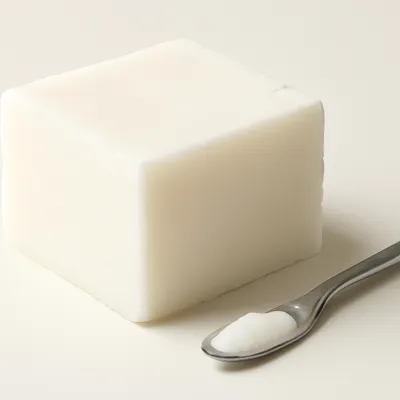
Render pork leaf lard and let it firm to a soft solid; mix it with salt and ground Sichuan pepper (or five-spice) into a spreadable seasoned lard.
Watch outUse rendered leaf lard firmed to a soft solid, not liquid oil — solid fat physically keeps the threads apart; liquid oil just merges them into a greasy paste.
- 230 min
Mix fine wheat flour with a little salt and water into a smooth, firm dough; cover and rest so it relaxes, about half an hour, kneading once or twice.
- 36 min
Roll the dough out into a large, very thin sheet and brush it evenly all over with the seasoned lard.
- 48 min
Cut the lard-spread sheet lengthwise into the finest possible threads, as if cutting noodles, keeping them oiled so they do not stick.
Watch outCut the lard-brushed sheet into the finest threads you can, keeping them oiled so they don't stick — coarse or stuck threads won't spring loose into golden strands.
- 58 min
Gather a bundle of threads, stretch them gently, and wind them around two fingers into a small coiled tower, tucking the end underneath.
- 620 min
Set the towers on an oiled steamer rack and steam over high heat until cooked through, about twenty minutes.
- 73 min
Lift each tower, pat and shake it so the threads spring loose into golden strands, and serve hot with shredded scallion and sweet bean paste.
Watch outAfter steaming, pat and shake each tower so the threads spring apart into loose golden strands — that lift is the whole point of the dish.
Archive tool suggestions — not reviewed
These legacy suggestions have not been evidence-reviewed and are not presented as required tools.


